James Buchanan's Inauguration as the 15th President of the United States
1857 · Washington, D.C., United States
James Buchanan was inaugurated as the 15th President of the United States.
March 4, 1853
Franklin Pierce was inaugurated as the 14th President of the United States.
Washington, D.C., United States | United States Government
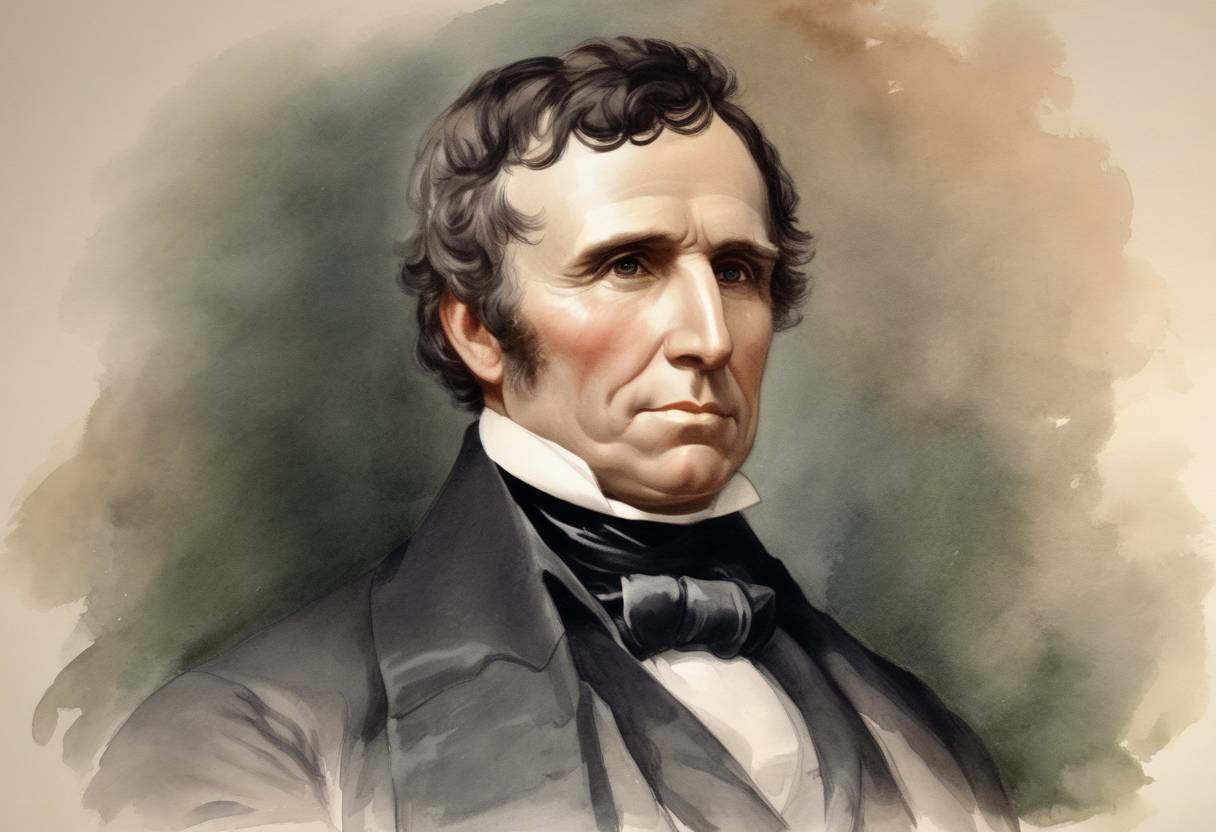
On March 4, 1853, Franklin Pierce was inaugurated as the 14th President of the United States. The inauguration took place at the East Portico of the United States Capitol in Washington, D.C. This event marked the commencement of Pierce’s presidency, which would last until 1857.
Franklin Pierce, a Democrat from New Hampshire, was elected president in the 1852 election. He defeated the Whig candidate, General Winfield Scott, in a campaign where Pierce’s stance as a proponent of the Compromise of 1850 and as a Northerner with Southern sympathies helped consolidate support. Pierce’s vice president, William R. King, was absent from the inauguration due to illness, which later led to his swearing-in abroad in Cuba.
Pierce’s inaugural address focused on themes of national unity and expansion, emphasizing his commitment to enforcing the existing compromises over slavery and fostering the country’s growth. He notably expressed his desire to see the nation avoid conflicts over sectional differences, reflecting the turbulent pre-Civil War era in which he assumed office.
Pierce’s presidency is often remembered for the controversial Kansas-Nebraska Act of 1854, which he supported and which effectively repealed the Missouri Compromise, exacerbating sectional tensions and contributing to the rise of the Republican Party. His term was marred by increasing national division over issues such as slavery, setting the stage for the conflicts that would eventually lead to the American Civil War.
After serving one term, Pierce failed to secure the Democratic nomination for re-election in 1856. His popularity waned due to his administration’s handling of sectional issues, particularly his endorsement of pro-slavery policies. After his presidency, Pierce lived a relatively quiet life, maintaining a low profile until his death in 1869. His legacy remains mixed, with historians often ranking his presidency as less effective due to his inability to ease sectional tensions.
Source: www.whitehouse.gov