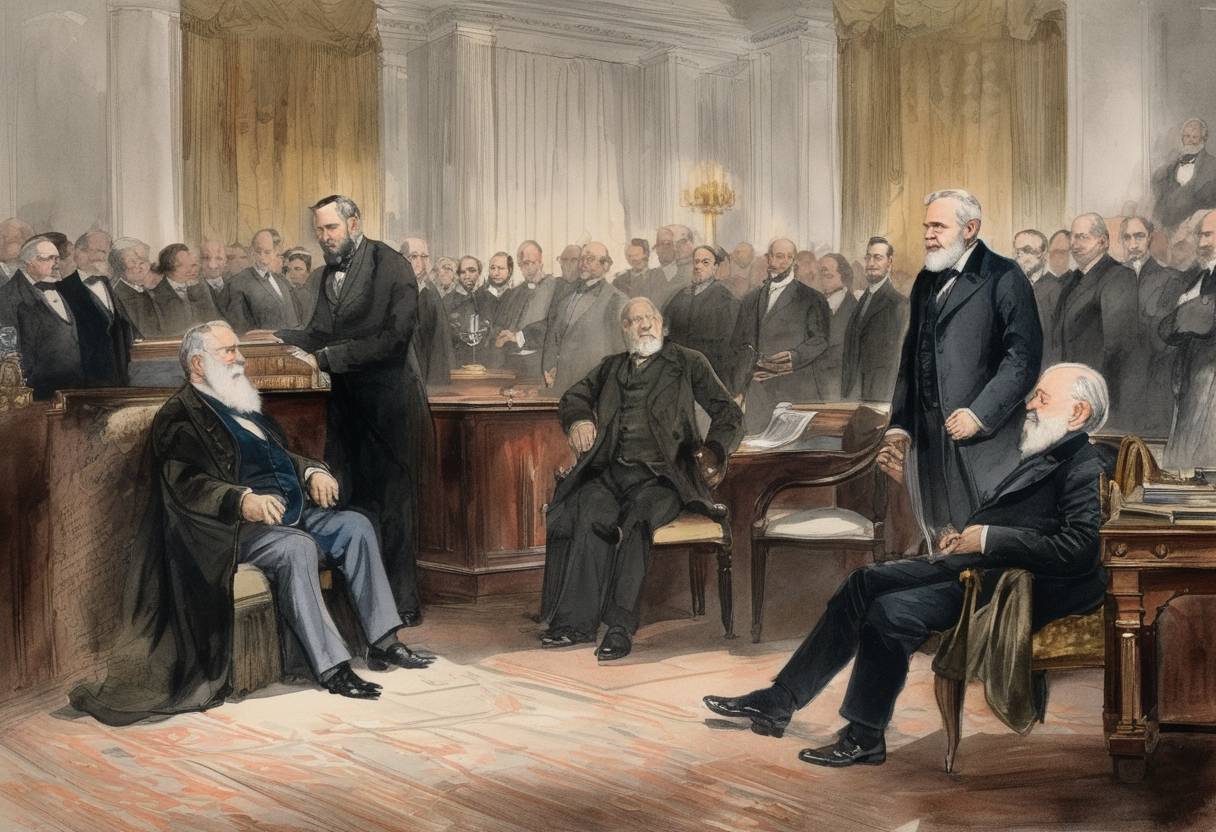
Inauguration of Benjamin Harrison
On March 4, 1889, Benjamin Harrison was inaugurated as the 23rd President of the United States in a ceremony held at the East Portico of the United States Capitol in Washington, D.C. The event marked the beginning of Harrison’s presidency, following his victory in the presidential election against the incumbent President Grover Cleveland.
Background
Benjamin Harrison, a Republican from Indiana, was the grandson of William Henry Harrison, the 9th President of the United States. Before becoming president, he had a distinguished career as a lawyer and politician, serving as a U.S. Senator from Indiana from 1881 to 1887. His platform during the 1888 election focused on economic protectionism, civil rights, and veterans’ benefits. Despite losing the popular vote, Harrison won the electoral college.
The Inauguration Day
The inauguration of Harrison took place under blustery and cold weather conditions, typical of early March in Washington, D.C. Chief Justice Melville Fuller administered the oath of office, which Harrison took on a Bible that he had inherited from his mother, a personal touch that underscored his dedication to his family’s legacy.
Inaugural Address
In his inaugural address, Harrison emphasized themes of national progress, economic protectionism, and the importance of national unity. He spoke of the government’s role in supporting the rights and welfare of all citizens and highlighted the need for civil service reform and infrastructure improvements. Moreover, Harrison called for the preservation of civil rights, particularly in the context of African Americans’ rights in Southern states.
Significance
Harrison’s inauguration marked the beginning of a presidency that would oversee significant domestic and international developments. His administration is noted for its legislative accomplishments, including the Sherman Antitrust Act and the McKinley Tariff. Harrison’s term also saw the admission of six new states to the Union, reflecting the country’s westward expansion and growth.
Aftermath
Benjamin Harrison served only one term, as he was defeated by Grover Cleveland in the 1892 election. Despite this, his policies and the legislation from his administration had lasting impacts, particularly in terms of economic policy and federal involvement in civil rights, shaping future American governance and politics.