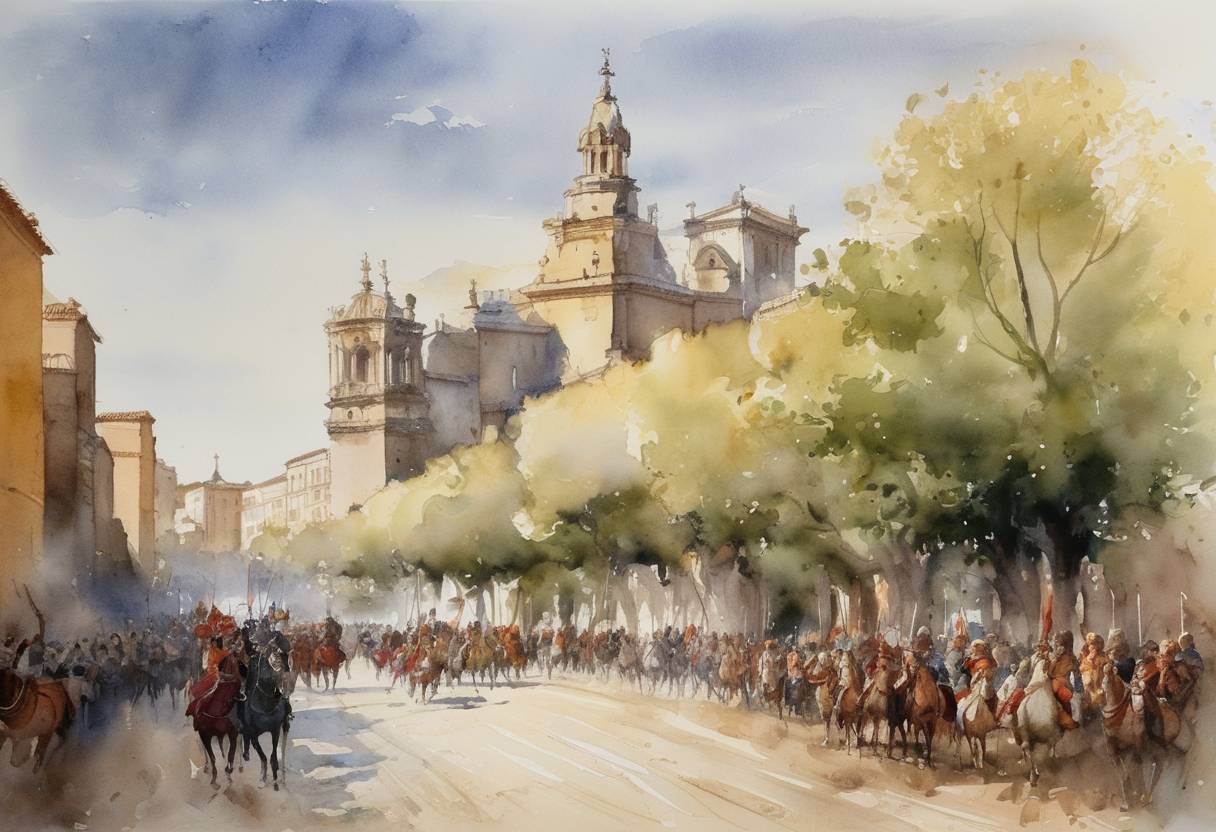
The Fall of Valencia to El Cid – May 3, 1094
On May 3, 1094, the city of Valencia fell to Christian forces led by the renowned military leader, Rodrigo Díaz de Vivar, popularly known as El Cid. This victory was a pivotal moment in the ongoing Christian Reconquista, a centuries-long campaign aimed at reclaiming Iberian territories that were under Muslim control since the early 8th century.
Context
The Reconquista was marked by a series of military campaigns led by Christian states aiming to reclaim land from Muslim rulers in the Iberian Peninsula. By the late 11th century, key figures such as El Cid emerged as prominent leaders in these efforts. El Cid’s reputation as a skilled military tactician and charismatic leader had already been established through his previous exploits, serving both Christian and Muslim rulers at different times, which was indicative of the complex political landscape of medieval Spain.
Siege of Valencia
The campaign against Valencia, one of the wealthiest and most influential cities in al-Andalus, began in earnest when El Cid laid siege to the city in the latter part of 1093. The siege lasted many months, marked by strategic blockades and negotiations until the city’s eventual capitulation on May 3, 1094. The victory at Valencia did not just signify a military win but also provided a powerful psychological boost to the Reconquista cause.
Aftermath and Significance
El Cid’s capture of Valencia consolidated his power base and enabled him to rule the city as a quasi-independent prince until his death in 1099. The fall of Valencia marked a significant shift in the power dynamics between Christian and Muslim forces in Spain.
The successful siege under El Cid’s leadership was instrumental in weakening Muslim control in the region and paved the way for further advances by Christian kingdoms. His actions also left a lasting cultural legacy, influencing Spanish history and myth, immortalizing El Cid as a national hero in the epic poem “El Cantar de Mio Cid.”
El Cid’s impact on the Reconquista and the broader historical landscape of the Iberian Peninsula endures as a testament to the complexity and enduring legacy of this transformative period in medieval history.