Pancho Villa's Raid on Columbus, New Mexico - March 9, 1916
1916 · Columbus, United States
Mexican revolutionary Pancho Villa led a raid on the town of Columbus, New Mexico, prompting the United States to send troops into Mexico in pursuit of Villa.
March 15, 1916
United States President Woodrow Wilson sends 4,800 U.S. troops over the U.S.-Mexico border to pursue Pancho Villa. This military action, known as the Pancho Villa Expedition or the Mexican Expedition, was in response to Villa's raid on the town of Columbus, New Mexico.
Columbus, United States | United States Army
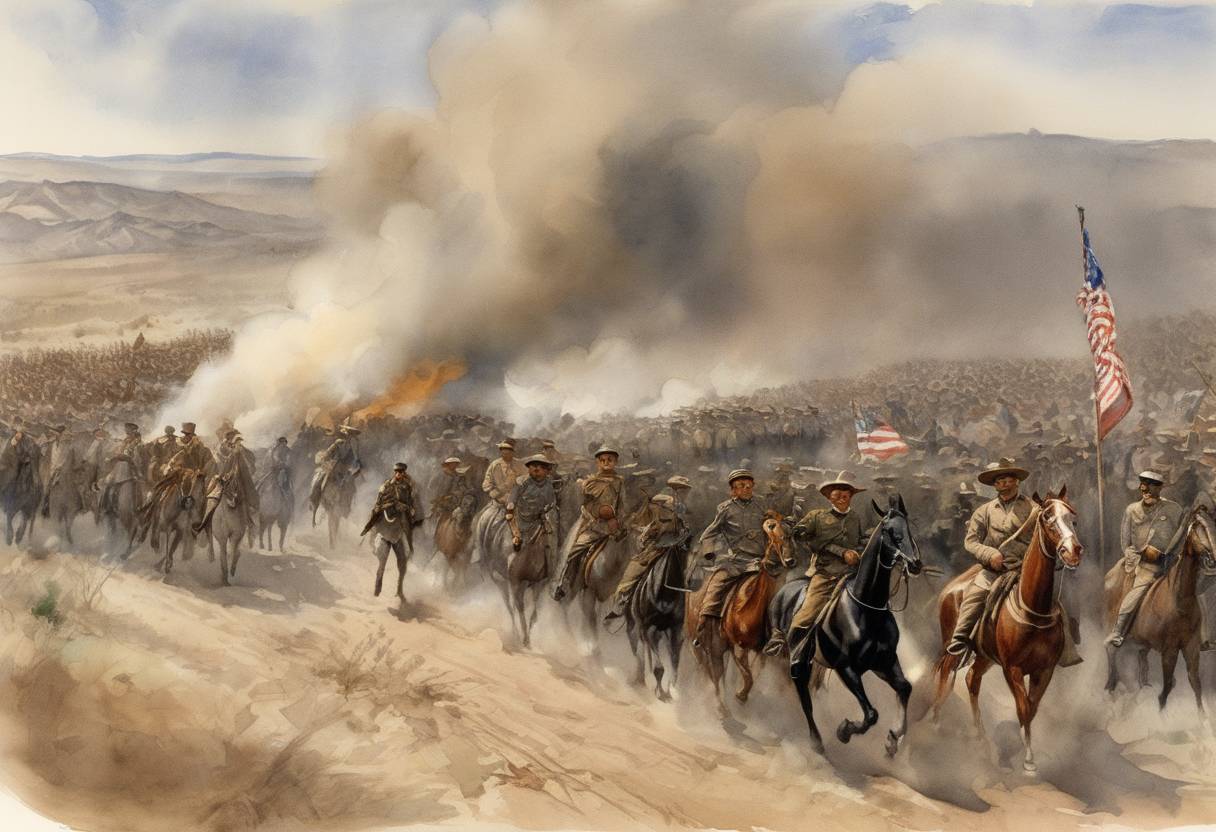
On March 15, 1916, the United States launched the Pancho Villa Expedition, also known as the Mexican Expedition, when President Woodrow Wilson ordered 4,800 American troops to cross the U.S.-Mexico border in pursuit of the Mexican revolutionary leader, Francisco “Pancho” Villa. This military response came shortly after Villa and his men conducted a raid on the town of Columbus, New Mexico, on March 9, 1916, resulting in the deaths of 18 Americans.
Pancho Villa, once an ally of the United States during the Mexican Revolution, became disenchanted with U.S. support for his rival, Venustiano Carranza, the then de facto leader of Mexico. In retaliation, Villa staged a cross-border attack, targeting Columbus. The raid was one of the few foreign attacks on American soil in the 20th century, causing national outrage and compelling President Wilson to act.
Under the command of General John J. Pershing, the U.S. Army initiated a military operation to capture Villa and neutralize his threat. The expedition involved troops, supported by aircraft and trucks, showcasing some of the first uses of mechanized military action by U.S. forces. The operation took place primarily in the northern Mexican states of Chihuahua and Sonora, with soldiers traversing rugged terrain in pursuit of the elusive Villa and his men.
The mission faced several difficulties, including harsh environmental conditions, logistical challenges, and tense diplomatic relations with the Carranza government. Despite extensive efforts, Villa evaded capture. After nearly a year, the expedition was called off and troops began withdrawing in February 1917, having failed to apprehend Villa but successfully disrupting his operations.
The Pancho Villa Expedition marks a significant moment in U.S.-Mexico relations and military history. It highlighted the complexities of U.S. intervention in the region and underscored the challenges of cross-border military actions. Although Villa was never caught, the mission demonstrated the growing capabilities of the U.S. military and foreshadowed General Pershing’s leadership role during World War I. Additionally, it left a lasting impact on U.S.-Mexican diplomacy, reflecting broader tensions and cooperation efforts between the two nations.