1308 · Kortrijk, Belgium
The Battle of the Golden Spurs took place near Kortrijk, where Flemish forces defeated French knights in a significant medieval conflict.
March 15, 1311
The Battle of Halmyros took place, resulting in the decisive defeat of the Catalan Company by the forces of the Duchy of Athens. This battle led to significant shifts in power in the region.
Halmyros, Greece | Catalan Company
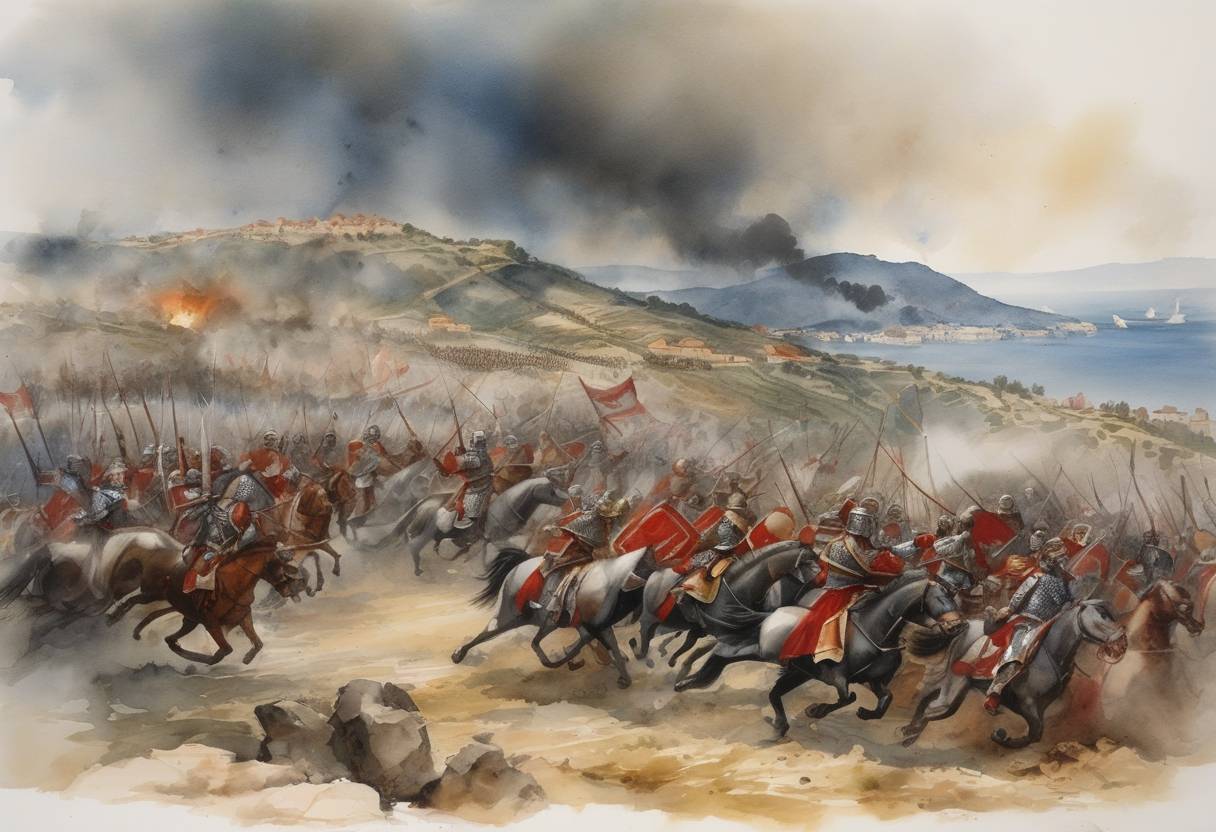
The Battle of Halmyros, also known as the Battle of the Cephissus, took place on March 15, 1311, and marked a turning point in the control of territories within the Latin states of the Eastern Mediterranean. It was fought near the modern town of Almyros in Thessaly, Greece. The battle was between the forces of the Duchy of Athens, led by Walter V of Brienne, and the Catalan Company, a group of mercenaries primarily composed of Catalans and Aragonese soldiers.
The Catalan Company, originally hired as mercenaries by the Byzantine Empire, found itself in conflict with its employer and gradually moved westward, plundering territories as they went. By 1310, they had entered Thessaly and were hired by the Duke of Athens, Walter V, to help him consolidate his power in the region.
Despite the Catalans’ aid in defeating his enemies, Walter V sought to be rid of the mercenary force by denying them land promised as payment. In retaliation, the Catalan Company prepared for confrontation with the Duchy of Athens.
Walter V amassed a coalition of knights and foot soldiers, including a contingent of Frankish knights, to face the Catalan Company. The battle occurred near Halmyros, where the heavily armored cavalry of the Duchy faced the lighter and more mobile troops of the Catalans.
The rainy conditions and marshy ground of the battlefield favored the Catalan Company’s light infantry and Almogavars, expert skirmishers adept in rough terrain. The Catalan Company’s clever use of the terrain and their tactical skill overwhelmed the heavily armored Frankish knights, leading to a disastrous defeat for Walter V and his forces.
The outcome of the Battle of Halmyros was decisive. Walter V was killed, and the Catalan Company seized control over much of the Duchy of Athens, eventually establishing their own rule over the region. This radically altered the power dynamics in the area, leading to the foundation of a new political entity largely governed by the Catalan Company. They managed the Duchy on behalf of the King of Sicily, Frederick II of Aragon, to whom they swore fealty.
The Catalan Company’s victory and subsequent governance reshaped the regional political map by integrating Catalan and Aragonese influences into the fabric of the Athenian duchy, bringing a unique blending of cultures, laws, and military practices to the region.
The Battle of Halmyros highlights the vulnerabilities of feudal overlords relying heavily on mercenaries and illustrates the volatility of territorial control during this era of Eastern Mediterranean history. It also underscores the influence of medieval mercenary companies and their capability to alter geopolitical landscapes. The Catalan Company’s success in establishing the Duchy under their rule further demonstrates the transformative power of well-organized mercenary forces during the Middle Ages.
Source: en.wikipedia.org