The First Broadcast of Big Ben's Chimes by the BBC
1923 · London, United Kingdom
The chimes of Big Ben, the clock tower of the Palace of Westminster in London, were broadcast for the first time by the BBC to mark the new year.
August 15, 1859
The tolling bell known as Big Ben rang out for the first time at the Palace of Westminster in London, England.
London, United Kingdom | UK Parliament
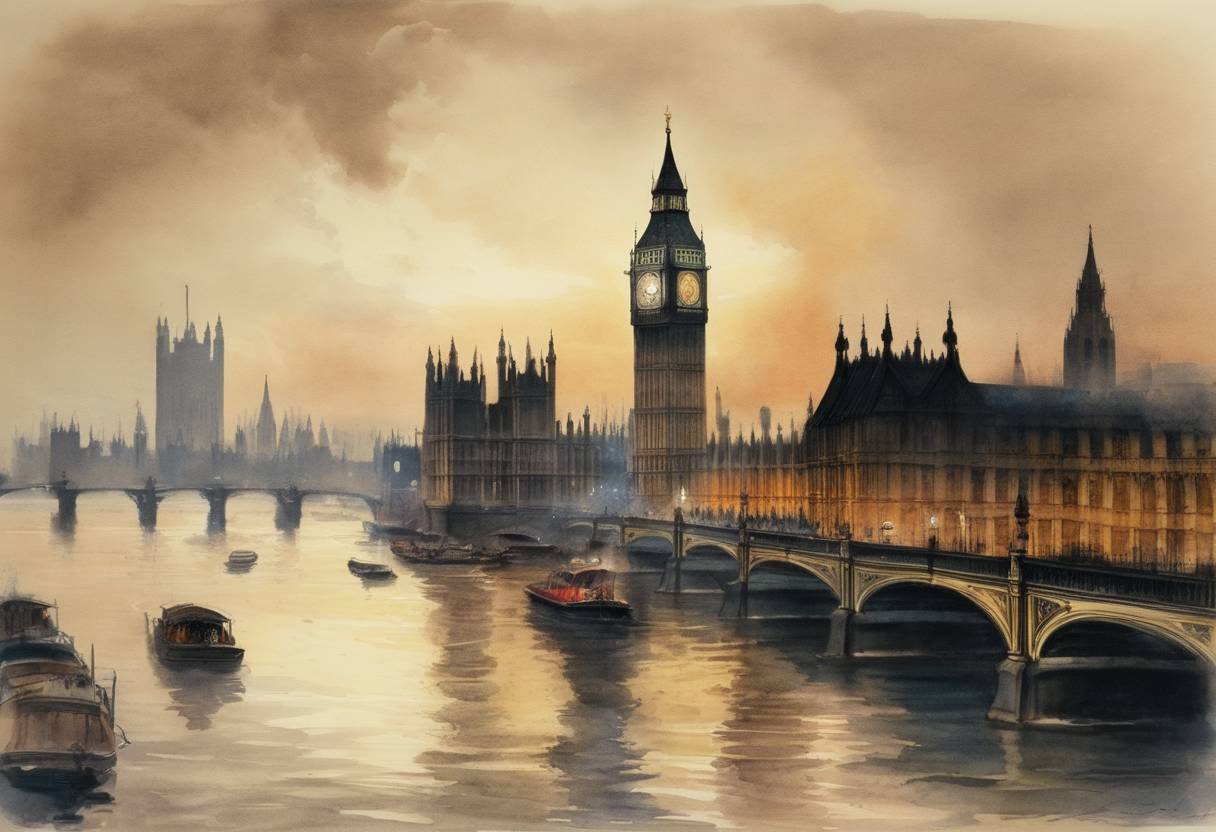
On August 15, 1859, Big Ben, the Great Bell of the clock at the north end of the Palace of Westminster in London, resounded for the first time. This iconic bell, part of the Great Clock of Westminster, became a symbol of the UK’s parliamentary democracy and a celebrated timekeeping institution throughout the world.
The reconstruction of the Palace of Westminster was necessitated after a devastating fire in 1834. In its redesign, Charles Barry, the architect, incorporated a clock tower, whose plans were further developed with input from expert clockmaker Edward John Dent and astronomer George Airy. The task of casting the Great Bell was complex, with the first attempt resulting in a cracked bell. The second and successful casting, weighing 13.5 tons, was carried out at the Whitechapel Bell Foundry.
The clock tower itself, the Elizabeth Tower, was completed in 1859. On August 15, the Great Bell, having already cracked once more after a testing phase, famously rang out in a moment that would mark its enduring presence as a London landmark. Even with the initial damage, adjustments were made to the hammer making the bell usable for its debut chime, a sound that quickly became synonymous with London.
Big Ben’s ringing not only marked time but also became a part of both London’s identity and its soundscape. It still serves as the iconic auditory signal for numerous political and cultural broadcasts. Despite challenges, including WWII and repairs over the years, the bell and its clock tower have stood resilient.
The tolling of Big Ben symbolizes continuity and endurance in the face of adversity. It continues to draw both historical interest and fascination, resonating globally through its broadcasts and imagery, embedding itself deeply into British cultural heritage.
Source: www.parliament.uk