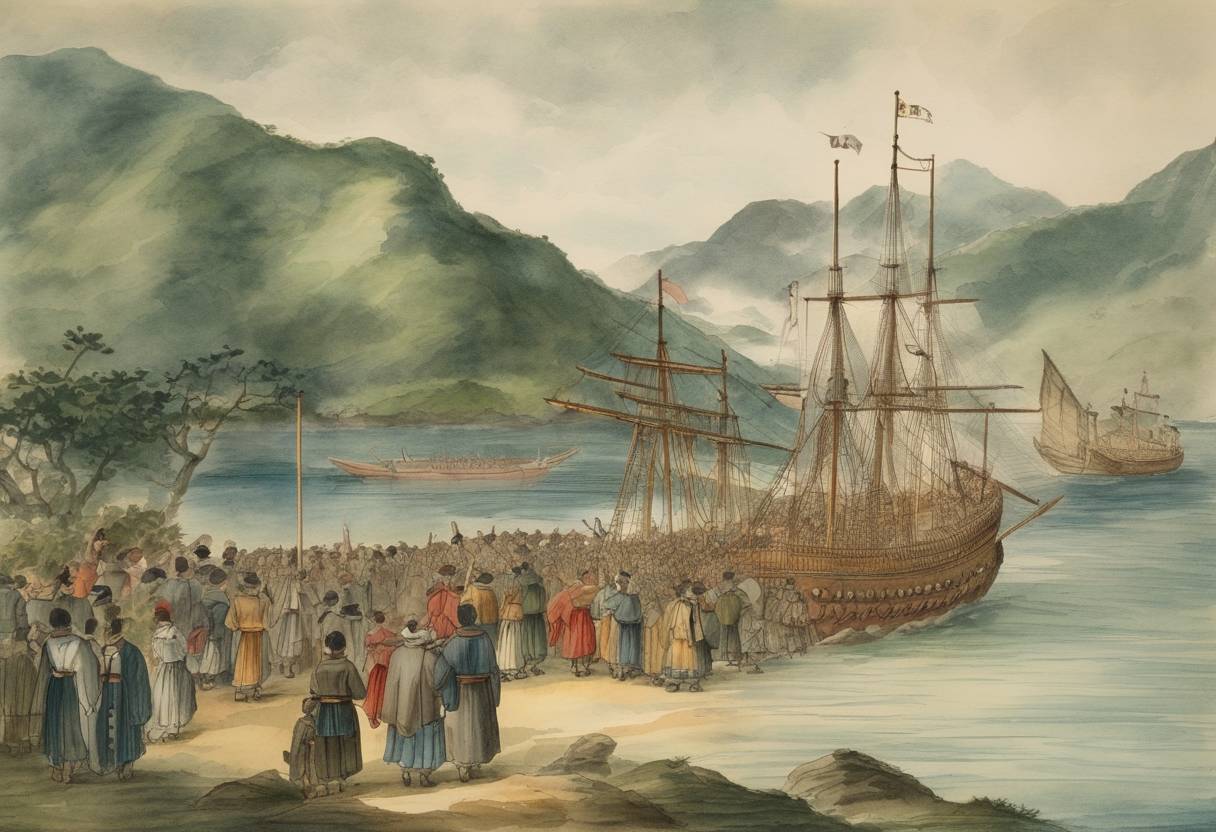
Francis Xavier Arrives in Kagoshima, Japan - August 15, 1549
On August 15, 1549, Francis Xavier, a co-founder of the Society of Jesus (Jesuits), arrived in Kagoshima, Japan, marking a pivotal moment in the history of Christianity and cultural exchange between Europe and Japan. His arrival signaled the beginning of Christian missionary work in the region.
Background
Francis Xavier was a Spanish Roman Catholic missionary and one of the first members of the Jesuit order, which was founded in 1534. The Jesuits were dedicated to missionary work and education, aiming to spread Christianity across the world. Xavier had already undertaken missionary journeys to India and the Malay Archipelago before setting his sights on Japan.
Events Leading Up to Xavier’s Arrival
Xavier’s mission to Japan came after learning about the country from a Japanese man named Anjirō (later baptized as Paulo de Santa Fe), whom he met in Malacca, in present-day Malaysia. Anjirō provided Xavier with information about Japanese culture, language, and the possibility of introducing Christianity to the Japanese people.
With this knowledge, Xavier set sail from Malacca with a small number of companions, including Anjirō, and after several months of perilous travel, they reached Kagoshima, Anjirō’s hometown.
Xavier’s Mission in Japan
Upon his arrival, Xavier was warmly received by the local authorities, including the daimyo (feudal lord) of Kagoshima. This reception was partly due to the diplomatic skills and connections of Anjirō, as well as interest in the goods and knowledge that Xavier and the Jesuits brought with them from Europe.
Xavier began preaching Christianity and established the first Christian community in Japan. He dedicated himself to learning Japanese and translating religious texts, although the language barrier initially posed a significant challenge.
Significance and Consequences
Xavier’s mission laid the foundation for future Christian missionary work in Japan. His efforts led to the establishment of Christian communities, which grew over the following decades. His work also initiated a period of cultural exchange between Europe and Japan, influencing both regions.
Over time, the missionaries gained a considerable following, but they also faced persecution as the Japanese authorities became wary of their influence and intentions. Despite this, Christianity had a lasting impact on Japanese culture and history, as it introduced new ideas and practices.
Xavier’s journey to Japan is remembered as a significant chapter in the history of the Jesuits and the spread of Christianity in Asia. His legacy is celebrated for his dedication to his faith and his role in fostering early interactions between different cultures and religions.