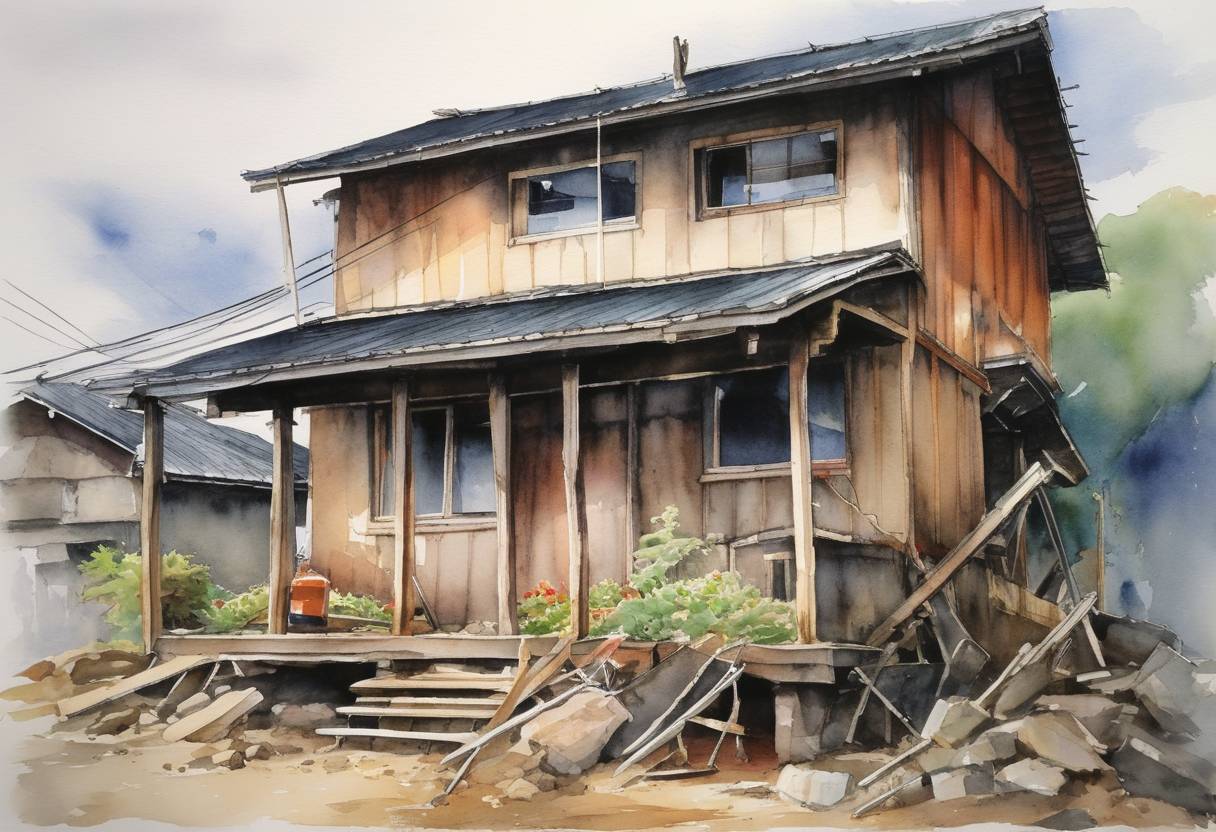
Earthquake in Northern Japan on August 23, 2003
On August 23, 2003, a powerful earthquake measuring 7.2 on the Richter scale struck the northern region of Japan at 4:50 PM local time. The epicenter of the quake was located off the coast of Miyagi Prefecture, approximately 330 kilometers (205 miles) northeast of Tokyo.
Impact and Casualties
The earthquake resulted in the deaths of at least two people and caused injuries to more than 240 individuals. The disaster struck with considerable force, causing extensive damage to infrastructure, including roads and buildings. There were reports of landslides, and some train services were disrupted due to the tremors.
Geographic and Seismic Context
Japan, situated along the Pacific Ring of Fire, is a zone of high seismic activity, and experiences frequent earthquakes. The 2003 event was significant, reminding residents and authorities of the persistent seismic threats facing the nation. Structures in Japan are generally built to withstand earthquakes, but this quake’s strength caused considerable concern among the population.
Emergency Response
Following the earthquake, emergency response teams quickly mobilized to assist with rescue operations and provide medical care to those affected. The Japanese government and local authorities worked to assess the damage and assist in recovery efforts. Public safety announcements and updates were issued to keep the local and national populace informed about aftershocks and safety measures.
Broader Implications
The August 23, 2003, earthquake highlighted the need for ongoing vigilance and preparedness in regions prone to seismic activity. It served as a catalyst for reviewing and enhancing earthquake-resistant design standards and emergency procedures in Japan.
This event underscored the dynamic geological environment of Japan and the continued investment necessary in disaster preparedness and mitigation strategies to protect lives and infrastructure.