The First Flight of the Douglas DC-3 - May 15, 1935
1935 · Santa Monica, United States
The first flight of an aircraft using the Douglas DC-3 took place, revolutionizing air transport across the globe.
August 23, 1954
The first flight of the Lockheed C-130 Hercules took place. This aircraft became one of the most successful and versatile military transport planes in history.
Burbank, United States | Lockheed Corporation
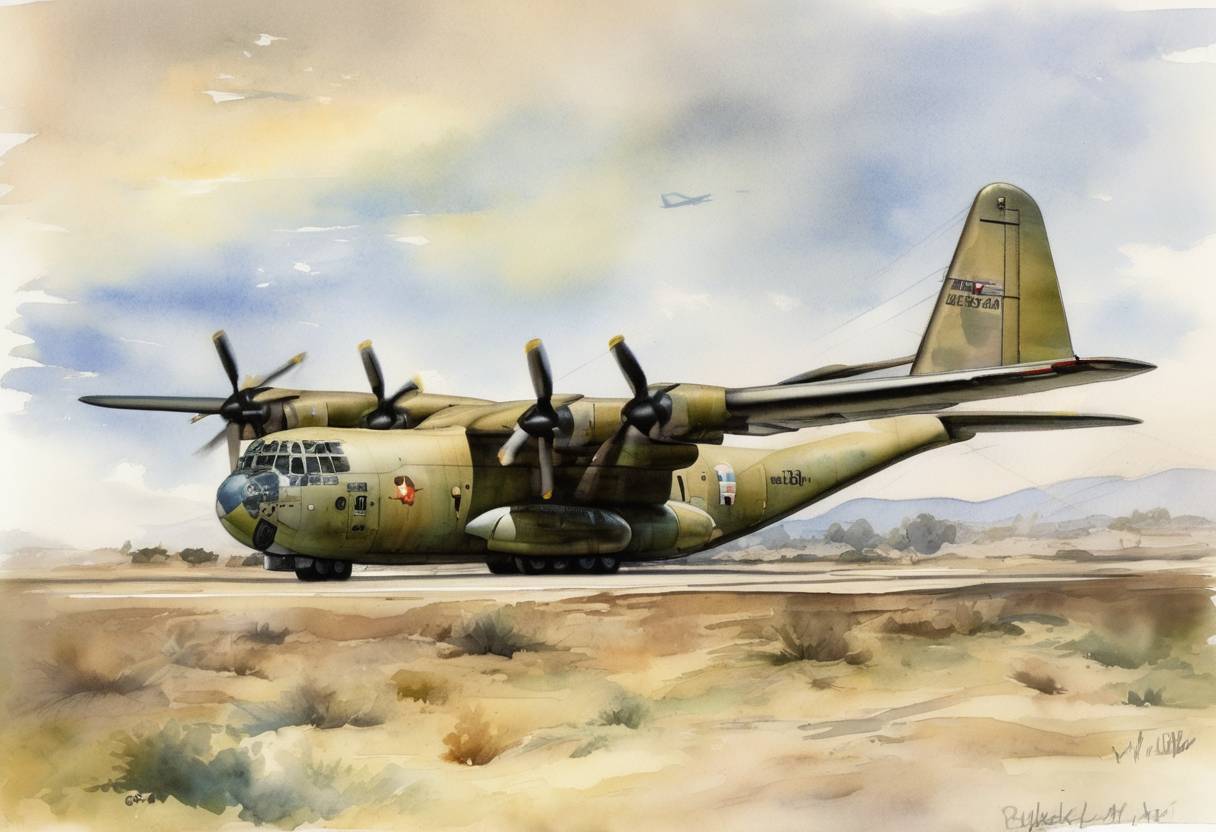
The Lockheed C-130 Hercules, one of the most renowned military transport aircraft in history, took to the skies for its maiden flight on August 23, 1954. This event marked the beginning of an aircraft’s legacy renowned for its versatility and durability.
In the early 1950s, the United States Air Force identified the need for a new transport aircraft that could operate from unpaved runways and provide reliable logistical support in a variety of military operations. The design requirements emphasized the need for the aircraft to carry large payloads over long distances rapidly, accommodating both personnel and equipment in diverse environments.
Lockheed, under the leadership of engineer Willis Hawkins and pilot Stan Beltz, responded to this call with the C-130 design, which integrated innovative features like a rear loading ramp and a strong, wide fuselage. The concept was tailored to ensure flexibility in high-pressure logistical scenarios.
The first flight took place at the Lockheed Air Terminal in Burbank, California. Piloted by Stan Beltz, the C-130 prototype demonstrated its potential right from the start, showcasing the ability to perform short takeoffs and landings—key elements that would define its future success in military operations.
The C-130 was powered by Allison T56 turboprop engines, which provided the power necessary for the aircraft’s impressive lift capacity. Its rugged construction allowed it to operate from rough airstrips, and its range and payload capacity made it an ideal choice for a variety of missions, from troop transport to disaster relief and medical evacuation.
The C-130 Hercules quickly gained a reputation as one of the most versatile and reliable aircraft in military aviation history. Over the decades, it has been adapted into multiple variants, fulfilling roles such as weather reconnaissance, search and rescue, air-to-air refueling, and more.
The C-130 has seen action in numerous conflicts and humanitarian efforts worldwide, underscoring its pivotal role in both combat scenarios and peacetime operations. Its impact is highlighted by its continued use and production, with many original models still in service today.
In summary, the first flight of the Lockheed C-130 Hercules on August 23, 1954, marked the launch of an aircraft that would become a foundational asset in military transport and a symbol of engineering excellence. Its enduring service record attests to its unparalleled design and functionality.
Source: en.wikipedia.org