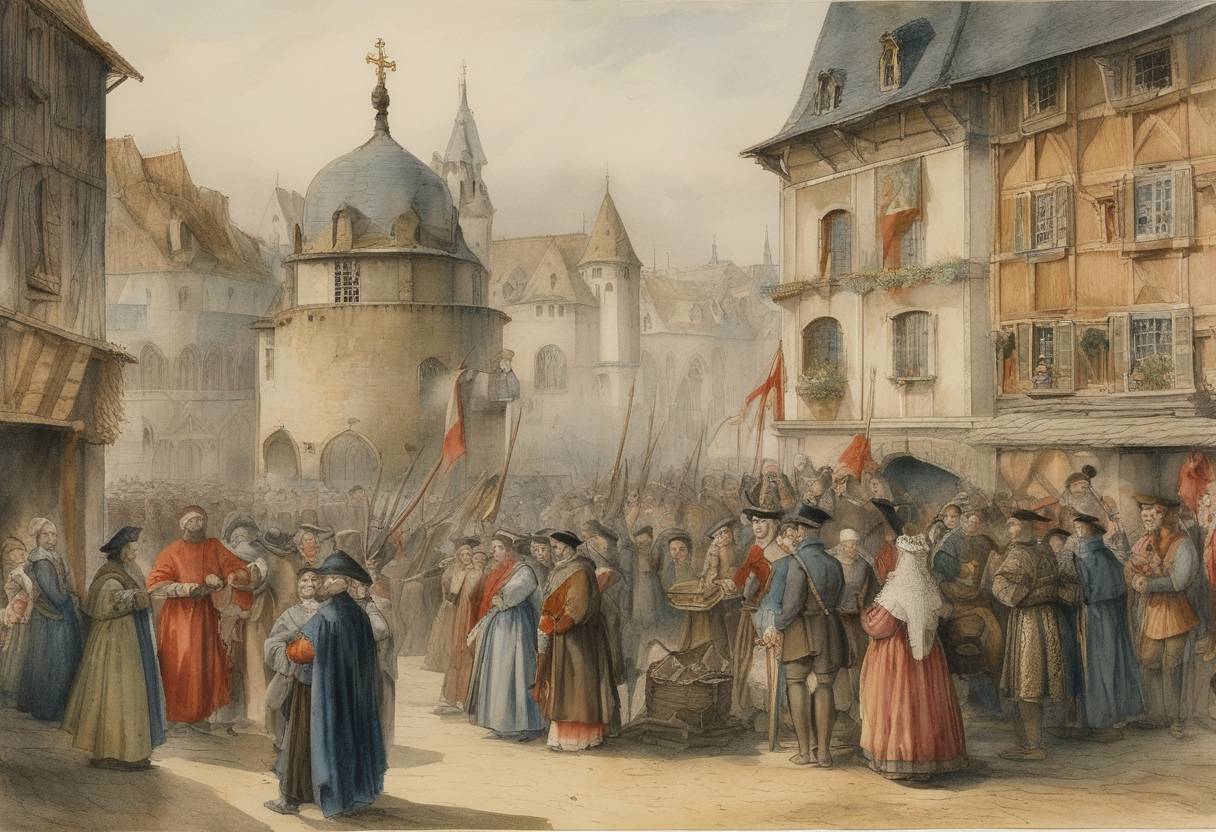
The Peace of Longjumeau: February 16, 1568
The Peace of Longjumeau, signed on February 16, 1568, marked a temporary cessation of hostilities in the complex and volatile series of conflicts known as the French Wars of Religion. These wars, which raged intermittently from 1562 to 1598, were primarily fought between the Catholic majority and the Protestant Huguenots. This peace agreement sought to end the Second War of Religion, which had erupted in September 1567.
Background
The French Wars of Religion were deeply rooted in both religious and political disputes. The Huguenots, influenced by Calvinist teachings, sought freedom to practice their faith and challenge the Catholic establishment, which was supported by the powerful Guise family and largely aligned with the Crown. By 1567, tensions had risen due to the St. Bartholomew’s Day Massacre of 1562, and failed peace attempts led to the outbreak of the Second War of Religion.
Key Provisions
The peace treaty, largely a reinstatement of the Edict of Amboise from 1563, granted several concessions to the Huguenots, including:
- Freedom of Worship: Allowed within their own private settings and public worship was permitted in specific locations, especially in areas where Protestantism was already firmly established.
- Political Concessions: Huguenots were allowed to maintain garrison towns, essentially granting them certain strongholds as guarantees of safety and autonomy.
- Return of Confiscated Property: Properties seized during the war were to be returned to both sides.
Consequences and Significance
Though the Peace of Longjumeau temporarily halted violence, it was fraught with mistrust on both sides. The peace terms were seen as a way to regroup rather than a genuine attempt at reconciliation. The provisions did little to address the deep-seated animosities and differing visions of France’s future, leading to the Third War of Religion before year’s end.
Conclusion
The Peace of Longjumeau was a part of the larger cyclical pattern of negotiations and conflicts that marked the French Wars of Religion. It failed to establish a long-lasting resolution, highlighting the profound divisions within French society. These tensions would only culminate much later with the Edict of Nantes in 1598, which granted substantial rights to the Huguenots and attempted to establish enduring religious peace in France.