The Storm of 1360: Impact on the English Siege of Paris
1360 · Paris, France
A major storm forces the English army, led by King Edward III, to abandon its siege of Paris and retreat to the safety of the English-held territory of Calais.
March 24, 1199
Richard I (the Lionheart), King of England, was wounded by a crossbow bolt during the siege of the castle of Châlus-Chabrol in France.
Châlus, France | Kingdom of England
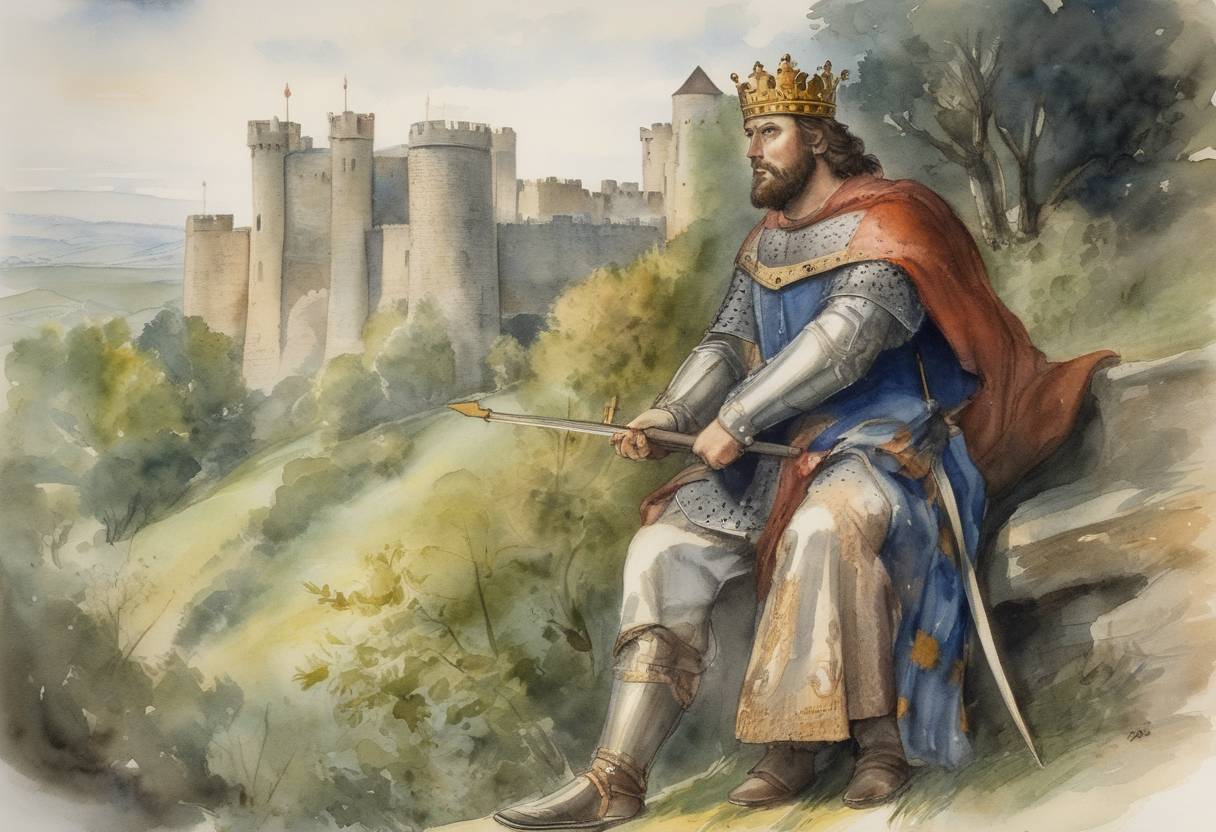
On March 24, 1199, King Richard I of England, famously known as Richard the Lionheart, was wounded by a crossbow bolt during the siege of the castle of Châlus-Chabrol, in the Limousin region of France. This incident occurred amidst the complex backdrop of the Angevin Empire’s territorial disputes and Richard’s ongoing military campaigns in France.
Richard I, reigning as King of England from 1189 to 1199, was a renowned military leader and warrior. His tenure was marked by frequent campaigns to protect and expand his territories, both during the Third Crusade and in his frequent conflicts with neighboring France. By the late 1190s, Richard was engaged in defending his holdings in continental Europe.
The castle of Châlus-Chabrol belonged to the Viscount of Limoges, a vassal who had rebelled against Richard’s authority. This rebellion was part of a larger conflict involving various rebellious French nobles aligned against the Angevin hegemony, in a landscape where allegiances often shifted.
During the siege of Châlus-Chabrol, Richard I personally oversaw the operations. On that fateful day, while he was reportedly inspecting the progress of the siege without his protective chainmail, Richard was struck in the shoulder by a crossbow bolt. The wound, though initially not considered immediately fatal, soon became gangrenous.
The crossbow bolt was shot by a defender of the castle, often identified as a young boy or man, depending on various historical sources. Despite the imminently fatal wound, Richard’s legendary chivalry was evident when he ordered that the shooter be pardoned.
Richard’s wound became severely infected, leading to his untimely death on April 6, 1199, just days after being struck. His death marked a significant turning point, effectively weakening the Angevin Empire. It left his brother John to inherit the throne of England amidst political turmoil and challenges, reshaping the future of English and French territories.
Richard the Lionheart’s legacy endures as one of the most celebrated English monarchs, a status cemented not only by his military exploits but also by his chivalric conduct, as demonstrated in his final days. The siege of Châlus-Chabrol remains a poignant episode, illustrating both the perils of medieval warfare and the lasting impact of Richard’s reign.
Source: en.wikipedia.org