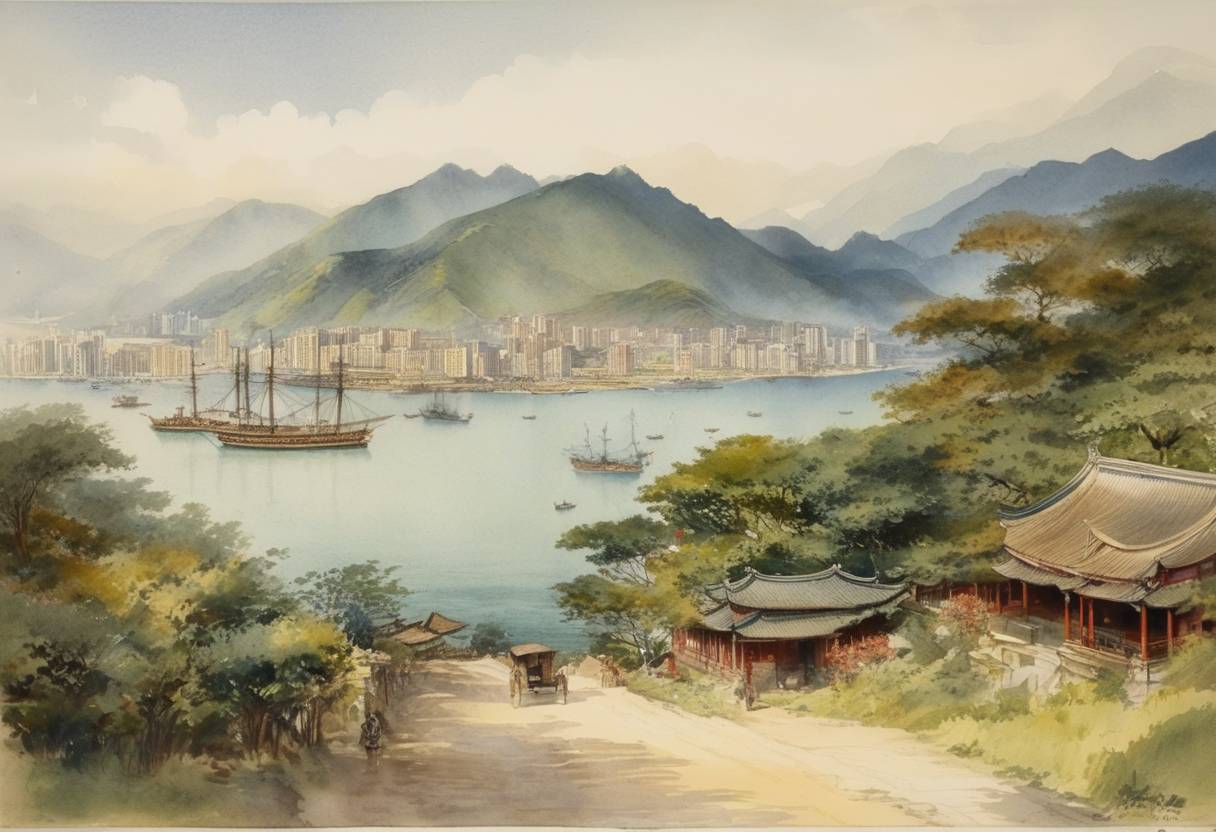
The Second Convention of Peking: Leasing of Hong Kong’s New Territories
On June 9, 1898, the Second Convention of Peking was signed, marking a significant moment in the history of Hong Kong and British colonial expansion in East Asia. The agreement resulted in the Qing Dynasty of China leasing the New Territories, an area extending north from the Boundary Street to Shenzhen River, along with adjacent islands, to the United Kingdom for a period of 99 years.
Context and Background
By the late 19th century, Hong Kong had already become an important British Crown Colony, with the original cession of Hong Kong Island occurring in 1842 under the Treaty of Nanking, followed by the Kowloon Peninsula under the Convention of Peking in 1860. The British sought to ensure the security and expansion of Hong Kong, driven by increasing trade ambitions and strategic military considerations.
The demand for additional land became pressing as the colony’s population and economic activities grew. The geopolitical environment of the era was characterized by intense colonial competition, with Western powers seeking to expand their spheres of influence across China.
Key Provisions of the Convention
Lease Terms: The treaty stipulated that the New Territories would be leased to Britain for 99 years, starting from July 1, 1898, to June 30, 1997. The leased area included 365 square miles of land.
Territorial Composition: The New Territories comprised the rural area south of the Shenzhen River, the northern extension of Kowloon, and over 200 outlying islands, including Lantau Island.
Significance and Impact
Strategic Importance: The acquisition of the New Territories was crucial for the defense and logistical facilitation of Hong Kong’s increasing economic activities. It provided the space needed for agriculture, housing, and the development of infrastructure, accommodating the colony’s burgeoning population and trade demands.
Long-term Consequences: The lease fundamentally shaped Hong Kong’s geographical and demographic expanse. It laid the groundwork for the complex political negotiations that culminated in the Sino-British Joint Declaration of 1984, which set the stage for the eventual handover of Hong Kong back to China in 1997.
The Second Convention of Peking encapsulates a pivotal episode of colonial dealings in Asia, reflecting the era’s imperial dynamics and the enduring influence of those decisions on contemporary geopolitical landscapes.