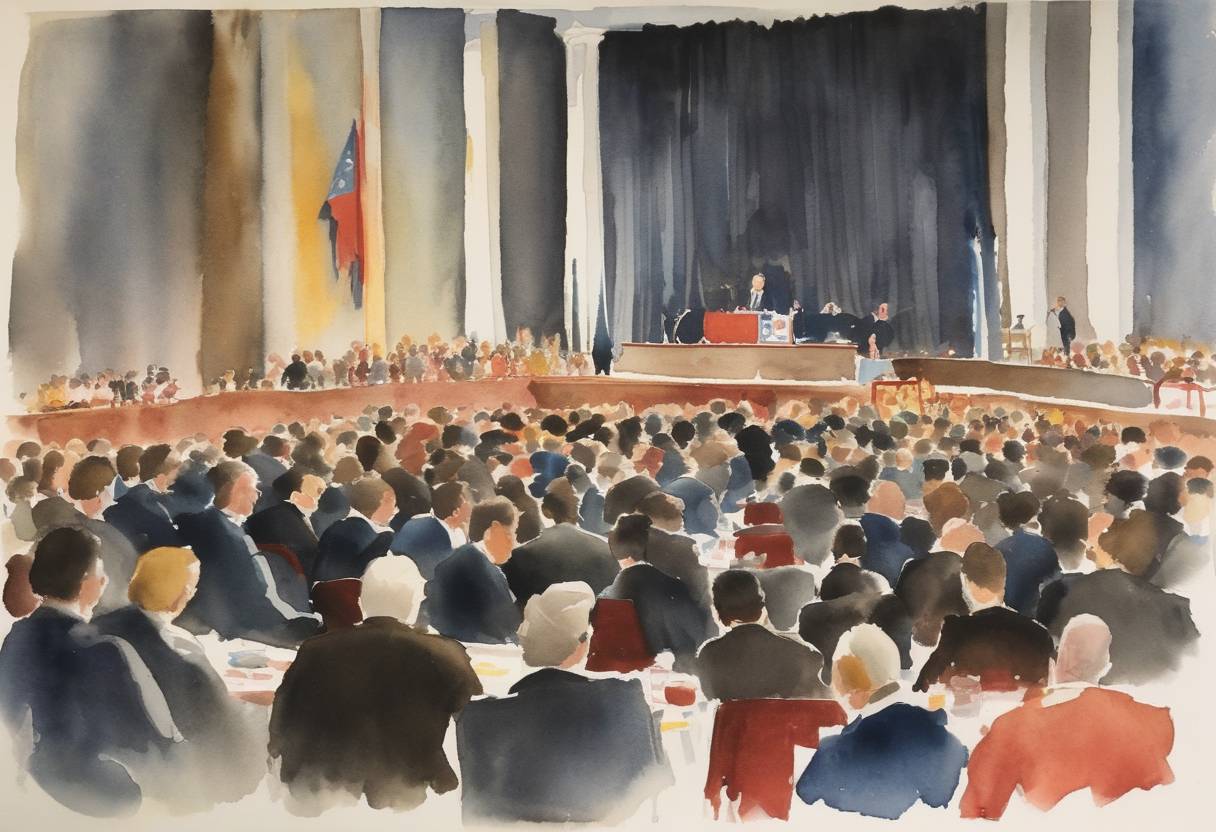
Reinforcement of Hardline Policies at the 23rd National Conference of the Communist Party of Czechoslovakia
On November 3, 1978, the Communist Party of Czechoslovakia held its 23rd National Conference in the midst of the period known as the “Normalization” era — a time characterized by the reassertion of hardline Communist policies following the Prague Spring of 1968. During this conference, party chairman Gustav Husák delivered a critical speech that underlined the regime’s stance against reform or liberalization efforts.
Context Leading to the Conference
The Prague Spring of 1968 was a moment of political liberalization in Czechoslovakia, which introduced reforms aiming to create “socialism with a human face.” However, these reforms were met with disapproval from the Soviet Union, leading to the invasion of Czechoslovakia by Warsaw Pact troops in August 1968. The intervention sought to halt the reforms and reinstate strict Communist control, marking the beginning of the Normalization era.
Gustav Husák, who rose to power in the aftermath, became the face of the Czechoslovak Communist Party’s effort to “normalize” the political environment, ensuring it conformed to Soviet expectations. His leadership focused on removing reformists from positions of power and repressing political dissent.
Husák’s Speech and Policies
In his address at the National Conference, Husák warned against any attempts to revisit the reforms of the Prague Spring. He emphasized the dangers of liberalization, presenting it as a potential threat to the socialist system and sovereignty of the nation. Husák reinforced the party’s commitment to maintaining strict ideological conformity and aligning closely with Moscow’s directives.
Husák’s speech was not only an affirmation of the party’s existing policies but also served as a deterrent against any lingering reformist sentiments within the country. By warning against “revisionist” activities, he sought to ensure that the political environment remained stable and free of the challenges that characterized the more open and reform-minded stance of the 1960s.
Aftermath and Historical Impact
The stance reaffirmed at the conference by Husák’s speech left a profound impact on Czechoslovak society and politics. The era of Normalization continued to suppress political freedoms and curb civil liberties until the Velvet Revolution in 1989. The policies reinforced at the 23rd National Conference contributed to the longevity of the Communist regime in Czechoslovakia and highlighted the tensions between maintaining strict ideological control and the rising aspirations for freedom and reform that eventually culminated in the country’s peaceful transition to democracy.