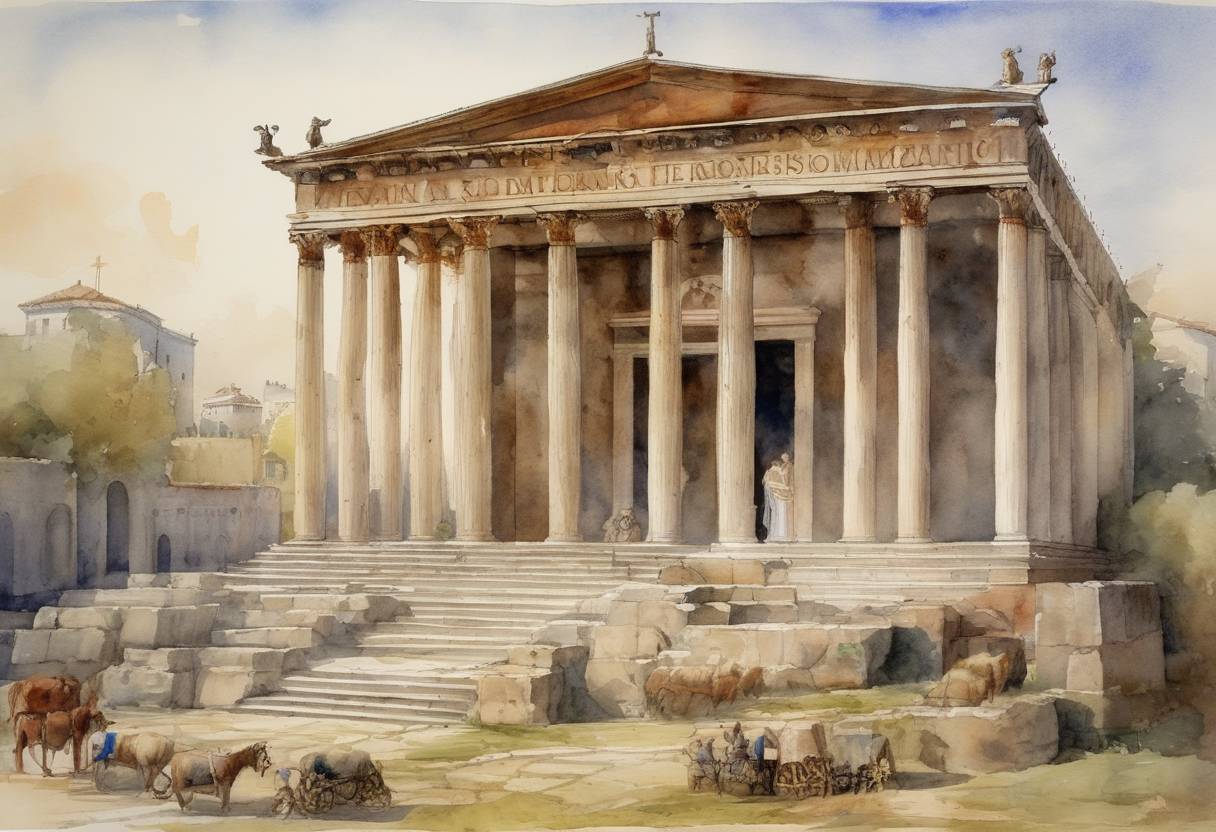
The Edict of Thessalonica - February 28, 380
On February 28, 380, the Roman Empire witnessed a significant transformation in its religious landscape with the issuance of the Edict of Thessalonica. This decree, officially known as “Cunctos populos,” was promulgated by the joint Roman Emperors Theodosius I, Gratian, and Valentinian II. The edict was pivotal in establishing Nicene Christianity as the official state religion of the Roman Empire.
Historical Context
Before the edict, the Roman Empire was a milieu of varied religious beliefs, including the traditional Roman religions, various pagan practices, and numerous Christian sects. The Council of Nicaea in 325 had previously attempted to unify Christianity under a single creed, endorsing the Nicene Creed, which articulated the consubstantiality of the Son with the Father as fundamental Christian doctrine. Despite this, Arianism and other interpretations of Christianity continued to gain followers, creating doctrinal and political tensions within the Empire.
Provisions of the Edict
The Edict of Thessalonica was issued from Thessaloniki, a significant Macedonian city in the Roman Empire, and was addressed to the people of Constantinople. It decreed that all Roman subjects should adhere to the faith that Peter the Apostle had delivered to the Romans, which was in the form of the Nicene Creed. This creed focused on the Trinity and the divine nature of Jesus Christ, aligning the Empire’s official religion with orthodox Nicene Christianity.
Key Provisions:
- Declaring the Trinitarian belief as the sole accepted faith: The edict prescribed a uniform Christian orthodoxy, mandating that all subjects of the Empire follow the religion transmitted by Saint Peter to the Romans.
- Recognition of the bishop of Rome (the Pope) and the bishop of Alexandria as rightful authorities: The edict solidified the positions of these two sees as doctrinal authorities in matters of faith.
- Labeling of other Christian beliefs as heretical: It denounced non-adherents of Nicene Christianity, termed “Foolish madmen,” and stripped them of the right to call their assemblies churches. Non-conformists faced the prospect of imperial retribution.
Aftermath and Significance
The implementation of the Edict of Thessalonica marked an inflection point in the religious history of the Roman Empire. It not only reinforced the Nicene Creed as the foundational doctrine of Roman Christianity but also aligned the religious establishment closely with imperial authority. This fusion of church and state laid the groundwork for the medieval European system where religion and governance became extensively intertwined.
Moreover, the establishment of Nicene Christianity as the state religion led to increased persecution of heresies and set a precedent for future religious policy in the Empire and beyond. It cemented Theodosius I as a central figure in shaping orthodox Christian doctrine and institutionalizing Christianity’s pivotal role in the Roman, and subsequent Byzantine, polities.
The Edict of Thessalonica is a monumental declaration in the annals of history, underscoring the transition from paganism and religious diversity towards a unified Christian orthodoxy that would have enduring impacts through the ages.