Launch of the USS Enterprise (CVN-65)
1960 · Newport News, United States
The USS Enterprise, the world's first nuclear-powered aircraft carrier, was launched in Newport News, Virginia.
February 28, 1893
The USS Indiana is launched as the U.S. Navy's first modern battleship.
Philadelphia, United States | United States Navy
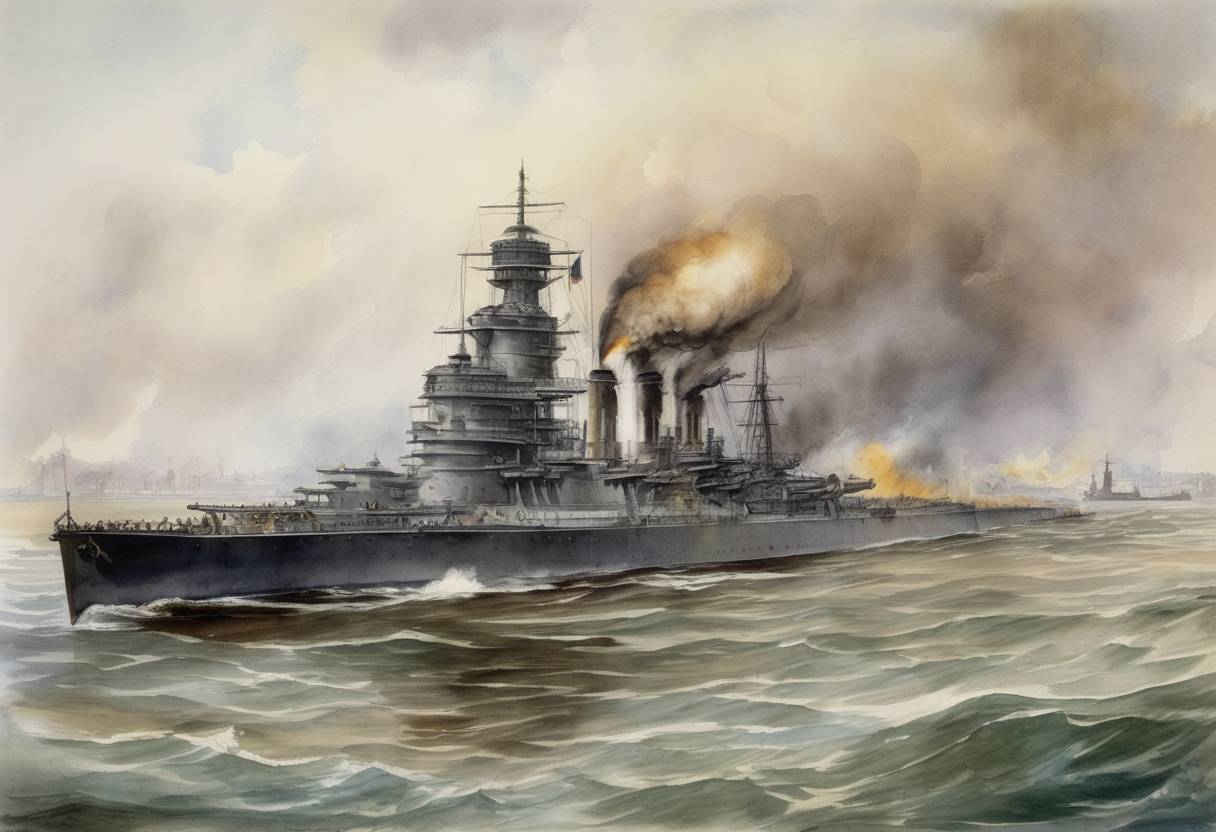
The USS Indiana (BB-1) was launched on February 28, 1893, marking a significant milestone in the history of the United States Navy as its first modern battleship. The launch took place at the William Cramp & Sons Ship and Engine Building Company in Philadelphia, Pennsylvania. This event heralded a transformation in naval warfare and signified America’s growing technological capabilities and ambitions on the global stage.
The USS Indiana was designed as part of the U.S. Navy’s shift towards modern steel battleships that could project power far beyond American shores. The ship featured a displacement of approximately 10,288 tons and was equipped with heavy armor and advanced armaments for the era:
The launching of the USS Indiana was part of the broader naval expansion initiated by the United States in the late 19th century, steered by influential figures such as Secretary of the Navy Benjamin F. Tracy and Captain Alfred Thayer Mahan. This expansion aimed to transition the Navy from a coastal defense force to a powerful, blue-water navy capable of global reach.
USS Indiana played a crucial role during the Spanish-American War in 1898, participating in key engagements such as the Battle of Santiago de Cuba. Its presence and performance during the war underscored the strategic importance of modern battleships in naval combat and contributed to the defeat of the Spanish fleet.
The vessel was decommissioned in 1919 after serving in both active and reserve capacities. While the Indiana was eventually stricken from the Naval Vessel Register and used as a target for bombing tests in the 1920s, its legacy as a pioneering force in the modernization of the U.S. Navy endured. The ship symbolized the transition to a new era of naval architecture and strategy that would shape American military policy for decades to come.
Source: en.wikipedia.org