Polish Counter-Offensive in the Battle of Warsaw
1920 · Warsaw, Poland
Polish forces under Józef Piłsudski launched a counter-offensive during the Battle of Warsaw amidst the Polish-Soviet War.
August 21, 1331
The Battle of Płowce, part of the Polish-Teutonic Wars, was fought between the Kingdom of Poland and the Teutonic Order, ending with a Polish victory.
Płowce, Poland | Kingdom of Poland
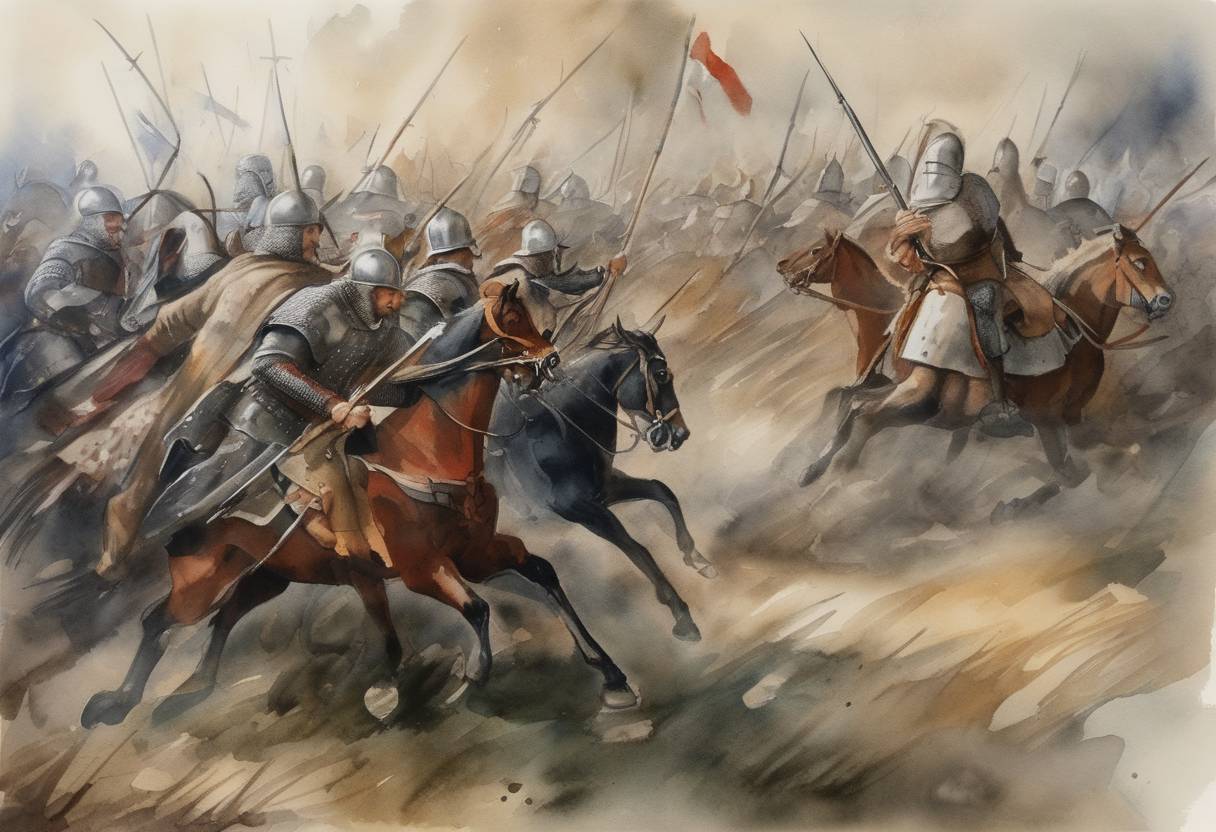
The Battle of Płowce was a significant military engagement during the Polish-Teutonic Wars, occurring on September 27, 1331. This battle was part of ongoing conflicts between the Kingdom of Poland and the Teutonic Order.
The early 14th century was marked by territorial conflicts and power struggles in Eastern Europe. The Teutonic Order, a medieval Catholic military order, had been expanding its territories into the Baltic region, often clashing with the Kingdom of Poland. The Polish monarch, Władysław I the Elbow-high, sought to reclaim lands and assert dominance over territories lost to the Order. The rising tensions culminated in the clash at Płowce, situated in present-day north-central Poland.
On September 27, 1331, the Polish forces, commanded by King Władysław and reinforced by local knights, directly engaged the Teutonic Knights under the command of Dietrich von Altenburg and Otto von Lautern. The Polish army utilized their familiarity with the terrain and executed strategies that led to a successful ambush.
The encounter at Płowce ended in a Polish victory, bolstering the morale and standing of King Władysław’s reign. However, despite this important victory, the war between Poland and the Teutonic Order continued for several years, with fluctuating fortunes for both sides.
The Battle of Płowce remains an emblematic event in Polish history, symbolizing a critical confrontation in the medieval power struggles of Eastern Europe.
Source: en.wikipedia.org