The Siege of Constantinople: April 2, 1453
1453 · Constantinople, Byzantine Empire
Mehmed II, the Ottoman Sultan, began the siege of Constantinople, which would eventually lead to the fall of the Byzantine Empire.
April 5, 1453
The city of Constantinople began to prepare for the famous siege by the Ottoman Empire led by Sultan Mehmed II, which would culminate in the city's fall on May 29, 1453. This marked the end of the Byzantine Empire and had profound effects on Christian Europe, leading to shifts in trade routes and heralding the rise of the Ottoman Empire.
Constantinople, Byzantine Empire | Ottoman Empire
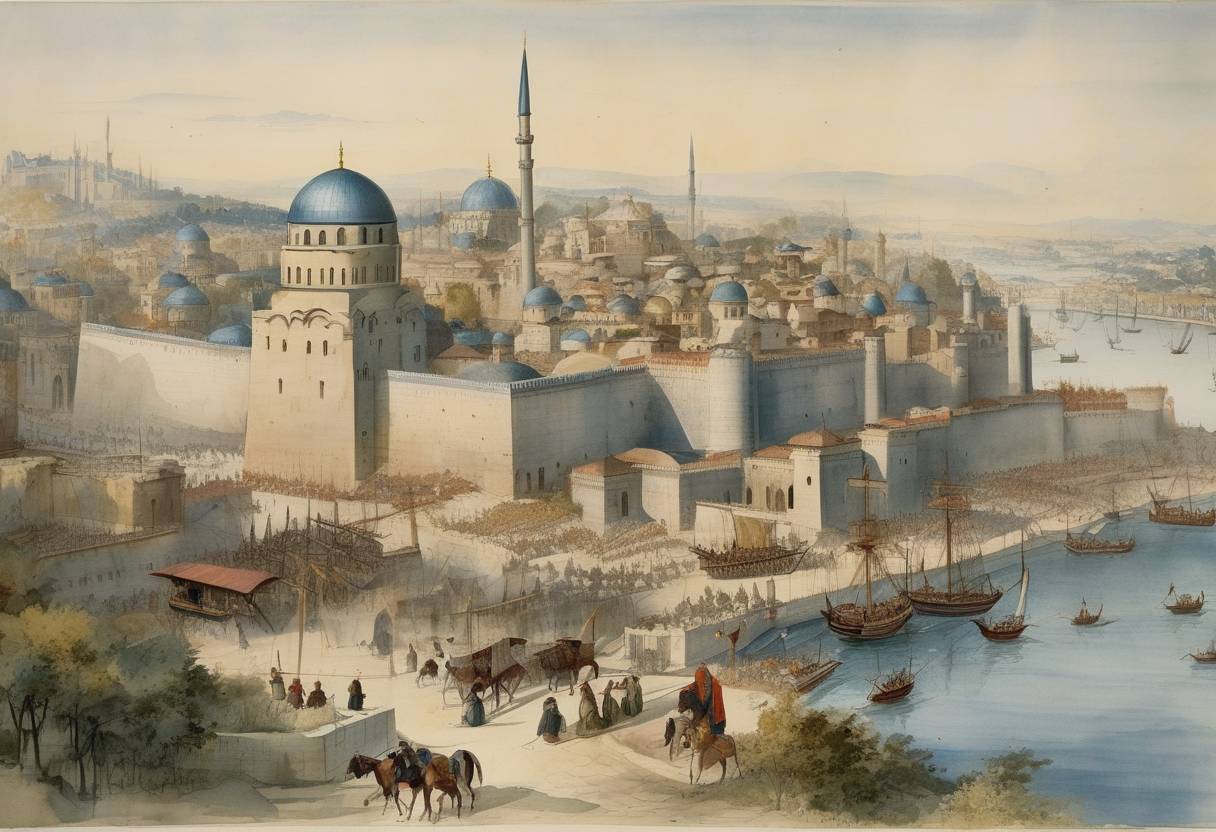
On April 5, 1453, the stage was set for a pivotal moment in world history as the city of Constantinople prepared to face an impending siege by the Ottoman Empire, led by Sultan Mehmed II. This marked the beginning of one of the most significant events during the late Middle Ages and had far-reaching ramifications for both Europe and the Middle East.
The Byzantine Empire, which once stretched across most of the Mediterranean, was by the 15th century reduced to a fragmented state largely limited to the city of Constantinople itself and a few surrounding territories. The rise of the Ottoman Empire over the previous century had put immense pressure on the Byzantine capital, which faced numerous sieges over the years but had always managed to withstand them. However, by 1453, the situation was dire; the once impregnable city was surrounded by Ottoman territory, and its resources and manpower were severely depleted.
Sultan Mehmed II, known as Mehmed the Conqueror, ascended to the Ottoman throne in 1451 and was determined to capture Constantinople. Recognizing the strategic and symbolic importance of the city, Mehmed made extensive preparations:
On April 5, 1453, Mehmed’s forces reached the walls of Constantinople and initiated the siege. The Byzantine defenders, led by Emperor Constantine XI Palaiologos, were heavily outnumbered, with only around 7,000 troops, including a significant contingent of Venetian and Genoese soldiers. Nevertheless, the city’s formidable defenses and the presence of the Genoese commander Giovanni Giustiniani Longo offered a glimmer of hope for resistance.
The fall of Constantinople, which would occur on May 29 after a relentless 53-day assault, marked the end of the Byzantine Empire, a continuation of the Roman legacy. This event is considered a historical watershed for several reasons:
The preparations and subsequent siege represented not just a military conquest, but a profound transformation in the geopolitical and cultural dynamics of the era.
Source: en.wikipedia.org