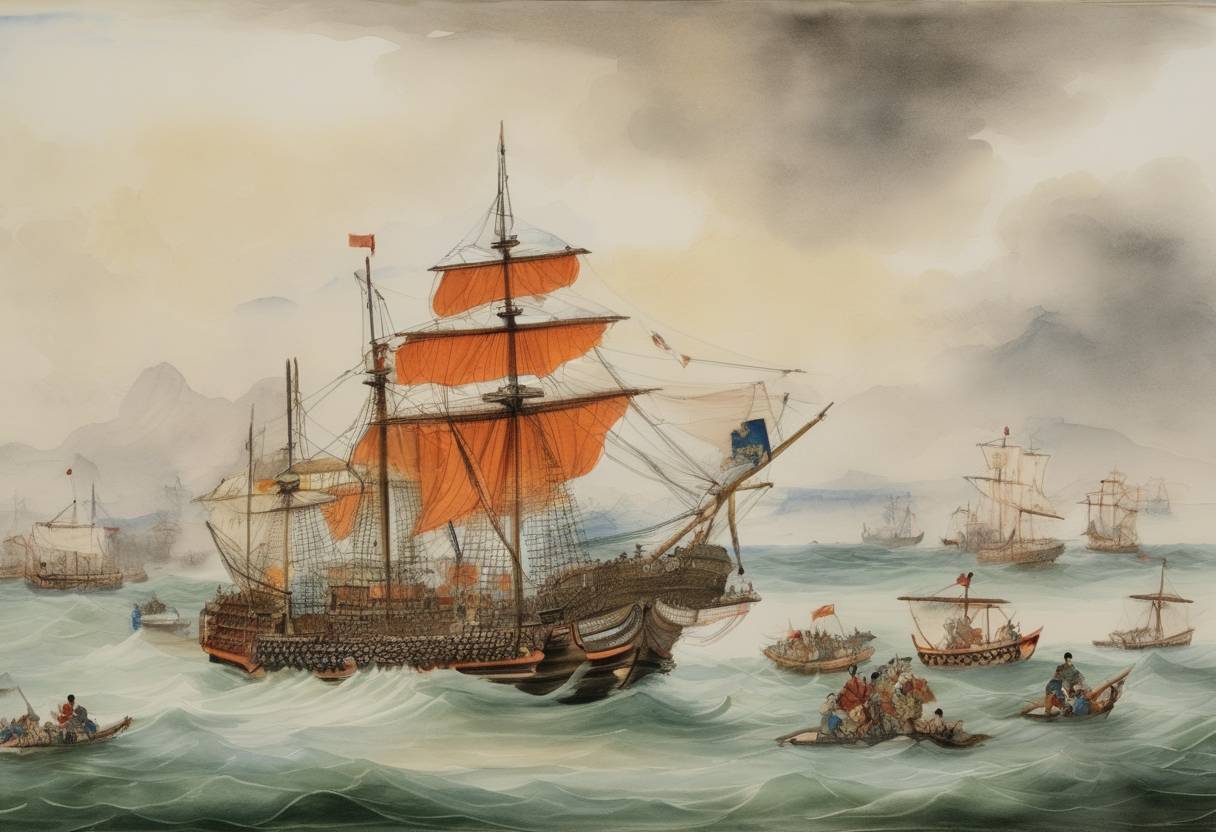
February 1, 1662: Koxinga Seizes Taiwan from Dutch Colonial Rule
On February 1, 1662, the Chinese pirate and military leader Koxinga successfully captured the island of Taiwan from Dutch colonial forces, marking the conclusion of the nine-month-long Siege of Fort Zeelandia and the end of the period known as Dutch Formosa.
Context and Background
Koxinga’s Origins: Born Zheng Chenggong, Koxinga was a loyalist to the Ming dynasty and a prominent figure opposing the invading Qing dynasty. His mixed Chinese and Japanese heritage came from a father who was a powerful pirate and trader and a Japanese mother.
Dutch Formosa: The Dutch East India Company had established a colonial presence on Taiwan since 1624, building Fort Zeelandia as their administrative and military center. The Dutch aimed to control trade routes and access resources.
The Siege
Initiation: In 1661, recognizing Taiwan’s strategic value against the Qing dynasty and the weakness of the Dutch military presence, Koxinga launched an attack. His fleet, composed of thousands of troops and ships, landed near modern-day Tainan.
Fort Zeelandia: The siege was centered on this stronghold where Frederick Coyett was the Dutch governor. Despite their technological advantages, especially in artillery, the Dutch forces were severely outnumbered.
Key Developments
Tactics and Strategy: Koxinga’s forces employed both land and sea blockades, cutting off the fort from reinforcements and supplies. Prolonged skirmishes wore down the defenders over months.
Surrender: Exhausted and unable to receive aid from Batavia (modern-day Jakarta, Indonesia), Coyett eventually negotiated a surrender. On February 1, 1662, the formal capitulation took place. The Dutch were allowed to leave the island peacefully, marking the end of Dutch governance.
Aftermath and Significance
Koxinga’s Rule: Post-victory, Koxinga established a base of operations and sought to use Taiwan as a springboard for his efforts against the Qing dynasty, though he died shortly afterwards in 1662 at the age of 37.
Legacy: This event significantly shifted power dynamics in East Asia. It marked the decline of Dutch influence on the island and laid the groundwork for future Chinese integration of Taiwan. Koxinga became celebrated as a national hero in Chinese history for resisting foreign colonization.
Broader Historical Impact
Trade and Influence: The expulsion of the Dutch paved the way for Taiwan to become more integrated into Chinese maritime trade networks.
Cultural Impact: Koxinga’s legacy is evident in the cultural narratives of resistance against colonial powers, and his story remains influential in Taiwanese, Chinese, and Japanese culture.
This event is a prominent example of the tumultuous power struggles in the region during the 17th century and reflects the wider conflicts between European colonial powers and emerging Asian sovereignties.