Adoption of the Gregorian Calendar by Greece on February 15, 1923
1923 · Athens, Greece
Greece becomes the last European country to adopt the Gregorian calendar.
February 1, 1918
Russia adopted the Gregorian calendar, effectively transitioning from the Julian calendar previously in use.
Petrograd, Russia | Russian Soviet Federative Socialist Republic
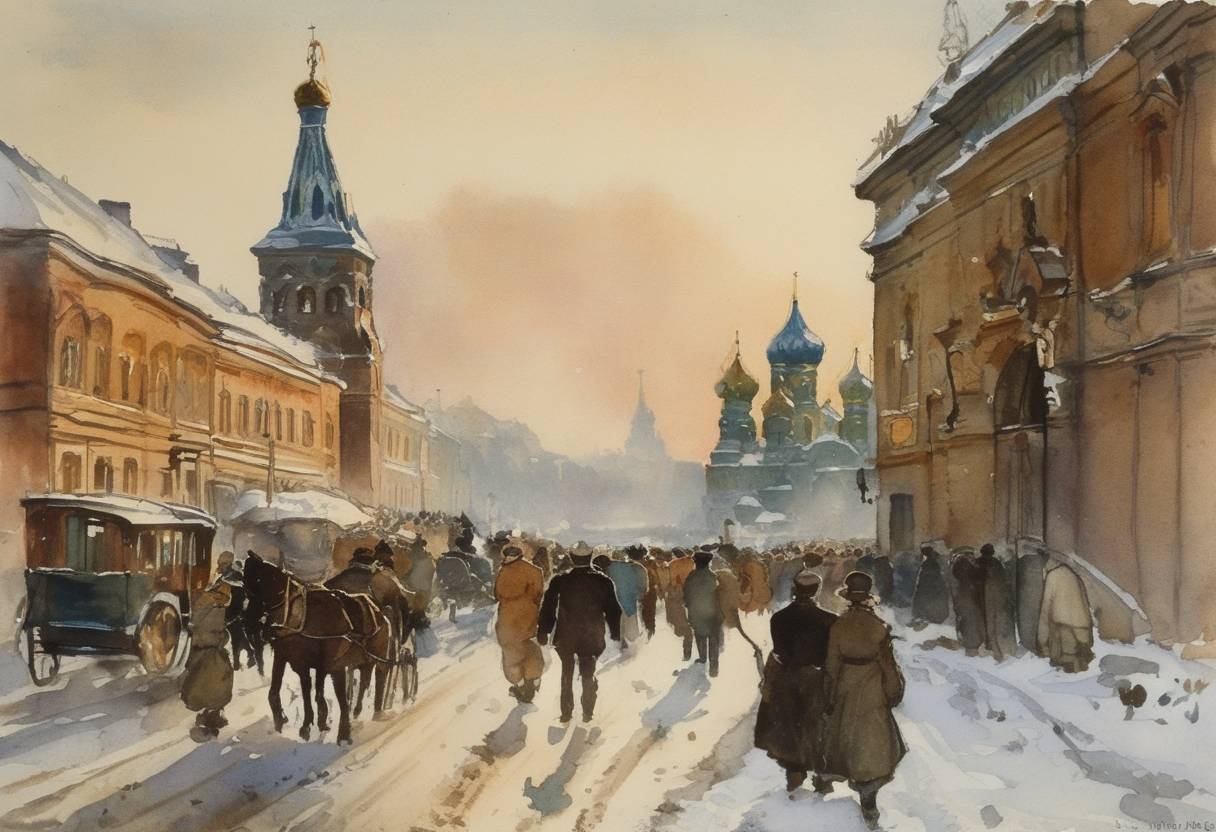
On February 1, 1918, Russia officially adopted the Gregorian calendar, aligning itself with much of the Western world and replacing the Julian calendar that had been in use since the country’s conversion to Christianity under the Eastern Orthodox Church. The change was decreed by the Council of People’s Commissars and took effect on February 14, 1918, which followed directly after January 31, 1918, according to the Julian calendar.
The Julian calendar, introduced by Julius Caesar in 45 BCE, had been the standard across Christian Europe for centuries. By the 16th century, discrepancies between the calendar year and the Earth’s solar year led to significant seasonal drift. In response, Pope Gregory XIII instituted the Gregorian calendar in 1582, which corrected the drift by adjusting leap year rules and omitting 10 days from the calendar that year.
While most Catholic and Protestant countries adopted the new calendar gradually between the 16th and 18th centuries, Eastern Orthodox countries like Russia held onto the Julian calendar due to religious and political reasons.
International Alignment: As Russia sought to modernize and engage more effectively in international diplomacy and trade, aligning its calendar system with those of other nations became imperative.
Bolshevik Reform Agenda: The Bolsheviks, having seized power in the October Revolution of 1917, viewed the calendar reform as part of broader societal reforms to dismantle old tsarist structures and integrate into the global community.
Government Decree: On January 24, Julian calendar (February 6 Gregorian), the Bolshevik government issued the decree to adopt the Gregorian calendar. This legislative act facilitated the timeline shift by advancing the calendar from January 31 directly to February 14 in 1918.
Public Adaptation: The transition impacted public life, including administration, education, and religious practices. While the Orthodox Church continued to use the Julian calendar for liturgical purposes, the civil switch marked a significant cultural and administrative adjustment.
The switch to the Gregorian calendar helped Russia synchronize with the timelines used by most countries worldwide, thus facilitating international relations. However, the cultural and religious significance of the Julian calendar endured, reflecting the ongoing tension between modernization efforts and traditional practices.
This change was one of many reforms during the early Soviet period aimed at transforming Russian society along Western lines, demonstrating the complexity of aligning various facets of Russian life with broader global norms. The dual use of both calendars persists in specific sectors, underscoring the historical impact and the enduring relevance of this move in Russian history.
Source: en.wikipedia.org