Canonization of Ignatius of Loyola and Francis Xavier
1622 · Rome, Italy
Ignatius of Loyola and Francis Xavier, founders of the Society of Jesus (Jesuits), are canonized as saints by the Catholic Church.
November 27, 1830
St. Catherine Fieschi, a prominent Italian noblewoman known for her charitable work, is canonized as a saint of the Catholic Church.
Rome, Italy | Catholic Church
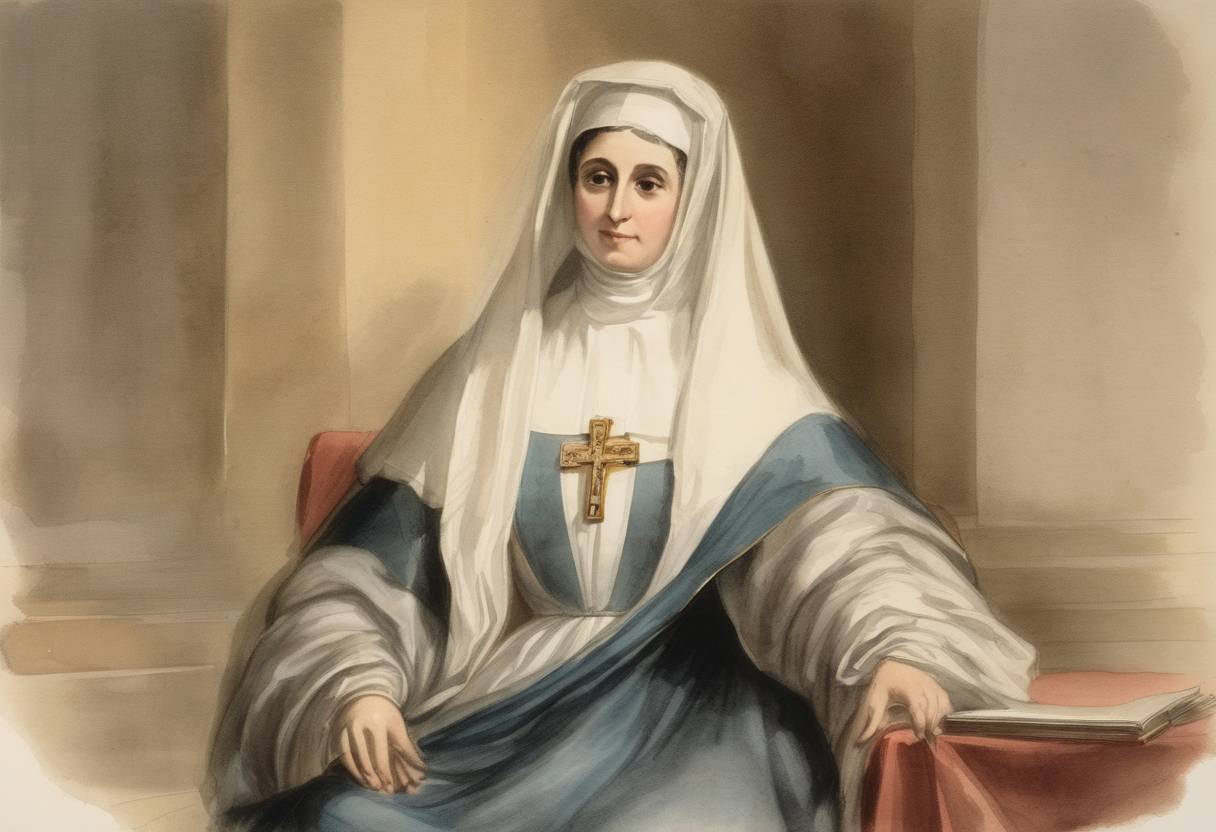
On November 27, 1830, St. Catherine Fieschi, also known as St. Catherine of Genoa, was canonized as a saint in the Catholic Church by Pope Pius VIII. She is celebrated for her deep spirituality, charitable acts, and profound influence on the care of the sick and poor during her lifetime.
Birth and Marriage: Catherine Fieschi was born into an illustrious noble family in Genoa, Italy, in 1447. In 1463, at the age of sixteen, she married Giuliano Adorno, a member of a prominent Genoese family. The marriage, beginning as an arranged one with personal challenges, ultimately led Catherine to seek solace in a deepening religious vocation.
Religious Awakening: Around the year 1473, Catherine experienced a profound religious conversion. She dedicated herself to a life of penance, charity, and prayer, becoming involved in caring for the sick at the local Pammatone Hospital, where she eventually became director.
Hospital Work: Catherine’s work at the Pammatone Hospital transformed it into a center for compassionate care. She focused on providing physical and spiritual assistance to patients, particularly during outbreaks of plague which ravaged the city during her lifetime.
Spiritual Writings: Catherine is renowned for her mystical writings, primarily “The Dialogue of the Soul and the Body” and her “Treatise on Purgatory,” which delve into her spiritual insights and experiences of divine love. These works remain influential in Catholic theology, emphasizing purification and the soul’s journey towards God.
Recognition: Catherine’s life of devotion and her written contributions to theological thought were celebrated by the Catholic Church. Her canonization on November 27, 1830, affirmed her status as a model of Christian virtue and sanctity.
Feast Day: The Catholic Church honors her feast day on September 15th, the date of her death in 1510, rather than on the date of her canonization.
Legacy: Catherine’s legacy lies in her embodiment of selfless service and profound mystical insight. Her life serves as an exemplar of transforming personal trials into opportunities for spiritual growth and service to others.
Impact on Mysticism: Her writings contribute to the understanding of Christian mysticism and the concept of purgatory, influencing both contemporary and later thought within the Church.
St. Catherine of Genoa remains a figure of veneration, not only for her sanctified life but also for her unrelenting service to the afflicted, encapsulating the spirit of Christian charity.
Source: www.catholic.org