President Woodrow Wilson's War Message to Congress: April 2, 1917
1917 · Washington D.C., United States
President Woodrow Wilson asks the U.S. Congress for a declaration of war against Germany, leading the United States into World War I.
August 31, 1935
The United States Congress passed the first Neutrality Act, aimed at ensuring the U.S. remained impartial in the approaching tensions that would lead to World War II.
Washington D.C., United States | United States Congress
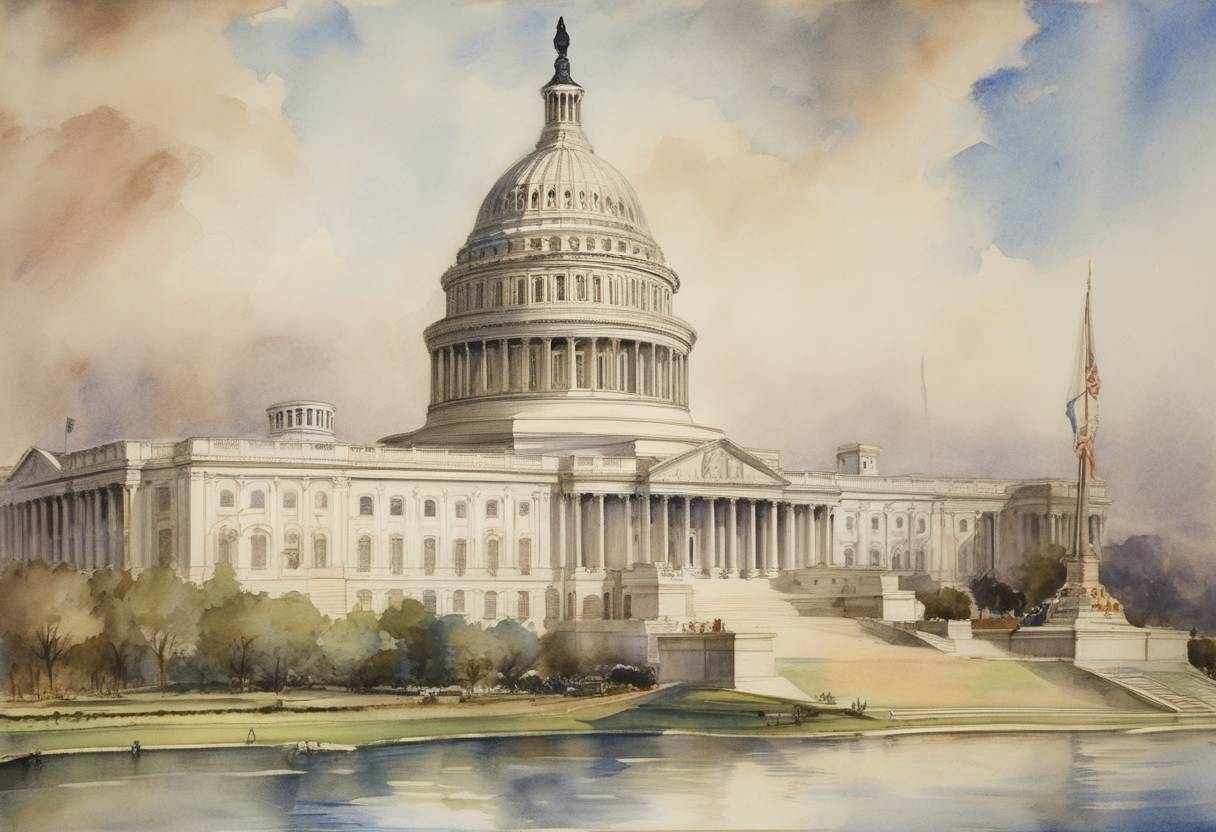
On August 31, 1935, the United States Congress passed the first Neutrality Act, marking a significant legislative attempt to ensure that the United States would remain impartial amidst escalating global tensions in the mid-1930s. This act was primarily motivated by the desire to prevent the United States from being drawn into foreign conflicts, as had happened in World War I, whose aftermath left many Americans skeptical of international entanglements.
The Neutrality Act of 1935 emerged from a growing isolationist sentiment in the United States. The country had experienced significant economic turmoil during the Great Depression, and there was strong public and political pressure to focus on domestic recovery rather than international involvement. Additionally, the belief that American involvement in World War I had been influenced by economic interests, particularly arms manufacturers and bankers, further bolstered isolationist policies.
In response to these concerns, Congress sought to establish a legal framework that would limit America’s ability to become involved in overseas conflicts. The ongoing conflicts in Asia, with Japanese aggression in Manchuria, and the rising tensions in Europe with the fascist movements in Italy and Germany, underscored the urgency of establishing such a policy framework.
The Neutrality Act of 1935 included several provisions designed to enforce American neutrality:
Embargo on Arms Sales: It prohibited the export of arms, ammunition, and implements of war to any nation engaged in conflict. This was intended to ensure that American manufacturers could not profit from warfare, mirroring the sentiments that followed World War I.
Travel Warnings for Citizens: The act restricted American citizens from traveling on belligerent ships, seeking to avoid incidents that could drag the United States into conflict, akin to the Lusitania incident during World War I.
Duration: Initially, the act had a six-month sunset clause, which indicated that it was seen as a temporary measure pending the evolving international situation.
The Neutrality Act marked a critical moment in U.S. foreign policy, reflecting a strong preference for isolationism in the face of burgeoning global conflicts. However, as global tensions increased, particularly with the outbreak of the Spanish Civil War in 1936 and the subsequent acts of aggression by the Axis Powers, the limitations of this policy became evident.
In the following years, the U.S. Congress passed subsequent neutrality acts, each modifying the restrictions in response to changing international dynamics. Ultimately, these acts were repealed in favor of the Lend-Lease program in 1941, as the Axis Powers’ military advances and the attack on Pearl Harbor forced the United States to reconsider its isolationist stance.
The first Neutrality Act of 1935 thus represents an essential chapter in the American approach to neutrality, illustrating the nation’s attempt to balance its policy amidst changing world orders leading up to World War II.
Source: en.wikipedia.org