Nguyễn Huệ Proclaims Himself Emperor Quang Trung on December 21, 1788
1788 · Phú Xuân (now Hue), Vietnam
Nguyễn Huệ proclaims himself Emperor Quang Trung of Vietnam.
October 4, 1052
Lý Nhật Tôn, later known as Emperor Lý Thánh Tông, ascends to the throne of the Lý Dynasty in Vietnam. His reign marked a period of consolidation and cultural development within the dynasty, notably initiating the expansion of Confucian education.
Hanoi, Vietnam | Lý Dynasty
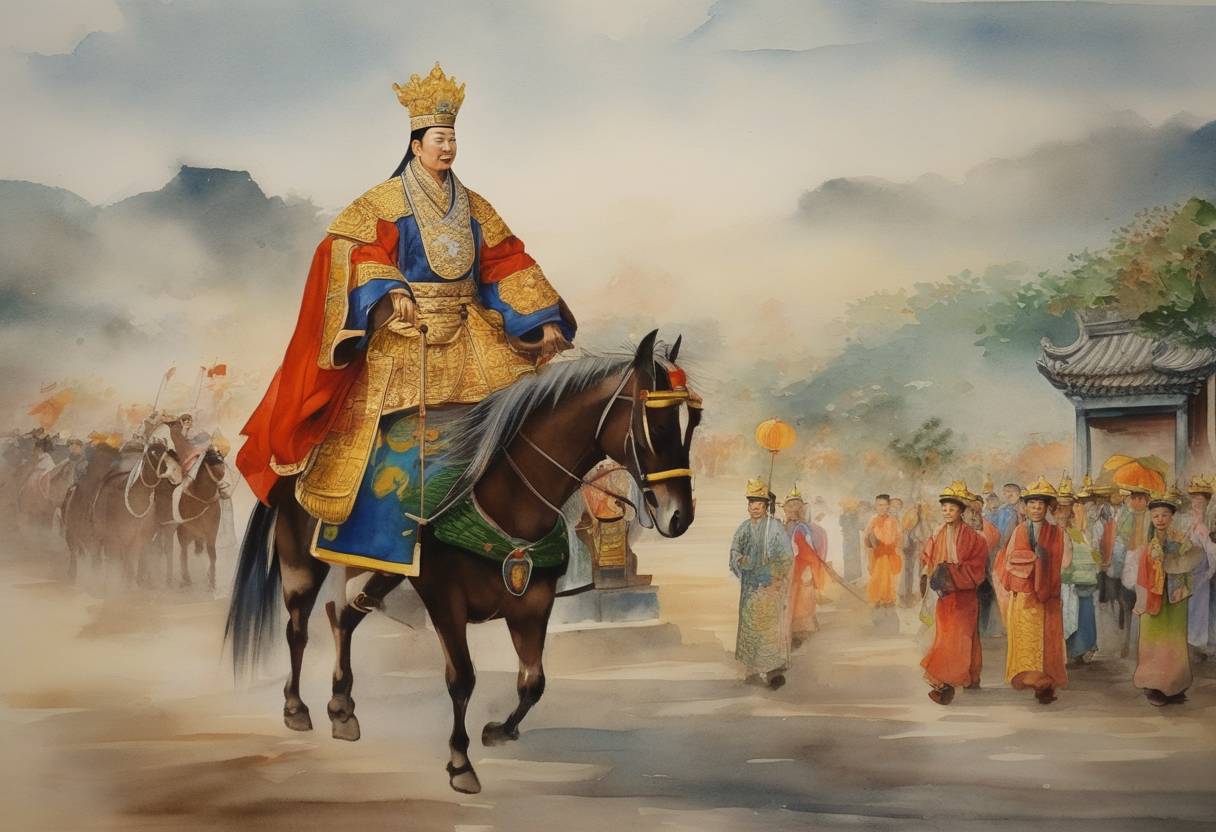
On October 4, 1054, in the capital of Thăng Long, present-day Hanoi, Lý Nhật Tôn ascended to the throne of the Lý Dynasty, adopting the regnal name Emperor Lý Thánh Tông. His ascension marked the beginning of a significant era in Vietnamese history, characterized by both political consolidation and cultural development.
Lý Nhật Tôn was the eldest son of Emperor Lý Thái Tông, under whose reign the Lý Dynasty firmly established its dominance over Đại Cồ Việt, the historical name for Vietnam. Building on his father’s accomplishments, Lý Nhật Tôn assumed the throne following Lý Thái Tông’s death.
Emperor Lý Thánh Tông’s reign (1054–1072) is notably marked by several key developments:
Consolidation of Power:
Military Expeditions:
Cultural and Educational Developments:
Bureaucratic Innovation:
Emperor Lý Thánh Tông passed away in 1072, succeeded by his son Lý Nhân Tông. The foundations he laid during his reign set the stage for continued prosperity and strength of the Lý Dynasty. His dedication to Confucian principles and education left a lasting impact on Vietnamese culture and governance that persisted well into subsequent dynasties.
The reign of Lý Thánh Tông is regarded as a crucial period in solidifying the identity and sovereignty of the Vietnamese state. His contributions towards cultural development and bureaucratic reforms reinforced the Lý Dynasty’s influence, shaping Vietnam’s subsequent historical trajectory.
Source: en.wikipedia.org