Founding of the Boston Latin School - April 23, 1635
1635 · Boston, United States
The first public school in the United States, Boston Latin School, was founded.
October 1, 1847
Maria Mitchell becomes the first woman elected to the American Academy of Arts and Sciences.
Boston, United States | American Academy of Arts and Sciences
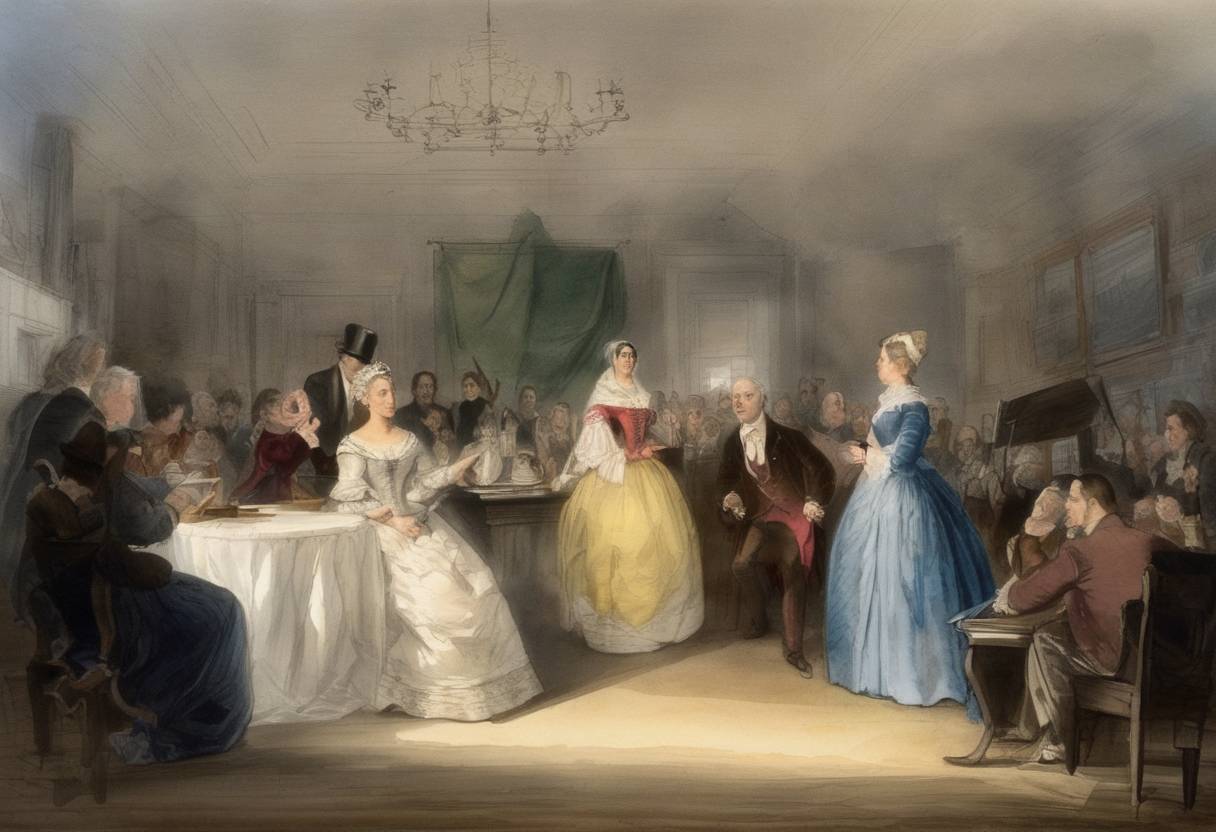
On October 1, 1847, Maria Mitchell, a self-taught astronomer from Nantucket, became the first woman elected to the American Academy of Arts and Sciences, marking a significant milestone not just in her life but also in the history of women in science.
Maria Mitchell was born on August 1, 1818, in Nantucket, Massachusetts, into a Quaker family that valued education and intellectual development regardless of gender. Her father, William Mitchell, was an amateur astronomer who introduced her to the field. He encouraged her studies in mathematics and astronomy, which laid the groundwork for her future discoveries.
Mitchell gained international fame on the night of October 1, 1847, when she discovered “Miss Mitchell’s Comet” (officially named C/1847 T1) using a telescope from the roof of her father’s observatory. This discovery earned her a gold medal from King Frederick VI of Denmark, offered for the first “telescopic comet” discovered by someone from America.
Aside from this discovery, Maria Mitchell was a dedicated educator. In 1865, she became the first female professor of astronomy at Vassar College in Poughkeepsie, New York, where she was also appointed as director of the Vassar College Observatory.
Maria Mitchell’s election to the American Academy of Arts and Sciences as its first female member was a groundbreaking achievement at a time when women’s contributions to sciences were often overlooked. Her membership symbolized a shift towards the inclusion of women in scientific communities.
Her legacy goes beyond her scientific achievements, as she was an advocate for women’s education and equal rights. She served as a powerful role model for subsequent generations, showing that women could excel and lead in fields traditionally dominated by men.
Mitchell’s influence extended through her active participation in various scientific and women’s rights organizations. She was one of the first members of the American Association for the Advancement of Science and held leadership roles in the American Association for the Advancement of Women.
Maria Mitchell passed away on June 28, 1889, but her impact endures, with her life continuing to inspire women in science and beyond.
Maria Mitchell’s election to the American Academy of Arts and Sciences on October 1, 1847, was more than a personal achievement; it was a beacon of progress and empowerment for women in science. Her journey and accomplishments have been instrumental in paving the way towards a more inclusive and diverse scientific community.
Source: www.amacad.org