The Second Battle of Homs: July 13, 1307
1307 · Homs, Syria
The Second Battle of Homs took place, a significant conflict of the Mamluk-Mongol Wars, where the Mamluks emerged victorious over the Ilkhanate forces, asserting their control over Syria.
September 3, 1260
The famous Battle of Ain Jalut was fought between the Mamluks of Egypt and the Mongol Empire, resulting in a decisive Mamluk victory.
Ain Jalut, Israel | Mamluk Sultanate
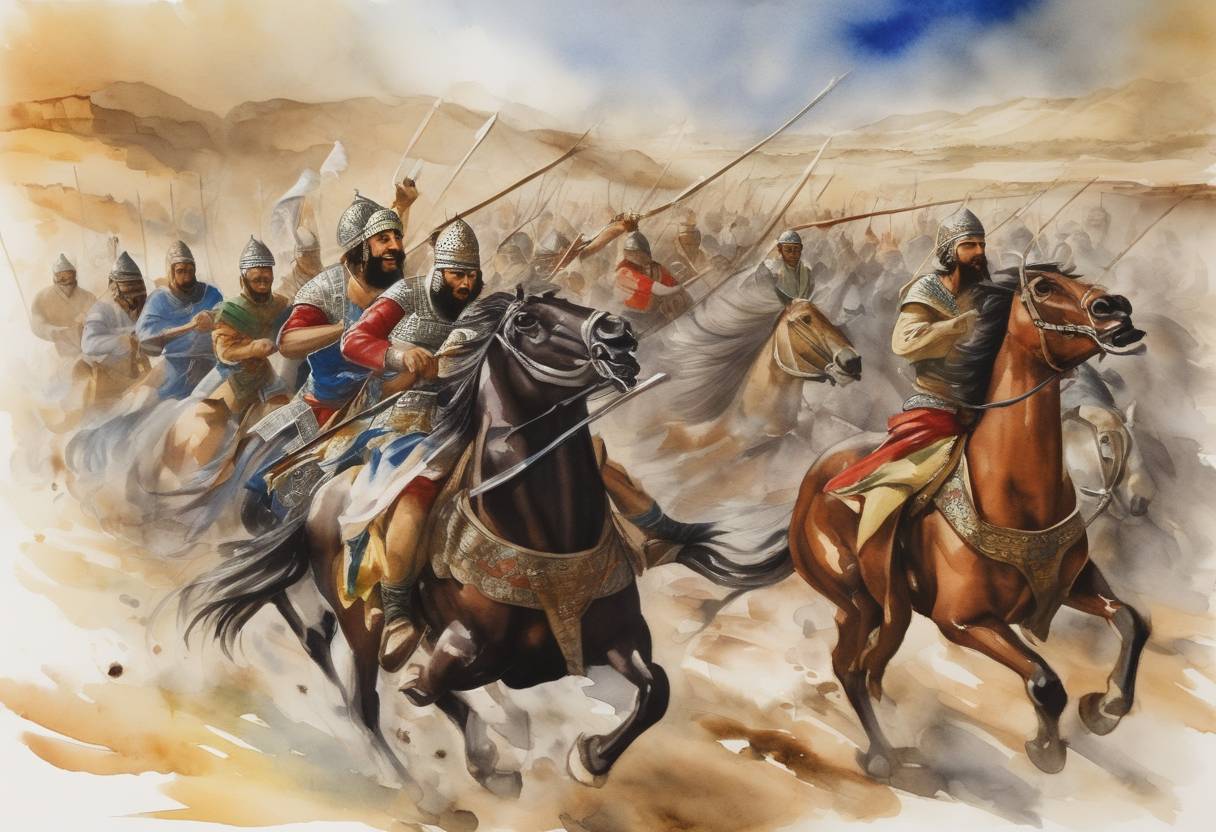
The Battle of Ain Jalut was a pivotal engagement fought on September 3, 1260, between the Mamluk Sultanate of Egypt and the Mongol Empire. This battle is historically significant as it marked the first major defeat of the Mongols, which effectively halted their westward expansion.
In the mid-13th century, the Mongol Empire had expanded rapidly under the leadership of Genghis Khan and his successors. By 1258, they had captured Baghdad, the cultural and political heart of the Islamic world, effectively ending the Abbasid Caliphate. Hulagu Khan, the grandson of Genghis Khan, led the Mongol advance into the Middle East, capturing large territories and instilling fear throughout the region.
The Mamluks, an elite military caste that had come to power in Egypt, were seen as one of the few remaining capable forces to challenge the Mongol onslaught. After the death of the Ayyubid sultan, Egypt was ruled by a Mamluk sultanate, which was militarily and politically organized to resist Mongol advances.
The encounter occurred near Ayn Jalut, in the Jezreel Valley in modern-day northern Israel. The Mamluks, under the leadership of Sultan Qutuz and the experienced military commander Baibars, used superior tactics and weaponry to combat the Mongol forces led by Kitbuqa, a respected and capable general.
One of the key strategies employed by the Mamluks was the use of horse archers and the strategic retreat tactics known as “feigned retreat” to lure the Mongol cavalry into a trap. The Mamluks made effective use of their composite bows and had developed a strong cavalry well-suited for engaging the Mongols.
The battle concluded with a decisive victory for the Mamluks. Kitbuqa was captured and executed, which significantly demoralized the Mongols. The victory at Ain Jalut is often heralded as a turning point for the Mamluks, solidifying their control over the Levant and halting further Mongol expansion into Egypt and North Africa.
Following the victory, the Mamluk Sultanate emerged as a significant power in the Middle East, maintaining control of the region until the Ottoman conquest in the early 16th century. In a wider context, the battle is regarded as a crucial moment in resisting Mongol invasions and preserving the cultural and political landscapes of the Middle East.
The victory at Ain Jalut is celebrated for demonstrating that the seemingly invincible Mongol forces could be defeated, inspiring resistance in other regions facing Mongol threats and altering the course of Middle Eastern and world history.
Source: en.wikipedia.org