Christmas Declared a Federal Holiday in the United States
1870 · Washington, D.C., United States
The Christian holiday of Christmas was declared a federal holiday in the United States.
December 23, 1823
The poem "A Visit from St. Nicholas," also known as "The Night Before Christmas," is first published anonymously in the Troy Sentinel newspaper in New York. This poem significantly contributed to the modern American conception of Santa Claus and Christmas Eve traditions.
Troy, United States | The Troy Sentinel
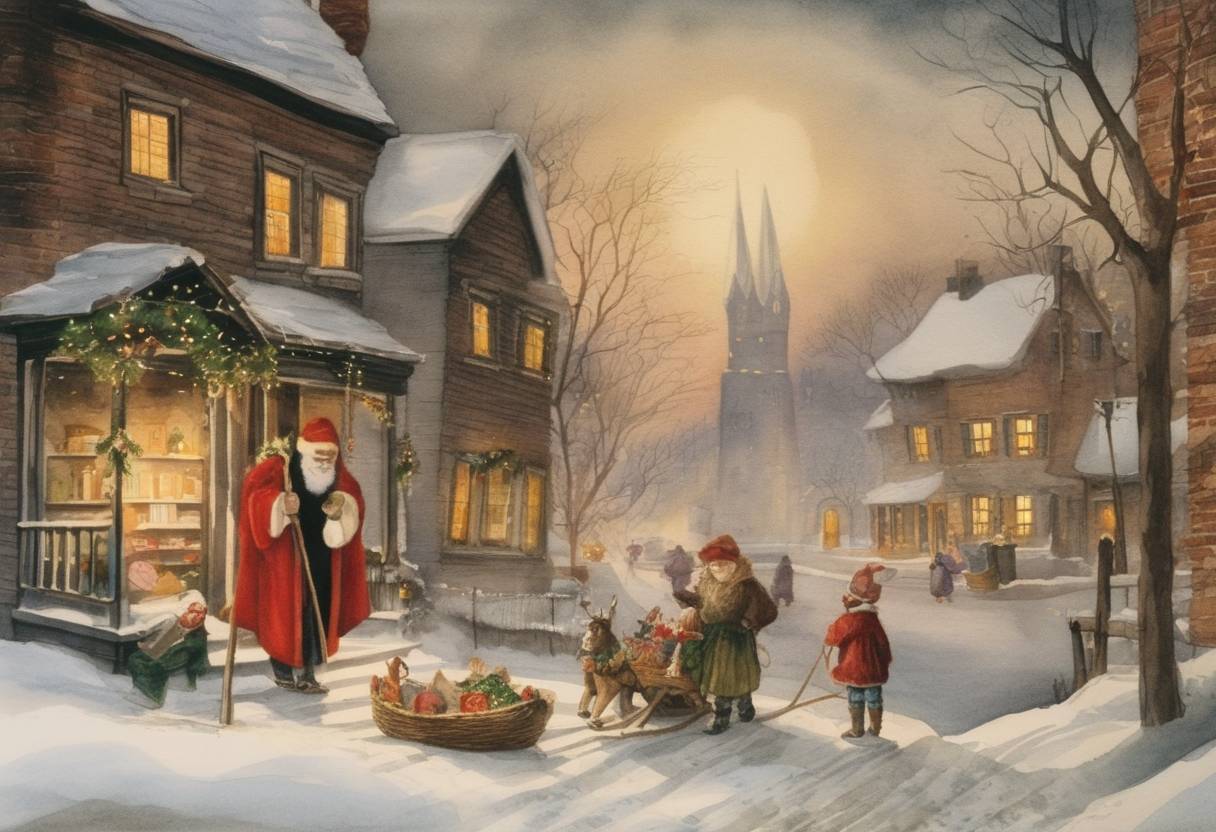
On December 23, 1823, the poem “A Visit from St. Nicholas,” more commonly known today as “The Night Before Christmas,” was first published anonymously in the Troy Sentinel, a newspaper in Troy, New York. This publication marked a seminal moment in the shaping of modern American Christmas traditions and the widespread cultural image of Santa Claus.
Before the poem’s publication, American Christmas celebrations were varied and less standardized compared to the traditions of today. The early 19th century was a period of transformation for the holiday, evolving from primarily religious observances to include more secular festivities and customs. With the growing influence of European immigrants, particularly Dutch settlers in the New York area, elements of Santa Claus lore began to consolidate.
“A Visit from St. Nicholas” played a crucial role in popularizing and solidifying these evolving Christmas celebrations. The poem’s portrayal of ‘St. Nicholas’ or Santa Claus depicted a jolly, rotund figure with a sleigh driven by reindeer, delivering presents to children on Christmas Eve. This imagery diverged significantly from earlier European depictions of St. Nicholas and served to establish many of the attributes associated with the modern Santa Claus:
For many years, the poem’s author remained anonymous, adding to its mystique. However, Clement Clarke Moore, a Biblical scholar and professor, was eventually credited with its authorship. Moore reportedly wrote the poem for his children but hesitated to publicly claim it due to the frivolous nature of the subject matter, which he felt contrasted with his scholarly reputation.
The poem’s influence cannot be overstated. Its images and themes became integral to the American Christmas narrative, deeply embedding the concept of Santa Claus and the rituals of Christmas Eve in popular culture. The traditions it popularized continue to thrive, affecting everything from holiday advertising to family customs and literature.
Source: en.wikipedia.org