Expulsion of Jews from France by King Charles VI on September 17, 1394
1394 · Paris, France
King Charles VI of France ordered the expulsion of all Jews from France.
October 20, 1390
King Charles VI of France promulgated an ordinance that established rules for the sale of foodstuffs in Paris markets, a measure aimed at controlling prices and curbing the ongoing economic difficulties in France during his reign.
Paris, France | French Monarchy
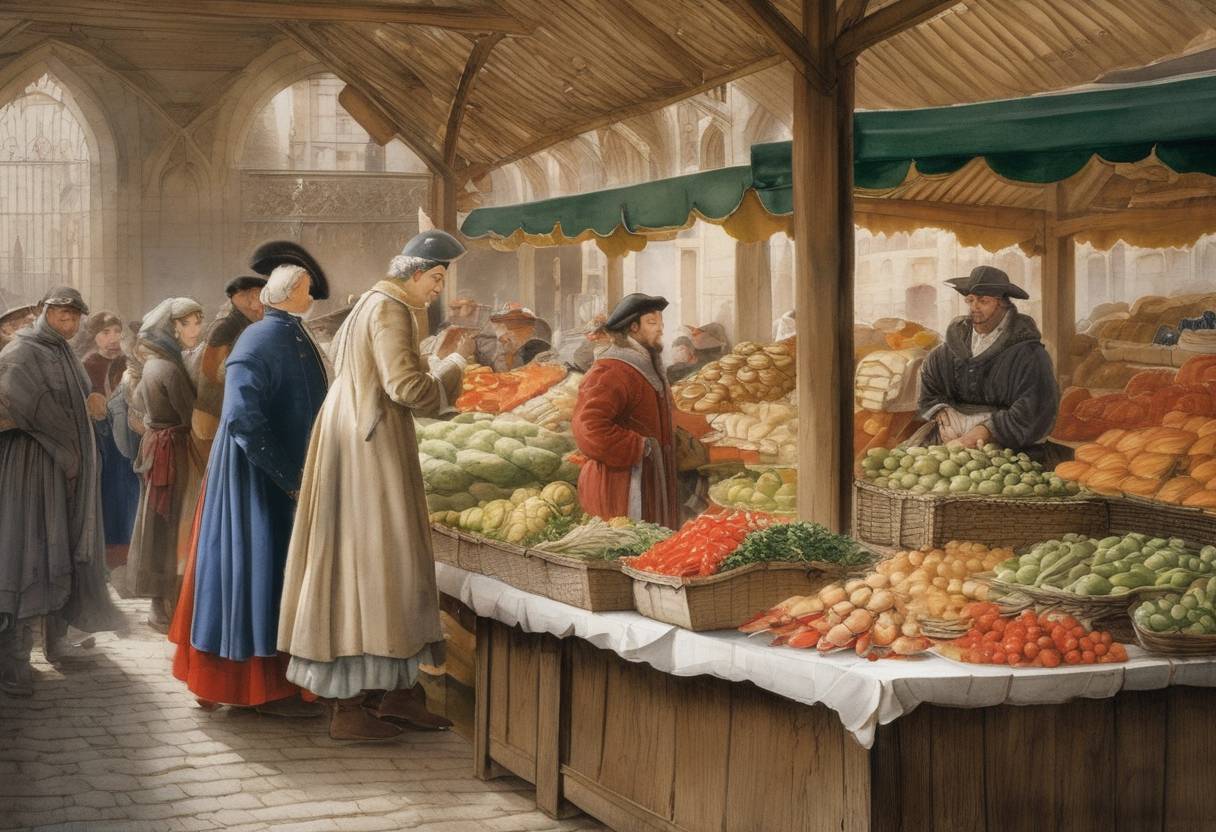
On October 20, 1390, King Charles VI of France issued a significant ordinance focused on the regulation of the sale of foodstuffs in the markets of Paris. This legislative act aimed to address the economic challenges of the period, specifically targeting issues related to pricing and market fairness.
During the late 14th century, France was grappling with a series of economic difficulties. The period was marked by political strife, remnants of the Hundred Years’ War, and recurring episodes of plague that had severely affected the population and labor force. These conditions had led to instability in the prices of goods and resources, contributing to economic hardship for the general population.
The French economy at the time relied heavily on agriculture, and the consistent supply and fair pricing of food were critical for maintaining social order and political stability. Amid these challenges, King Charles VI sought to implement measures that could stabilize the economy and improve the living conditions of his subjects.
The ordinance promulgated by King Charles VI set forth specific rules intended to regulate the sale and pricing of foodstuffs in Parisian markets. The primary objectives included:
Price Control: Establishing maximum permissible prices for essential food items to prevent exploitation by vendors and protect consumers against excessive charges.
Market Regulation: Introducing standardized measures to evaluate and monitor the weight and quality of food products being sold, ensuring that vendors maintained fair trading practices.
Supply Assurance: Encouraging the regular supply of goods to the markets to prevent shortages and hoarding, thus aiming to provide a steady availability of essential food products to the population.
This ordinance was part of broader efforts by the monarchy to assert control over economic activities during a time of turmoil. By instituting such regulations, King Charles VI aimed to mitigate social unrest that could arise from food scarcity and price inflation. The decree represented an early attempt in medieval Europe to employ state intervention to manage economic conditions, reflecting the King’s role as a guardian of his people’s welfare.
In the longer term, these reforms demonstrated the increasing involvement of the state in economic affairs, setting precedents for future governance and regulatory approaches.
The ordinance issued on October 20, 1390, was a pivotal step taken by King Charles VI to curb the ongoing economic difficulties in his realm. By controlling the sale and pricing of foodstuffs in Paris, the King sought to stabilize the economy and provide relief to his subjects during a tumultuous period in France’s history. This measure underscores the complexities faced by medieval monarchs in managing both economic challenges and the welfare of their populations.
Source: en.wikipedia.org