Henry VIII’s Break with the Roman Catholic Church
1536 · London, England
The authority of the Pope was declared void in England as part of King Henry VIII's break with the Roman Catholic Church.
October 8, 1515
Thomas Wolsey becomes a cardinal of the Catholic Church, affirming his political and ecclesiastical influence in England under King Henry VIII.
Westminster, England | Catholic Church
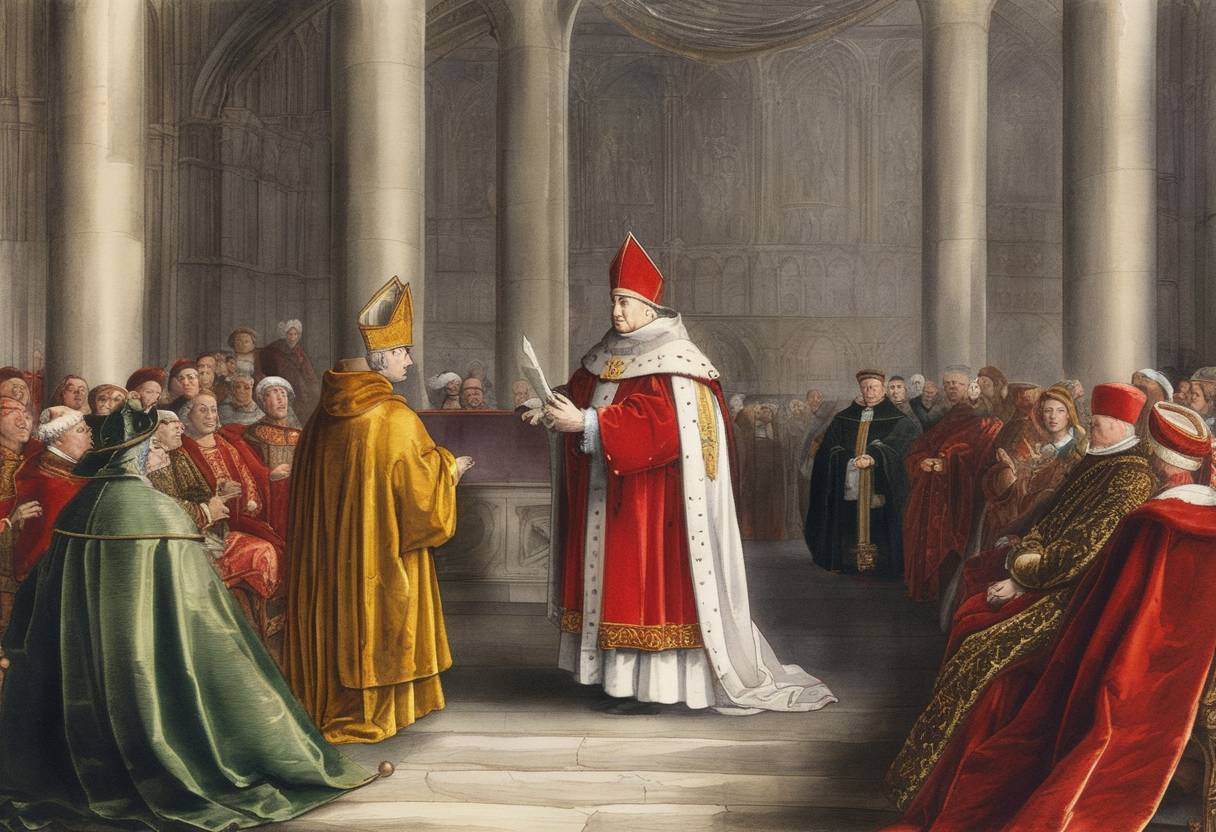
On October 8, 1515, Thomas Wolsey, a prominent figure in English politics and the Catholic Church, was elevated to the rank of cardinal by Pope Leo X. This appointment marked a significant enhancement of Wolsey’s influence both ecclesiastically and politically during the reign of King Henry VIII.
Thomas Wolsey, born circa 1473, emerged from modest beginnings to become one of the most powerful men in England. His education at Magdalen College, Oxford, and subsequent roles as a royal chaplain and almoner allowed him to ascend through the ranks of the church. His aptitude for administration and diplomacy drew the attention of King Henry VII and subsequently his son, Henry VIII.
Under Henry VIII, Wolsey rapidly gained the king’s favor and held multiple positions of authority. As Lord Chancellor beginning in 1515, he became the de facto ruler in many aspects of the English government, acting as both the king’s chief advisor and an intermediary between the monarch and the church.
Wolsey’s appointment as a cardinal was not just a personal triumph but also a strategic elevation that benefited Henry VIII’s ambitions. As Cardinal, Wolsey acquired considerable influence over ecclesiastical matters in England and increased sway in international relations, especially concerning England’s dealings with the papacy and other European powers.
His new status enabled him to exercise control over church appointments and revenues within England more authoritatively, reinforcing his ability to execute King’s policies and grooming England’s religious landscape according to royal preferences.
With his dual high-ranking positions in both church and state, Wolsey sought to orchestrate England’s foreign policy with strategic marriages, alliances, and interventions which were instrumental in positioning England on the European stage. However, his concentration of power also made him susceptible to the political intrigue and volatility of the Tudor court.
Wolsey’s tenure, though impactful, was not without controversy. His inability to secure an annulment for Henry VIII’s marriage to Catherine of Aragon later became a contributing factor in his downfall. His ambitious nature and occasional disregard for the king’s will would eventually lead to his loss of favor and ultimate arrest in 1529.
The elevation of Wolsey to cardinal was a noteworthy event in the history of Tudor England, exemplifying the intricate ties between religious authority and royal power. It set the stage for critical developments in the English Reformation, which would later see England break away from the Catholic Church under Henry VIII in pursuit of control over religious matters. Wolsey’s legacy is a testament to the complexities of governance, faith, and diplomacy in the early 16th century.
Source: www.british-history.ac.uk