The Declaration of Independence of the Mexican Empire: September 28, 1821
1821 · Mexico City, Mexico
The Declaration of Independence of the Mexican Empire is drafted, marking the end of Spanish rule in Mexico.
October 8, 1821
The Government Junta of the First Mexican Empire, after its independence from Spain, officially enacted the Declaration of Independence.
Mexico City, Mexico | First Mexican Empire
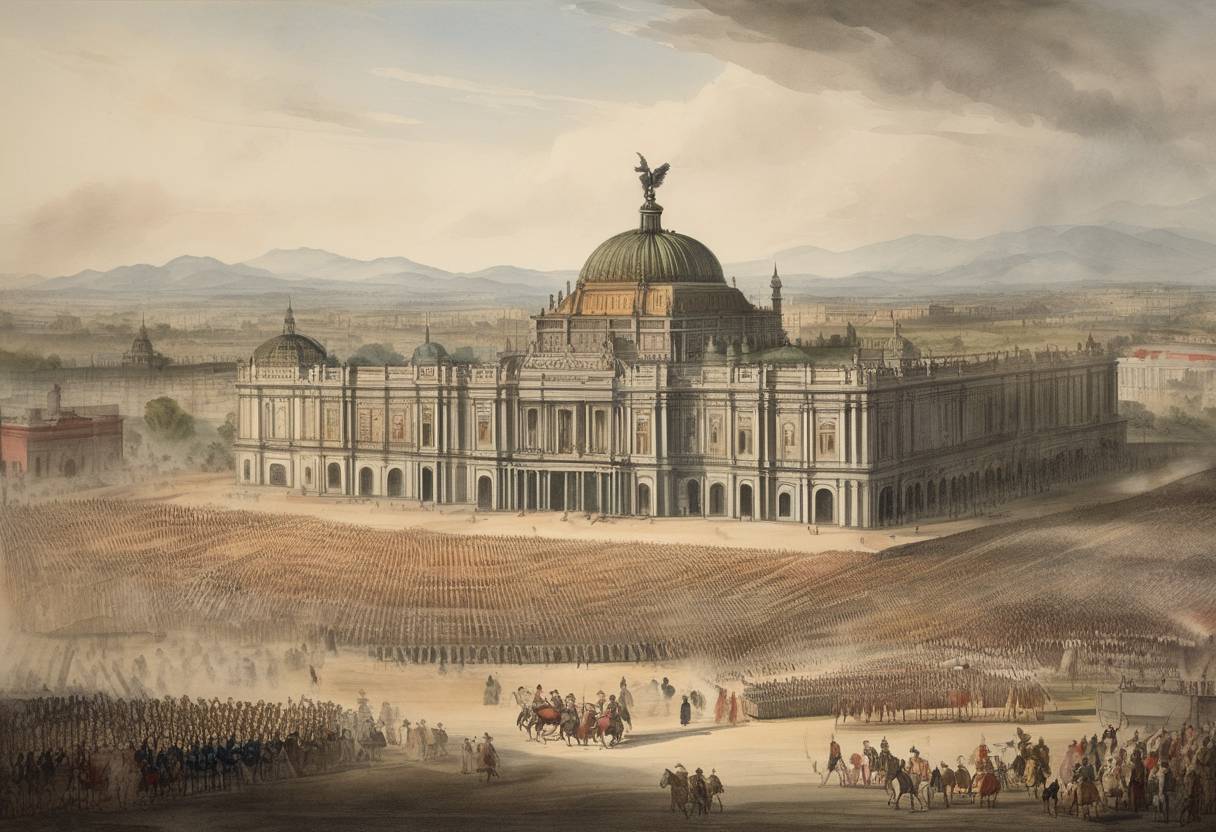
On October 8, 1821, a pivotal event in Mexican history unfolded as the Government Junta, following Mexico’s successful independence from Spanish rule, officially enacted the Declaration of Independence marking the formal establishment of the First Mexican Empire.
Mexican War of Independence: The struggle for Mexican independence began in 1810, ignited by the famous “Grito de Dolores” proclaimed by Miguel Hidalgo y Costilla. Over a decade of guerrilla warfare ensued, characterized by shifting allegiances and strategies.
Plan of Iguala and the Treaty of Córdoba: In February 1821, Agustín de Iturbide, a former royalist commander, proposed the Plan of Iguala. This plan called for an independent Mexico united under a constitutional monarchy, the preservation of the Catholic faith, and equality between Creoles and Peninsulares. The subsequent Treaty of Córdoba, signed on August 24, 1821, by Iturbide and the Spanish viceroy Juan O’Donojú, recognized Mexican independence.
On October 8, the Government Junta, a provisional governing body composed of diverse political figures, formally issued the Declaration of Independence. This act represented the consolidation of Mexico’s autonomy and sovereignty following the cessation of hostilities with Spain. The declaration was a crucial step in legitimizing the nascent nation-state of Mexico on the world stage.
Establishment of the First Mexican Empire: The declaration paved the way for the establishment of the First Mexican Empire in 1822, with Agustín de Iturbide ascending as Emperor Agustín I. The monarchy, however, was short-lived due to financial issues, internal conflicts, and dissatisfaction with the imperial government.
Political Transition: The enactment of independence facilitated the transition from colonial rule to a sovereign national government. However, it also ushered Mexico into an era of political instability that would persist for decades, with frequent changes in leadership and governance models.
Legacy of Independence: The formal declaration underscored the complex path from colonial territory to an independent nation, a legacy deeply embedded in Mexico’s national identity. Celebrations of independence, which often emphasize the events of 1821, continue to be a centerpiece of Mexican national pride.
This date marks a significant milestone in Mexico’s journey to independence, reflecting the culmination of years of struggle and laying the groundwork for the nation’s future political developments.
Source: en.wikipedia.org