Beni Isguen Massacre: August 26, 1997
1997 · Beni Isguen, Algeria
Beni Isguen massacres are carried out by Armed Islamic Group (Groupe Islamique Armé or GIA) in Algeria, leading to the deaths of dozens of people.
December 24, 1994
Air France Flight 8969 is hijacked by the Armed Islamic Group in Algiers, Algeria.
Algiers, Algeria | Armed Islamic Group
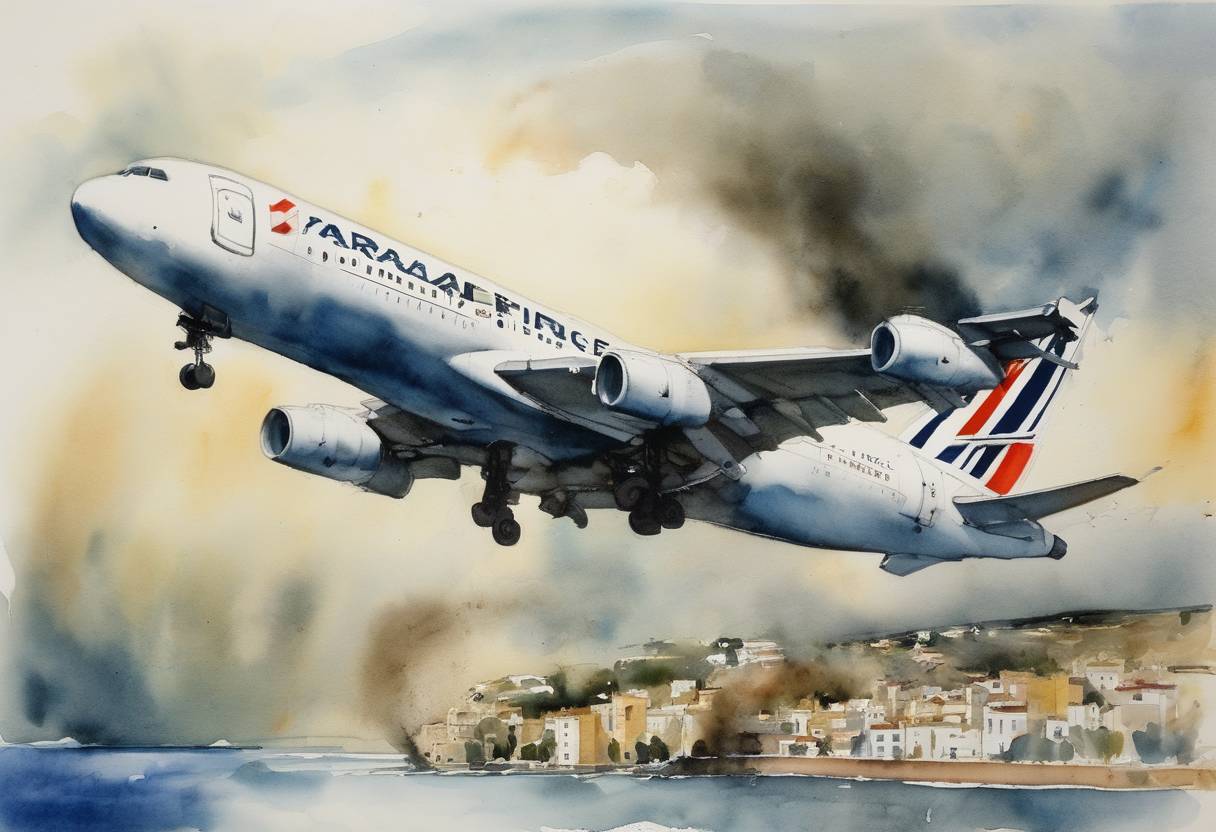
On December 24, 1994, Air France Flight 8969 was hijacked by four armed members of the Armed Islamic Group (Groupe Islamique Armé, GIA) at Houari Boumediene Airport in Algiers, Algeria. The aircraft, an Airbus A300, was scheduled to fly from Algiers to Paris, France.
The GIA was an Islamic extremist group involved in the Algerian Civil War, aiming to overthrow the Algerian government and establish an Islamic state. During this period, they conducted various attacks to further their political goals, one of which was the hijacking of Flight 8969.
Upon boarding the plane, the hijackers posed as Algerian security officials. They immediately took control of the aircraft, communicating their intent to fly to Paris and creating an international crisis. Initially, there were 220 passengers and 12 crew members on board.
Initial Seizure: The hijackers began by executing three hostages during the standoff at the Algiers airport, demanding the plane’s refueling and departure.
Negotiations: Over two days, the hijackers remained at the airport, negotiating with Algerian officials. The situation garnered international attention, with French authorities closely monitoring developments.
Flight to Marseille: On December 26, after a period of intense negotiations, the plane was allowed to leave for Marseille, France, ostensibly to refuel.
Upon landing at Marseille Provence Airport, the French government, under pressure to resolve the crisis, deployed special forces from the Groupe d’Intervention de la Gendarmerie Nationale (GIGN) to mount a tactical assault.
The hijacking of Flight 8969 highlighted the dangers of international terrorism and was indicative of the volatility in Algeria during the civil war. The GIGN’s intervention displayed tactical expertise and solidified France’s stance on handling terrorism with resolve and precision. This event prompted increased security measures in aviation and against international terrorism, as it underscored vulnerabilities within airline security protocols of the era.
Source: www.history.com