The Battle of Jersey - January 4, 1781
1781 · St. Helier, United Kingdom
The British defeat the Americans in the Battle of Jersey during the American Revolutionary War.
September 23, 1779
During the American Revolutionary War, the Battle of Flamborough Head took place. The American Continental Navy, led by John Paul Jones, captured the British warship HMS Serapis.
Flamborough Head, United Kingdom | Continental Navy
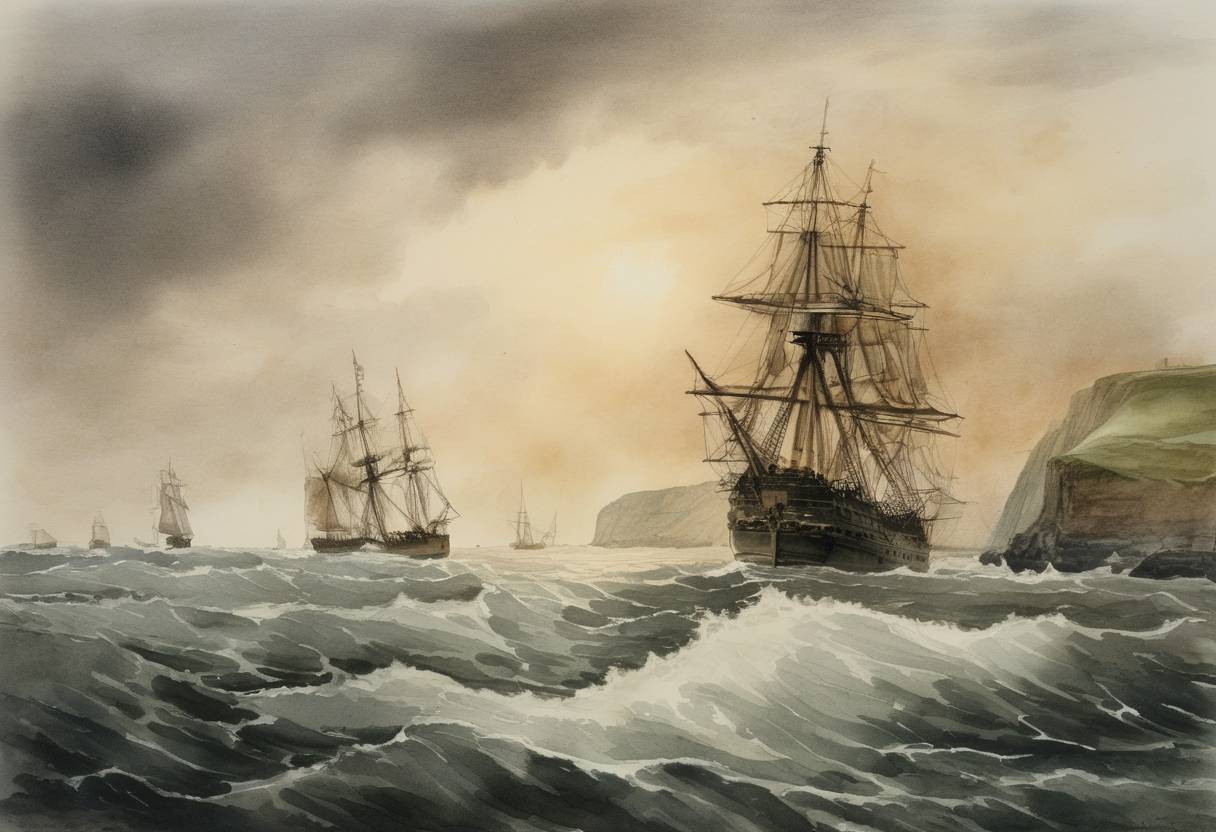
On September 23, 1779, a pivotal naval engagement during the American Revolutionary War occurred, known as the Battle of Flamborough Head. This battle was one of the most renowned victories for the fledgling American navy and was commanded by the esteemed American naval officer, John Paul Jones.
By 1779, the American Revolutionary War had extended beyond the shores of the thirteen colonies, increasingly involving European waters. John Paul Jones, recognized as a daring and skilled naval commander, led a small squadron of ships into the North Sea to disrupt British shipping and draw attention away from American land efforts.
Location: The engagement took place off the coast of Flamborough Head, Yorkshire, England. The strategic intention was to engage British warships and create a symbolic victory for the Continental Navy.
Key Figures:
Engagement Details:
American Victory: After several hours of intense fighting, the Americans captured HMS Serapis. The damage incurred forced Jones to abandon the Bonhomme Richard, which sank the next day.
Significance:
Strategic Impact: The battle influenced European perceptions of the American cause, strengthening alliances, particularly with France, and highlighting the ongoing naval struggle in the war effort.
The victory at Flamborough Head cemented John Paul Jones’s legacy as one of America’s greatest naval commanders. Despite the Bonhomme Richard’s loss, the capture of the Serapis and subsequent American naval actions underscored the formidable presence of the Continental Navy on an international stage, rallying further support for American independence.
Source: www.nps.gov