Sigmund Jähn: The First German Cosmonaut in Space
1978 · Baikonur, Kazakhstan
Sigmund Jähn became the first German cosmonaut to fly in space, aboard Soyuz 31.
October 12, 1964
The Soviet Union launches Voskhod 1 into Earth orbit as the first spacecraft to carry a multi-person crew and to go without space suits.
Baikonur, Kazakhstan | Soviet Space Program
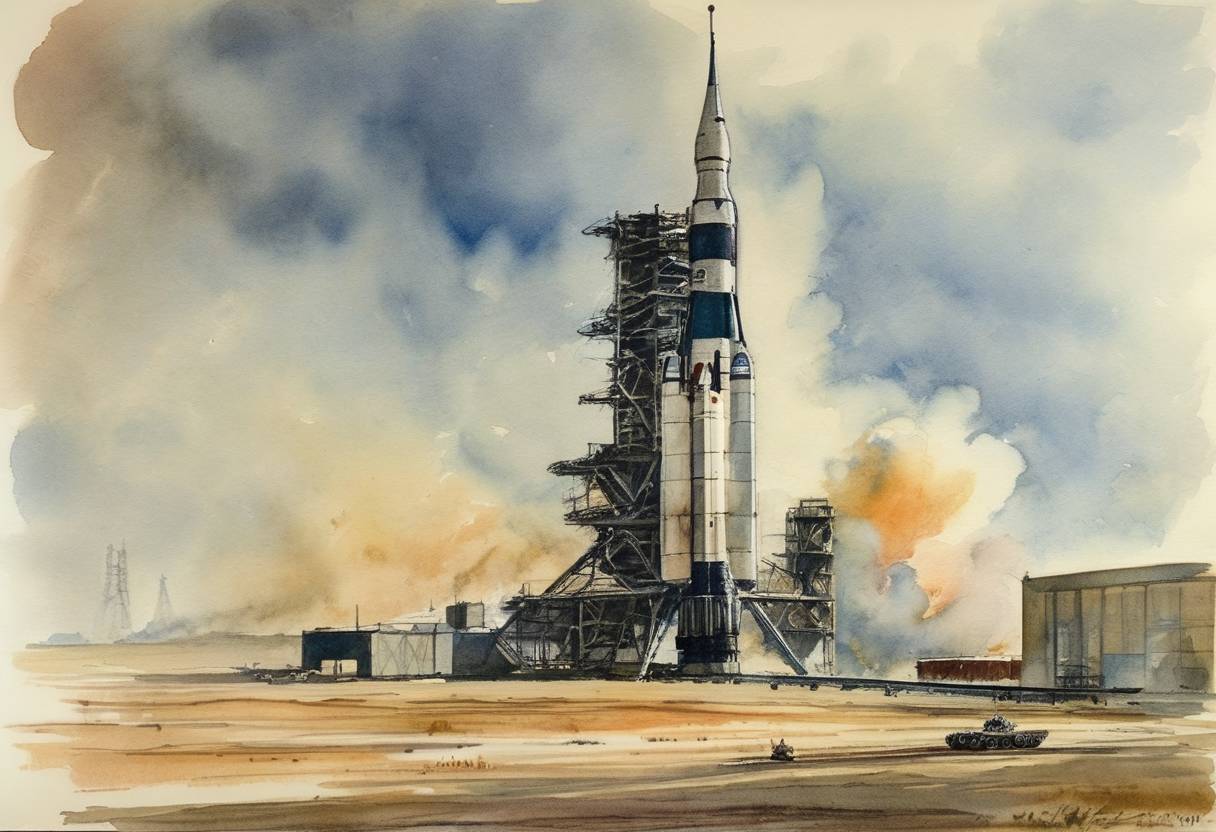
On October 12, 1964, the Soviet Union achieved a significant milestone in the history of human space exploration by launching Voskhod 1. This mission marked the first time a spacecraft carried a multi-person crew into orbit and did so without incorporating space suits for its occupants.
Voskhod 1 followed the Soviet Union’s successful Vostok missions, which included Yuri Gagarin’s historic flight as the first human in space in 1961. The success of the Vostok series spurred the Soviet space program to demonstrate further advancements in space travel, such as accommodating more than one crew member in a single spacecraft and testing fundamental components for long-duration missions.
The crew was comprised of individuals selected not only for their space-faring potential but also their expertise in engineering and medicine, crucial for the development of longer space missions and the management of human health in space.
Voskhod 1’s primary objective was to demonstrate the feasibility of multi-person crewed missions, paving the way for more complex expeditions, including potential lunar ventures and prolonged space station activities.
The mission was considered a resounding success, as all objectives were achieved without significant issues. The spacecraft safely returned to Earth the day after its launch, bolstering the Soviet Union’s prestige and technological prowess in the unfolding space race.
Voskhod 1 was a critical step in the evolution of human space exploration, showcasing the ability to manage and sustain a crewed mission involving more than one person. The successful completion of this mission continued to set the Soviet Union at the forefront of space exploration during the Cold War era. It also provided essential insights into various physiological and psychological challenges posed by space travel—knowledge that would be invaluable for future missions.
Source: www.britannica.com