Death of Richard the Lionheart
1199 · Châlus, France
Richard I of England, known as Richard the Lionheart, dies from an infection following an injury received during a siege, leading to his brother John ascending to the English throne.
December 20, 1192
Richard I of England, also known as Richard the Lionheart, was captured by Leopold V, Duke of Austria, while returning from the Third Crusade.
Vienna, Austria | Duchy of Austria
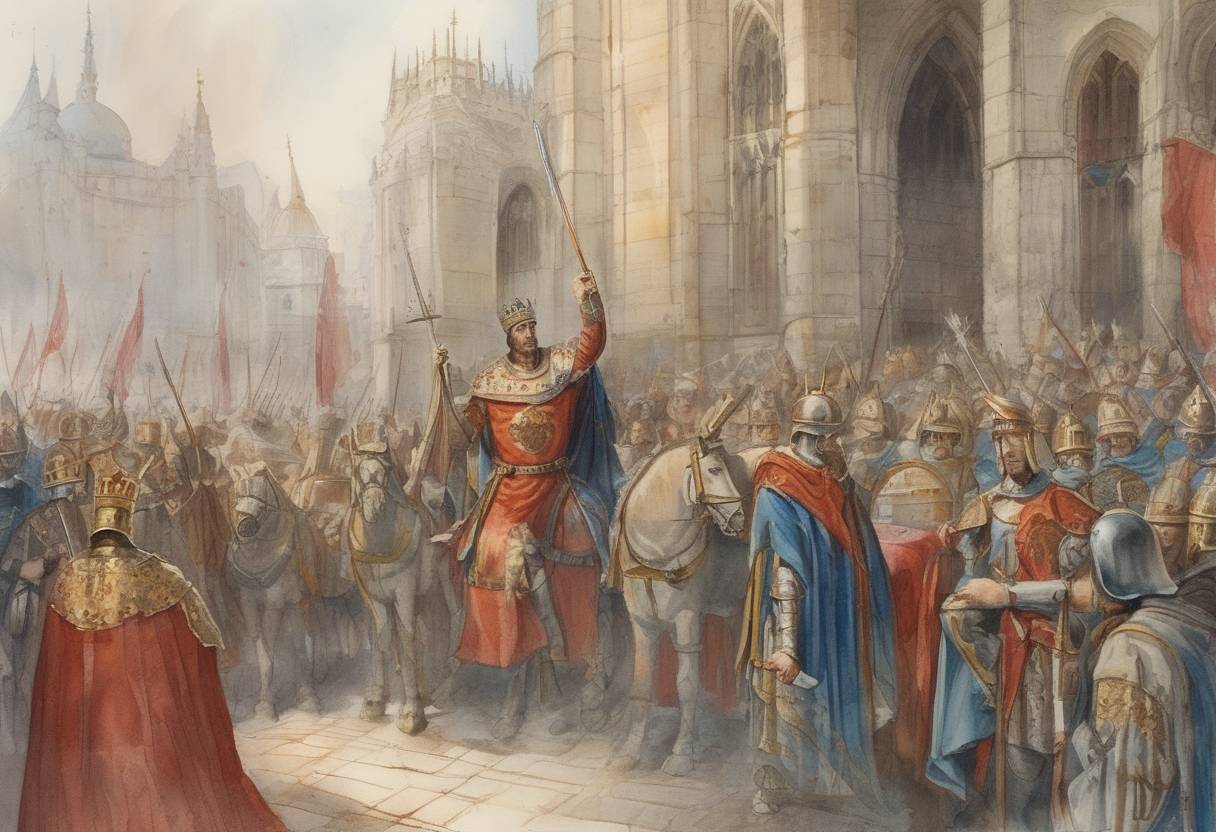
On December 20, 1192, Richard I of England, famously known as Richard the Lionheart, was captured by Leopold V, Duke of Austria. This event occurred during Richard’s return journey from the Third Crusade, a series of military campaigns aimed at recapturing Jerusalem and the Holy Land from Muslim control.
Richard the Lionheart: Richard I reigned as King of England from 1189 until his death in 1199. He was renowned for his military leadership and prowess, earning the nickname “Lionheart” for his bravery and strategic acumen.
The Third Crusade (1189-1192): Initiated in response to the capture of Jerusalem by Saladin in 1187, the Third Crusade saw European monarchs, including Richard I, Philip II of France, and Frederick I Barbarossa of the Holy Roman Empire, attempt to reclaim the Holy City. Although the crusaders did not succeed in retaking Jerusalem, they achieved significant victories, such as the capture of Acre and the Treaty of Jaffa, which allowed Christian pilgrims access to Jerusalem.
Journey Home: After the conclusion of the Third Crusade, Richard began his return to England. His journey was fraught with danger, as he had made numerous enemies during the crusade, including Leopold V, Duke of Austria, whom Richard had insulted by casting down his banner at the siege of Acre.
Capture by Leopold V: While traveling incognito through Europe to avoid detection, Richard was recognized near Vienna. On December 20, 1192, he was captured by Leopold V. The capture was motivated by both personal animosity and political gain, as Richard’s presence in Europe was a valuable bargaining chip.
Imprisonment: Richard was handed over to Henry VI, Holy Roman Emperor, and imprisoned at Trifels Castle. His captivity lasted until February 1194, during which time a hefty ransom was demanded for his release.
Ransom and Release: The ransom, amounting to 150,000 marks (a colossal sum at the time), was raised through heavy taxation and contributions from England and Richard’s territories in France. Richard was released after the payment was secured.
Impact on England: Richard’s capture and the subsequent ransom had significant financial implications for England, straining the kingdom’s resources. It also highlighted the political instability and rivalries within Europe during the period.
Legacy: Richard’s capture and the events surrounding it have become legendary, illustrating the complex interplay of power, loyalty, and enmity in medieval Europe. His reputation as a chivalric and valiant king endures, despite the challenges he faced during his reign.
Richard the Lionheart’s capture by Leopold V is a pivotal moment in medieval history, reflecting the intricate dynamics of crusader politics and the enduring legacy of one of England’s most storied monarchs.
Source: www.britannica.com