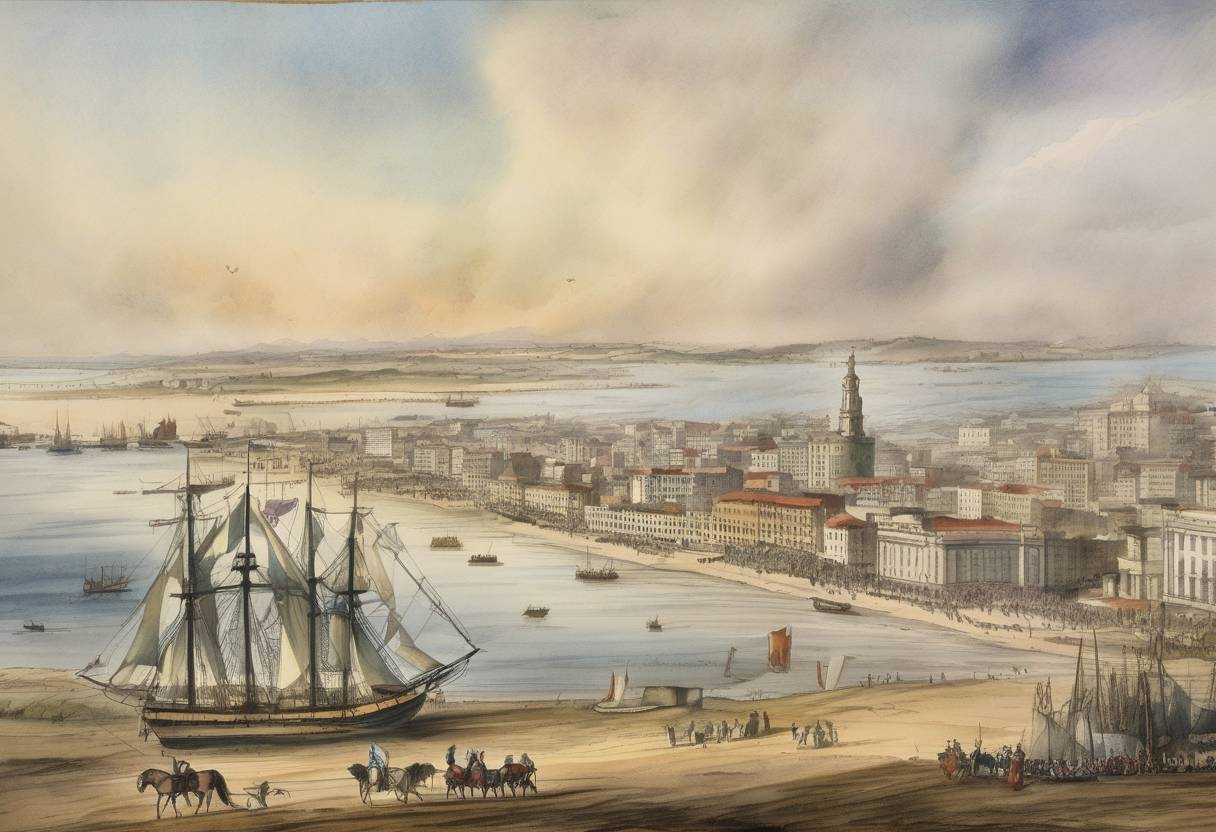
Uruguay Declares Independence from Brazil - August 25, 1825
On August 25, 1825, Uruguay declared its independence from Brazil, marking a pivotal moment in the region’s history. This event was part of a larger struggle involving regional powers and local factions, ultimately leading to the establishment of Uruguay as a sovereign nation.
Historical Context
Background
- Spanish Colonial Rule: The area now known as Uruguay was originally part of the Spanish Empire, under the Viceroyalty of the Río de la Plata.
- Portuguese Encroachment: In the early 19th century, the region experienced increasing pressure from Portuguese forces based in Brazil, which was then a part of the Portuguese Empire.
Brazilian Control
- Annexation by Brazil: In 1821, the region was annexed by Brazil and became known as the Cisplatina Province. This move was part of Brazil’s expansionist policies following its independence from Portugal in 1822.
The Path to Independence
The Thirty-Three Orientals
- Revolutionary Movement: A group of Uruguayan patriots, known as the “Thirty-Three Orientals,” led by Juan Antonio Lavalleja, initiated a movement to liberate the region from Brazilian control.
- Crossing the Uruguay River: In April 1825, these revolutionaries crossed the Uruguay River from Argentina, rallying local support against Brazilian rule.
Declaration of Independence
- Florida Assembly: On August 25, 1825, a congress convened in the town of Florida, Uruguay, where delegates declared independence from Brazil. This assembly also sought to reunite with the United Provinces of the Río de la Plata (modern-day Argentina).
Aftermath and Consequences
Cisplatine War
- Conflict with Brazil: The declaration led to the Cisplatine War (1825-1828) between Brazil and the United Provinces of the Río de la Plata, with Uruguay as the focal point of the conflict.
- British Mediation: The war concluded with British mediation, resulting in the Treaty of Montevideo in 1828, which recognized Uruguay as an independent nation.
Establishment of Uruguay
- Sovereign State: The treaty established Uruguay as a buffer state between Argentina and Brazil, ensuring its sovereignty and neutrality in regional conflicts.
Broader Historical Significance
- Regional Stability: Uruguay’s independence contributed to the balance of power in the region, preventing further territorial disputes between Argentina and Brazil.
- National Identity: The successful struggle for independence fostered a strong sense of national identity and laid the foundation for Uruguay’s future development as a democratic nation.
Uruguay’s declaration of independence on August 25, 1825, remains a significant milestone in South American history, symbolizing the resilience and determination of its people to achieve self-governance and autonomy.