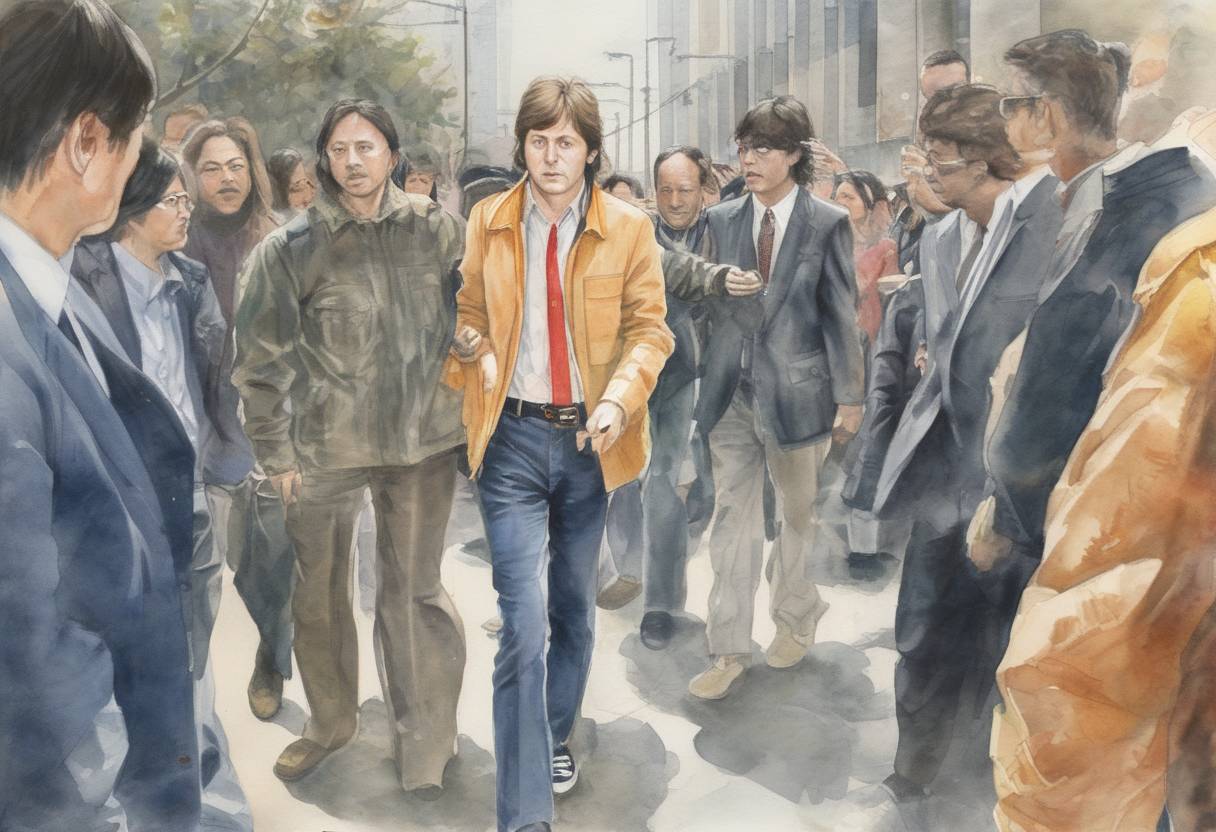
Paul McCartney’s Release and Deportation from Japan - January 25, 1980
On January 25, 1980, Paul McCartney, the renowned British musician and former member of The Beatles, was released from a Tokyo jail and deported from Japan following his arrest for marijuana possession. This incident marked a significant moment in McCartney’s life and career, drawing international attention and impacting his relationship with Japan.
Background
Paul McCartney arrived in Japan on January 16, 1980, with his band Wings for an 11-concert tour. However, upon arrival at Narita International Airport, customs officials discovered 219 grams (approximately 7.7 ounces) of marijuana in his luggage. This amount was substantial enough to warrant serious legal consequences under Japan’s strict drug laws.
Arrest and Detention
McCartney was immediately arrested and detained at the Tokyo Narcotics Detention Center. The arrest was a major shock to fans and the music industry, as McCartney was a high-profile figure with a clean public image. The incident led to the cancellation of the Wings tour, disappointing thousands of fans who had eagerly anticipated the performances.
Release and Deportation
After spending nine days in detention, McCartney was released on January 25, 1980. Japanese authorities decided not to press formal charges, likely due to his celebrity status and the potential diplomatic implications. Instead, he was deported from Japan and banned from entering the country for several years.
Aftermath and Impact
Public Reaction: The incident was widely covered in the media, highlighting the cultural differences in drug policies between Japan and Western countries. It also sparked discussions about the responsibilities of celebrities and the consequences of drug use.
Personal Reflection: McCartney later reflected on the arrest as a significant and sobering experience. It served as a turning point, leading him to reassess his lifestyle choices and public persona.
Future Relations with Japan: Despite the ban, McCartney eventually returned to Japan in 1990 for a successful tour, indicating a mending of relations and a renewed appreciation for his Japanese fanbase.
Broader Historical Significance
This event underscored the cultural and legal challenges faced by international artists during tours, particularly in countries with stringent drug laws. It also highlighted the global influence of celebrity culture and the potential for personal actions to have wide-reaching consequences.
Overall, Paul McCartney’s arrest and subsequent deportation from Japan in 1980 remain a notable episode in the history of rock music, illustrating the intersection of fame, law, and cultural expectations.