Kim Jong-il's Ascension as Supreme Leader of North Korea
1994 · Pyongyang, North Korea
Kim Jong-il is confirmed as the Supreme Leader of North Korea following the death of his father, Kim Il-sung.
September 9, 1948
The Democratic People's Republic of Korea (North Korea) was established, with Kim Il-sung as its leader.
Pyongyang, North Korea | Workers' Party of Korea
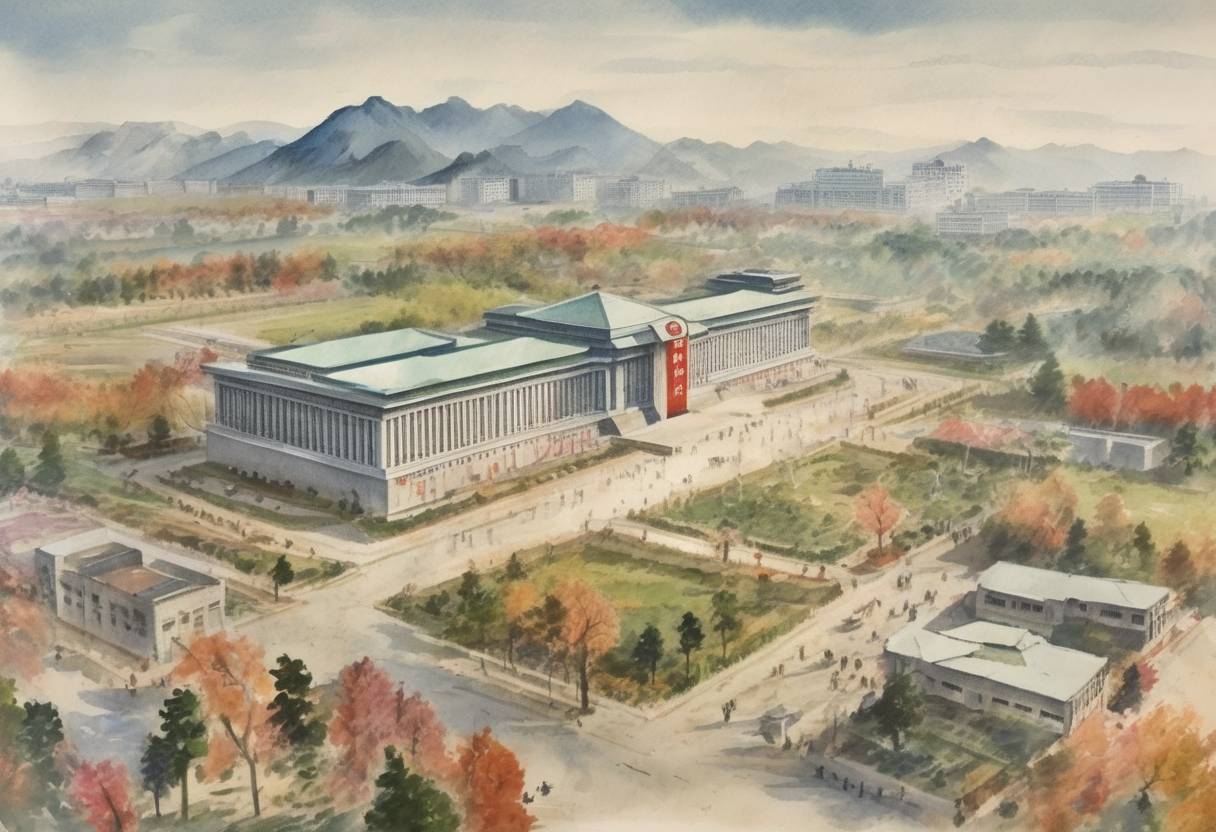
On September 9, 1948, the Democratic People’s Republic of Korea (DPRK) was officially established, marking a significant moment in the history of the Korean Peninsula. This event was pivotal in the division of Korea into two separate states, each with its own political ideology and government.
Post-World War II Division: After Japan’s defeat in World War II, Korea, which had been under Japanese colonial rule since 1910, was liberated. The peninsula was divided along the 38th parallel into two occupation zones: the Soviet Union occupied the north, while the United States occupied the south.
Emergence of Separate Governments: The geopolitical tensions of the Cold War influenced the establishment of separate governments in Korea. In the south, the Republic of Korea (ROK) was established on August 15, 1948, with Syngman Rhee as its president. In response, the north established the DPRK less than a month later.
Proclamation of the DPRK: The DPRK was proclaimed in Pyongyang, with Kim Il-sung appointed as the Premier. Kim, a former guerrilla fighter against Japanese forces and a prominent figure in the Korean Communist movement, was backed by the Soviet Union.
Government Structure: The new government adopted a socialist framework, heavily influenced by Soviet-style communism. The Workers’ Party of Korea (WPK) became the ruling party, with Kim Il-sung as its central figure.
Korean War (1950-1953): The establishment of two separate Korean states set the stage for the Korean War, which began on June 25, 1950, when North Korean forces invaded South Korea. The war resulted in significant casualties and destruction but ended in an armistice, not a peace treaty, leaving the peninsula technically still at war.
Long-term Division: The division of Korea has persisted into the 21st century, with the DPRK and ROK developing distinct political, economic, and social systems. The DPRK remains one of the most isolated and authoritarian regimes in the world.
Kim Dynasty: Kim Il-sung’s leadership marked the beginning of the Kim dynasty, which continues to rule North Korea. His son, Kim Jong-il, and grandson, Kim Jong-un, have succeeded him, maintaining the family’s grip on power.
The establishment of the DPRK was a critical event in the Cold War era, reflecting the global ideological struggle between communism and capitalism. It also laid the groundwork for ongoing tensions on the Korean Peninsula, influencing regional and international politics for decades.
The legacy of September 9, 1948, continues to shape the geopolitical landscape of East Asia, with the DPRK’s nuclear ambitions and human rights issues remaining central concerns for the international community.
Source: www.britannica.com