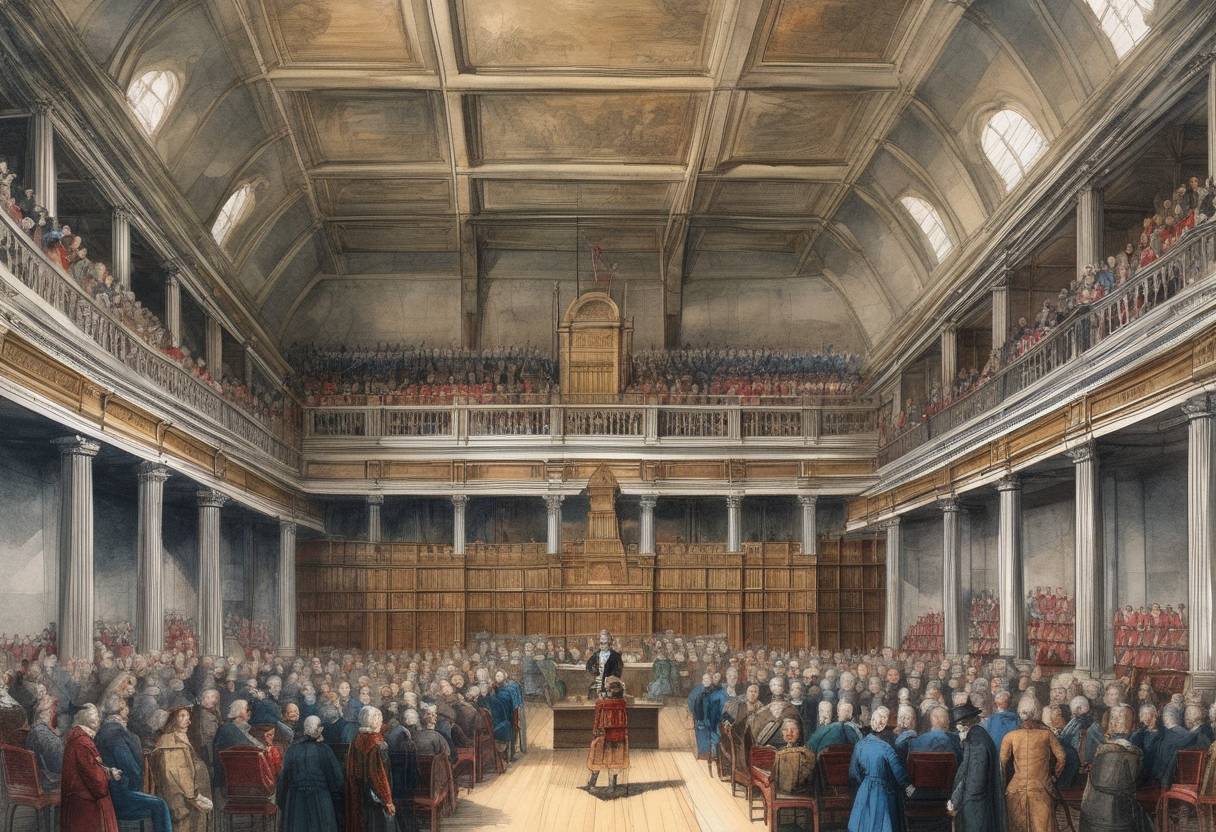
The First Parliament of Great Britain: October 23, 1707
On October 23, 1707, the first Parliament of Great Britain convened, marking a significant milestone in the political history of the British Isles. This event was the culmination of the Acts of Union 1707, which unified the separate parliaments of England and Scotland into a single legislative body.
Background
The Acts of Union 1707
- Political Context: The unification was driven by a combination of political, economic, and security concerns. England and Scotland had shared a monarch since 1603, but they maintained separate parliaments and legal systems.
- Economic Factors: Economic instability in Scotland, exacerbated by the failed Darien scheme (an attempt to establish a Scottish colony in Panama), increased the appeal of economic union with the more prosperous England.
- Security Concerns: The threat of French aggression during the War of the Spanish Succession highlighted the need for a unified defense strategy.
Passage of the Acts
- Negotiations: The Acts of Union were the result of complex negotiations between English and Scottish commissioners, culminating in the Treaty of Union in 1706.
- Ratification: The Scottish Parliament passed the Union with England Act in January 1707, and the English Parliament passed the Union with Scotland Act in March 1707. Both acts came into effect on May 1, 1707.
The First Meeting
- Location: The first session of the new Parliament of Great Britain was held at the Palace of Westminster in London.
- Composition: The Parliament consisted of members from both former parliaments. England contributed 513 members to the House of Commons and 190 peers to the House of Lords, while Scotland contributed 45 members to the Commons and 16 representative peers to the Lords.
- Significance: This inaugural session symbolized the formal political unification of England and Scotland, creating a single sovereign state under Queen Anne.
Aftermath and Consequences
- Political Impact: The union laid the groundwork for the modern United Kingdom, influencing the political landscape of the British Isles for centuries.
- Economic Integration: Over time, the union facilitated economic integration, leading to increased trade and industrialization.
- Cultural and Social Effects: While the union faced opposition and resentment in Scotland, it also led to a blending of cultures and shared national identity.
Broader Historical Significance
The first meeting of the Parliament of Great Britain was a pivotal moment in British history, setting a precedent for future political unions and expansions of the British state. It demonstrated the complexities and challenges of merging distinct political entities and laid the foundation for the United Kingdom as it is known today.