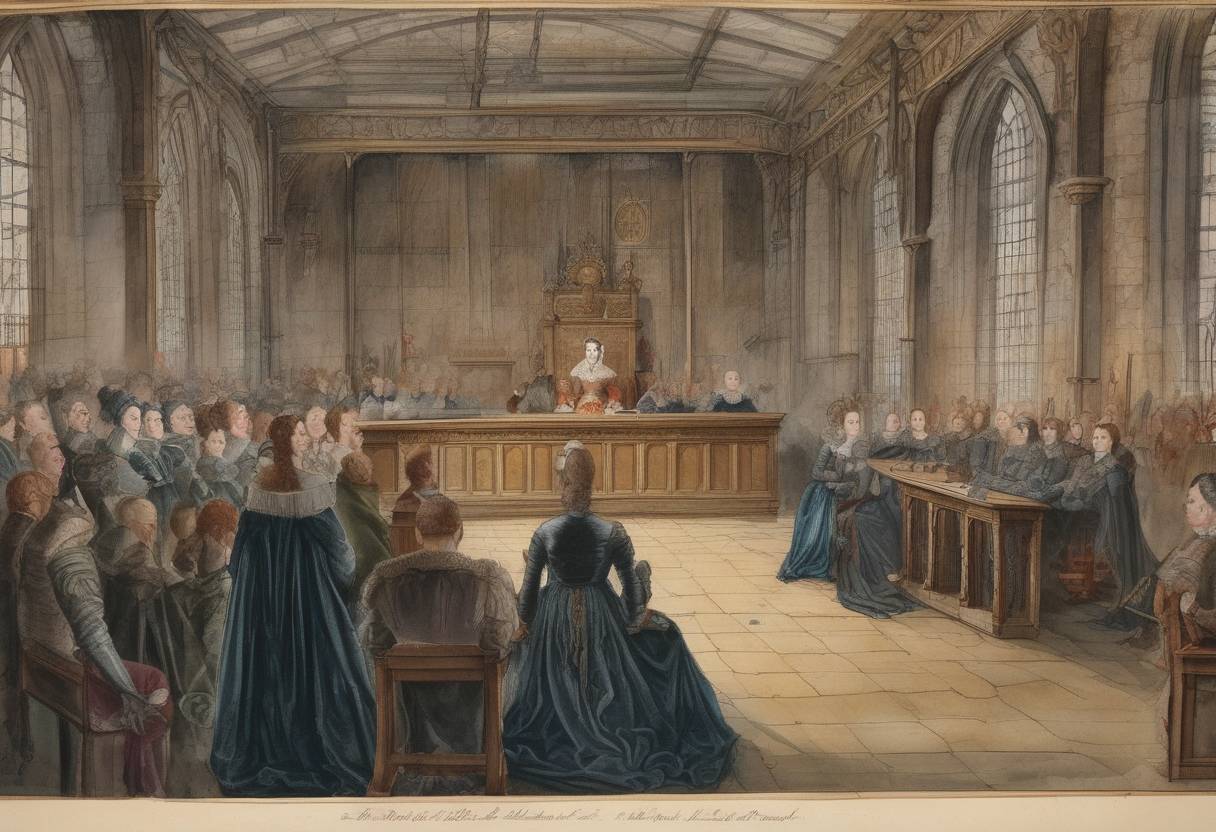
Mary, Queen of Scots: Trial for Conspiracy Against Queen Elizabeth I
On October 14, 1586, Mary, Queen of Scots, stood trial for her alleged involvement in a plot to assassinate Queen Elizabeth I of England. This event was a pivotal moment in the complex political and religious tensions of the time, ultimately leading to Mary’s execution.
Background
Mary, Queen of Scots, was a Catholic monarch with a legitimate claim to the English throne, which made her a focal point for Catholic plots against the Protestant Elizabeth I. After being forced to abdicate the Scottish throne in 1567, Mary sought refuge in England, where she was held in custody by Elizabeth for 19 years. During this time, Mary became the center of numerous conspiracies aiming to replace Elizabeth with a Catholic ruler.
The Babington Plot
The immediate cause of Mary’s trial was the Babington Plot, named after Anthony Babington, a young Catholic nobleman. The plot, uncovered by Elizabeth’s spymaster Sir Francis Walsingham, involved a plan to assassinate Elizabeth and place Mary on the English throne. Crucially, intercepted letters allegedly showed Mary’s approval of the plot, providing the evidence needed to charge her with treason.
The Trial
Mary’s trial began on October 14, 1586, at Fotheringhay Castle. The trial was conducted by a commission of 36 noblemen and privy councillors. Mary defended herself with dignity, arguing that she was denied the right to legal counsel and that, as a foreign queen, she was not subject to English law. Despite her arguments, the evidence presented, particularly the letters implicating her in the Babington Plot, led to her conviction.
Aftermath and Significance
Mary was found guilty of treason on October 25, 1586, and sentenced to death. Elizabeth hesitated to sign the death warrant, aware of the potential political repercussions, including the risk of alienating Catholic powers in Europe. However, under pressure from her advisors and Parliament, Elizabeth eventually signed the warrant, and Mary was executed on February 8, 1587.
Mary’s execution had significant consequences. It eliminated a major Catholic threat to Elizabeth’s reign but also strained relations with Catholic Europe, particularly with Spain, contributing to the tensions that led to the Spanish Armada’s attempted invasion of England in 1588. Mary’s death also cemented her status as a Catholic martyr, influencing subsequent Catholic-Protestant conflicts in Britain.
In summary, the trial of Mary, Queen of Scots, on October 14, 1586, was a crucial event in the Elizabethan era, highlighting the intense religious and political conflicts of the time and shaping the course of English and Scottish history.