The Battle of Fort Washington: A Decisive British Victory
1776 · New York City, United States
The Battle of Fort Washington ends in a decisive British victory during the American Revolutionary War.
September 21, 1780
Benedict Arnold gives the British the plans to West Point.
West Point, United States | British Army
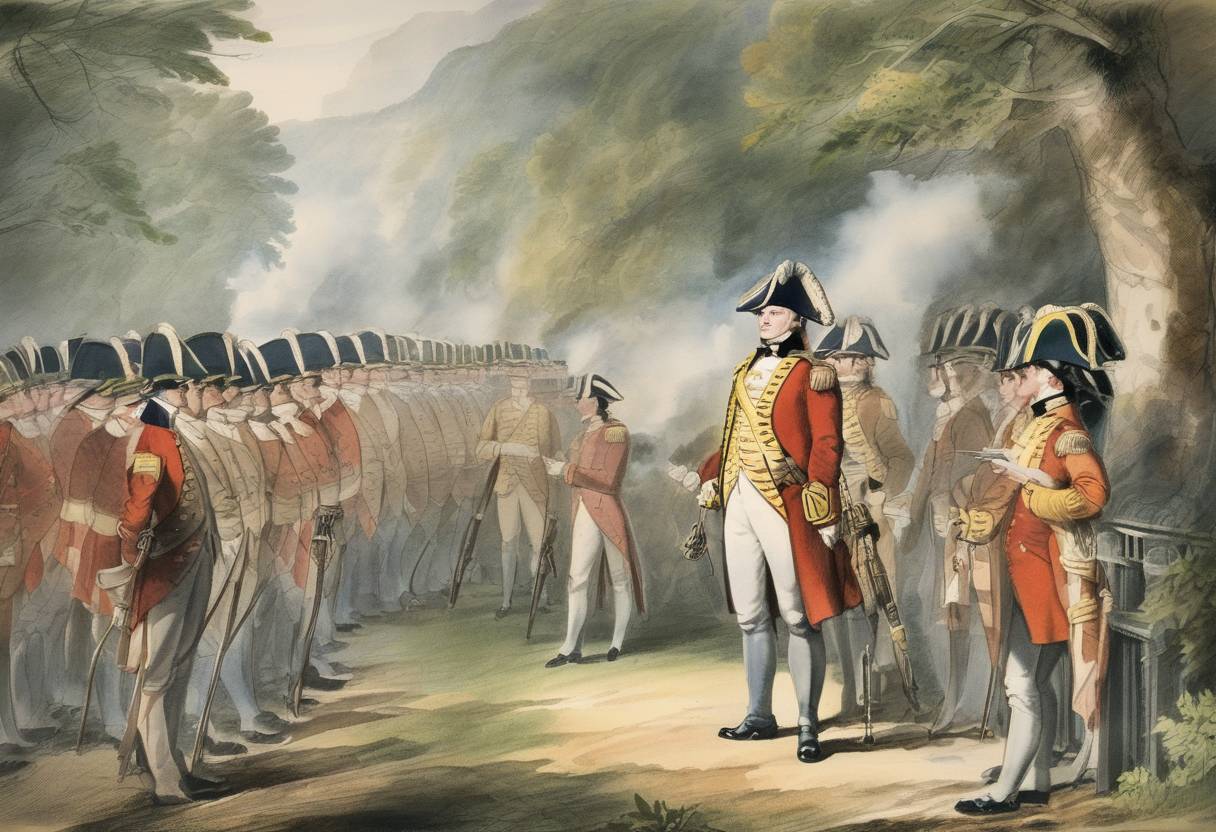
On September 21, 1780, one of the most infamous acts of treason in American history unfolded when Major General Benedict Arnold, a respected officer in the Continental Army, met with British Major John André to finalize the betrayal of the American stronghold at West Point.
Benedict Arnold was initially a celebrated hero of the American Revolutionary War, known for his bravery and leadership in battles such as the capture of Fort Ticonderoga and the pivotal Battle of Saratoga. However, Arnold felt underappreciated and aggrieved by the Continental Congress, which he believed had overlooked his contributions and failed to promote him adequately. Additionally, Arnold faced financial difficulties and was accused of corruption and misconduct while serving as the military governor of Philadelphia.
Disillusioned and in debt, Arnold began secret communications with the British in May 1779. By 1780, he had assumed command of West Point, a strategic fortification on the Hudson River crucial for controlling the river and preventing British advances from New York City into the interior of New York State.
Arnold’s plan was to surrender West Point to the British, which would have given them a significant advantage in the war. In exchange, Arnold was promised £20,000 and a commission in the British Army.
On September 21, 1780, Arnold met with Major John André in a clandestine meeting near Haverstraw, New York. During this meeting, Arnold provided André with detailed plans of West Point’s defenses. The meeting was held aboard the British sloop-of-war HMS Vulture, anchored in the Hudson River.
The plot unraveled when André was captured by American forces on September 23, 1780, near Tarrytown, New York. He was found with incriminating documents hidden in his boot, including the plans for West Point. André was tried and executed as a spy on October 2, 1780.
Arnold, upon learning of André’s capture, fled to the British lines, narrowly escaping arrest. He was later commissioned as a brigadier general in the British Army and led raids against American forces.
Arnold’s treason was a severe blow to American morale, but it ultimately did not alter the course of the war. His name became synonymous with betrayal in American culture. The incident underscored the vulnerabilities and internal challenges faced by the Continental Army but also highlighted the resilience and dedication of American forces in overcoming such setbacks.
Arnold’s actions serve as a reminder of the complexities and personal motivations that can influence historical events, as well as the importance of loyalty and integrity in leadership.
Source: en.wikipedia.org