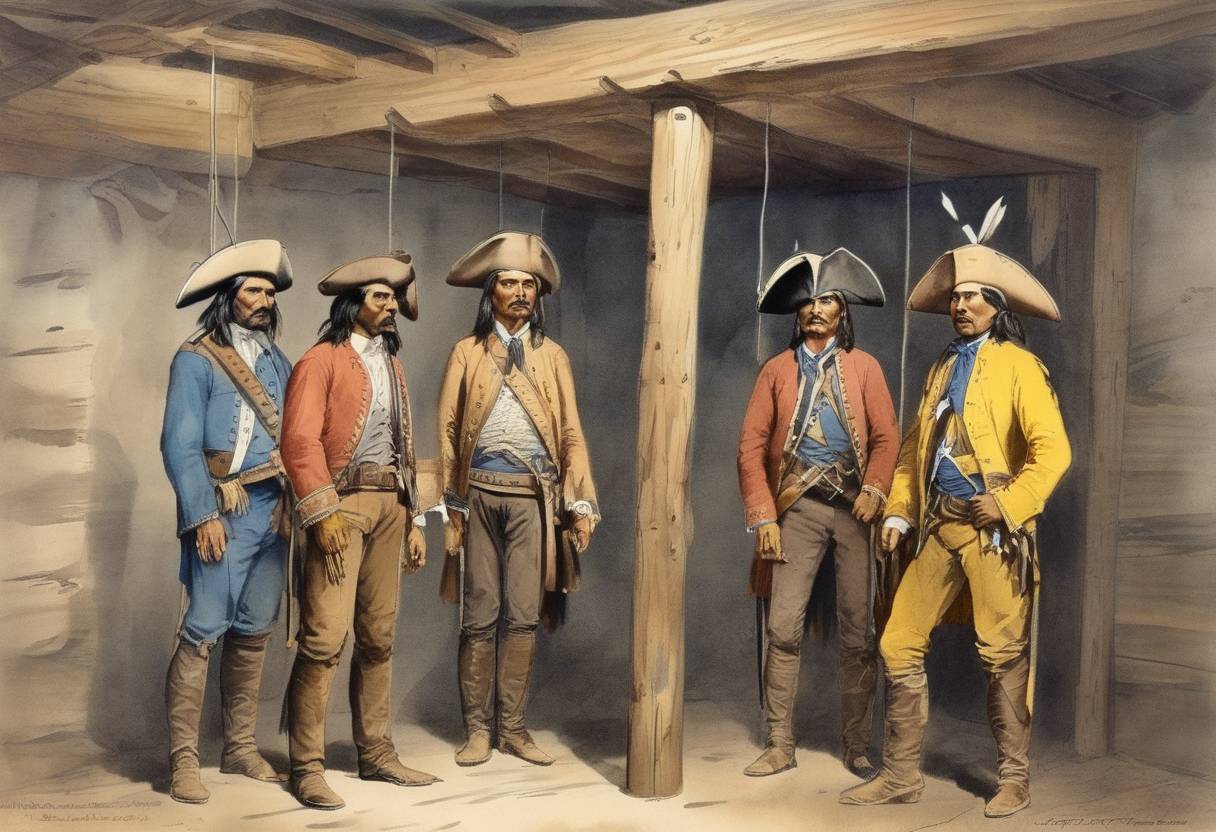
The Execution of Captain Jack and Modoc Warriors
On October 3, 1873, Captain Jack, also known as Kintpuash, along with three other Modoc warriors—Boston Charley, Black Jim, and Schonchin John—were executed by hanging at Fort Klamath, Oregon. This event marked a significant and somber conclusion to the Modoc War, a conflict that had profound implications for Native American and United States government relations.
Background of the Modoc War
The Modoc War, which lasted from 1872 to 1873, was a result of escalating tensions between the Modoc tribe and the U.S. government. The Modoc people, originally from the area around Tule Lake in Northern California and Southern Oregon, were forcibly relocated to the Klamath Reservation in Oregon. The conditions on the reservation were poor, leading to dissatisfaction and unrest among the Modoc.
Captain Jack led a group of Modoc back to their ancestral lands, seeking to live independently. The U.S. government, however, demanded their return to the reservation, leading to a series of conflicts known as the Modoc War.
The Assassination of General Canby
A pivotal moment in the Modoc War occurred on April 11, 1873, during peace negotiations. Captain Jack, under pressure from other Modoc leaders, assassinated General Edward Canby, the highest-ranking U.S. military officer killed during the Indian Wars. This act was intended to force the U.S. to concede to Modoc demands but instead led to increased military action against the Modoc.
The Trial and Execution
Following the assassination, the U.S. military intensified its efforts to capture the Modoc leaders. By June 1873, Captain Jack and other key figures were captured. They were tried by a military commission, found guilty of war crimes, and sentenced to death.
On October 3, 1873, Captain Jack, Boston Charley, Black Jim, and Schonchin John were executed at Fort Klamath. Their execution was intended to serve as a deterrent to other Native American tribes considering resistance against U.S. policies.
Aftermath and Historical Significance
The execution of Captain Jack and his fellow warriors marked the end of the Modoc War. The remaining Modoc people were relocated to Indian Territory in present-day Oklahoma, far from their homeland. The war and its aftermath highlighted the broader issues of Native American displacement and the U.S. government’s Indian policy during the 19th century.
The Modoc War and the execution of its leaders remain significant in the history of Native American resistance, illustrating the complexities and tragedies of U.S.-Native American relations during this period.