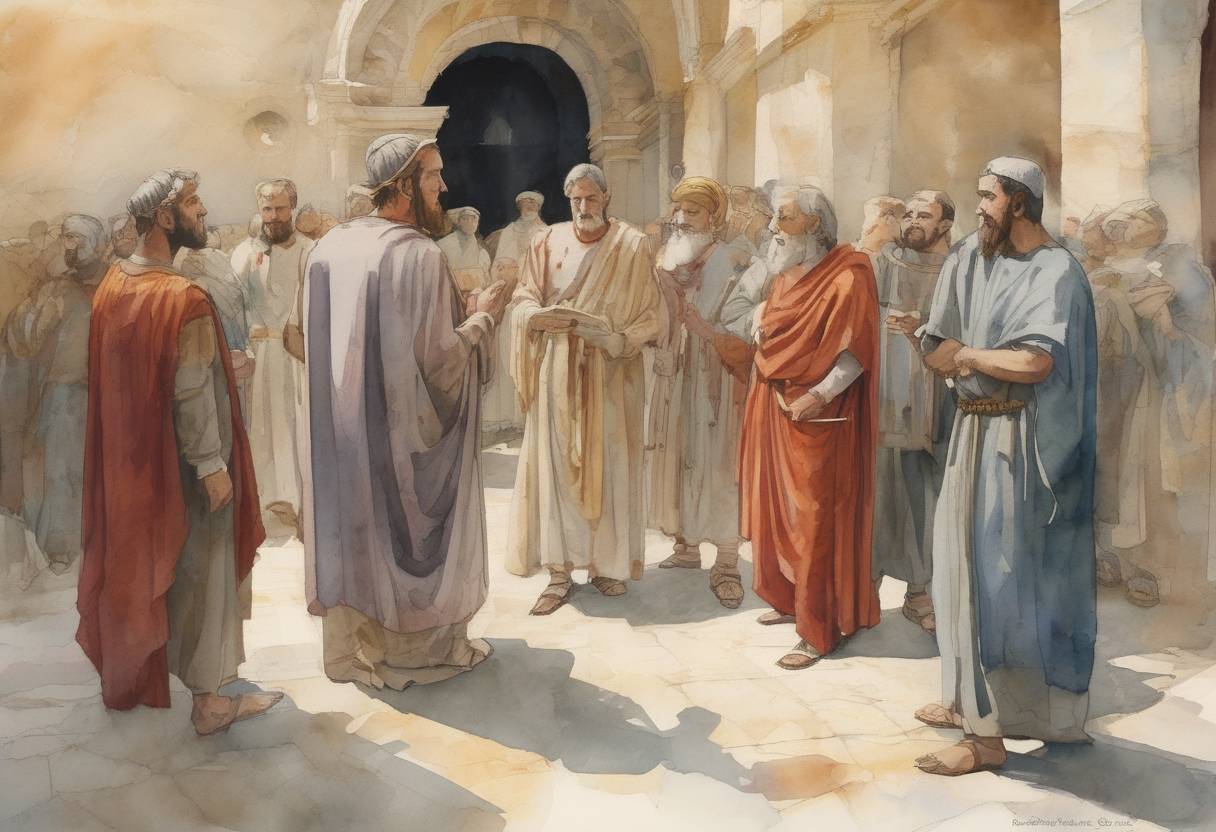
The Council of Arles: A Significant Early Christian Council
Date: October 8, 314
Background
The Council of Arles was convened in the early 4th century, a period marked by significant challenges and transformations within the Christian Church. This council was primarily called to address the Donatist controversy, a schism that had arisen in the North African Church. The controversy centered around the legitimacy of sacraments performed by priests and bishops who had lapsed in their faith during the Diocletian persecution. The Donatists argued that clergy who had renounced their faith under persecution were invalid ministers, and thus, any sacraments they performed were invalid.
Key Events Leading to the Council
- Diocletian Persecution (303-311): The last and most severe persecution of Christians in the Roman Empire, which led to many Christians renouncing their faith under duress.
- Edict of Milan (313): Issued by Constantine and Licinius, this edict legalized Christianity and restored confiscated church properties, setting the stage for addressing internal church disputes.
- Donatist Schism: The Donatists, led by Donatus Magnus, refused to accept the authority of clergy who had lapsed during persecution, leading to a significant division within the church.
The Council of Arles
The Council of Arles was one of the first attempts to resolve a major theological and ecclesiastical dispute through a synod. It was convened by Emperor Constantine, who sought to unify the Christian Church and stabilize the empire.
Key Outcomes
Condemnation of Donatism: The council reaffirmed the decisions of the earlier Synod of Rome (313), which had condemned the Donatist position. It declared that the validity of the sacraments did not depend on the moral purity of the clergy administering them.
Canons on Church Discipline: The council established several canons to regulate church discipline and practices, including:
- The prohibition of rebaptism, aligning with the stance against Donatism.
- Regulations concerning the celebration of Easter, aiming for uniformity across the Christian world.
- Guidelines on the ordination and conduct of clergy, emphasizing moral integrity and ecclesiastical order.
Role of Constantine: The council marked one of the first instances of imperial involvement in church affairs, setting a precedent for future interactions between the church and the state.
Aftermath and Historical Significance
- Continued Donatist Resistance: Despite the council’s decisions, the Donatist movement persisted, particularly in North Africa, leading to ongoing tensions and conflicts.
- Precedent for Ecumenical Councils: The Council of Arles set a precedent for future ecumenical councils, such as the First Council of Nicaea in 325, by demonstrating the effectiveness of synods in resolving doctrinal disputes.
- Church-State Relations: The involvement of Emperor Constantine in the council’s proceedings highlighted the growing relationship between the Christian Church and the Roman state, a dynamic that would shape the future of Christianity.
The Council of Arles was a pivotal moment in early Christian history, addressing critical issues of church unity and discipline while illustrating the complexities of integrating a rapidly growing religion within the Roman Empire.