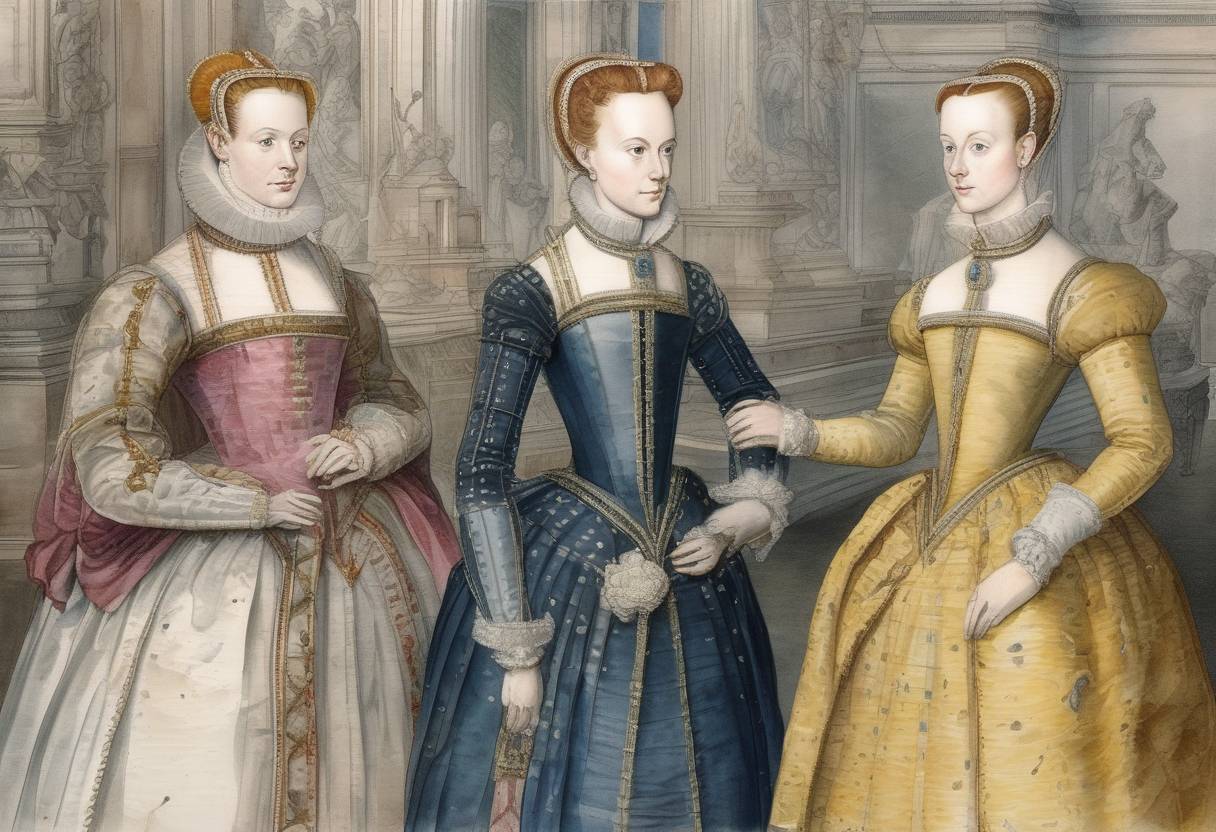
Marriage of Mary, Queen of Scots, to the French Dauphin Francis
On April 24, 1558, Mary, Queen of Scots, married Francis, the Dauphin of France, in a grand ceremony at Notre Dame Cathedral in Paris. This union was not only a significant personal event for Mary but also a pivotal moment in the political landscape of Europe during the 16th century.
Context and Background
Mary, Queen of Scots, was born in 1542 and became queen of Scotland when she was just six days old, following the death of her father, King James V of Scotland. Her early life was marked by political turmoil, as Scotland was caught between the influences of England and France. To secure an alliance with France against England, Mary was betrothed to Francis, the heir to the French throne, at a young age.
Francis, born in 1544, was the eldest son of King Henry II of France and Catherine de’ Medici. The marriage was part of a strategic alliance between Scotland and France, known as the “Auld Alliance,” which aimed to counterbalance English power.
The Marriage Ceremony
The wedding took place at the iconic Notre Dame Cathedral, attended by a host of European nobility and dignitaries. The ceremony was a lavish affair, reflecting the importance of the union. Mary, known for her beauty and charm, was just 15 years old, while Francis was 14. The marriage was celebrated with great pomp and splendor, symbolizing the strong ties between the two nations.
Political Implications
The marriage had significant political implications. It strengthened the Franco-Scottish alliance and posed a challenge to England, ruled by Queen Elizabeth I. Mary, being a legitimate Catholic claimant to the English throne, was seen as a potential threat by Elizabeth, especially after her marriage to Francis, which bolstered her position.
Aftermath and Consequences
In 1559, following the death of King Henry II of France, Francis ascended to the French throne as King Francis II, making Mary the queen consort of France. However, Francis’s reign was short-lived; he died in December 1560, leaving Mary a widow at the age of 18.
Mary’s marriage to Francis and her subsequent widowhood had lasting effects on her life and reign. After Francis’s death, she returned to Scotland, where she faced numerous challenges, including political instability and religious conflict. Her claim to the English throne continued to be a contentious issue, ultimately leading to her imprisonment and execution in 1587.
Historical Significance
The marriage of Mary, Queen of Scots, to Francis, the Dauphin of France, is a notable event in European history. It exemplifies the intricate web of alliances and rivalries that characterized the period. The union had lasting repercussions for Mary, influencing her political and personal life and shaping the course of Scottish and English history.
Mary’s life and legacy remain subjects of fascination and debate, with her marriage to Francis being a key chapter in the tumultuous story of her reign.