The Battle of Brandywine: September 11, 1777
1777 · Chadds Ford Township, United States
The Battle of Brandywine occurred during the American Revolutionary War, resulting in a British victory.
April 27, 1777
The Battle of Ridgefield was fought during the American Revolutionary War, resulting in a tactical victory for the British forces.
Ridgefield, United States | British Army
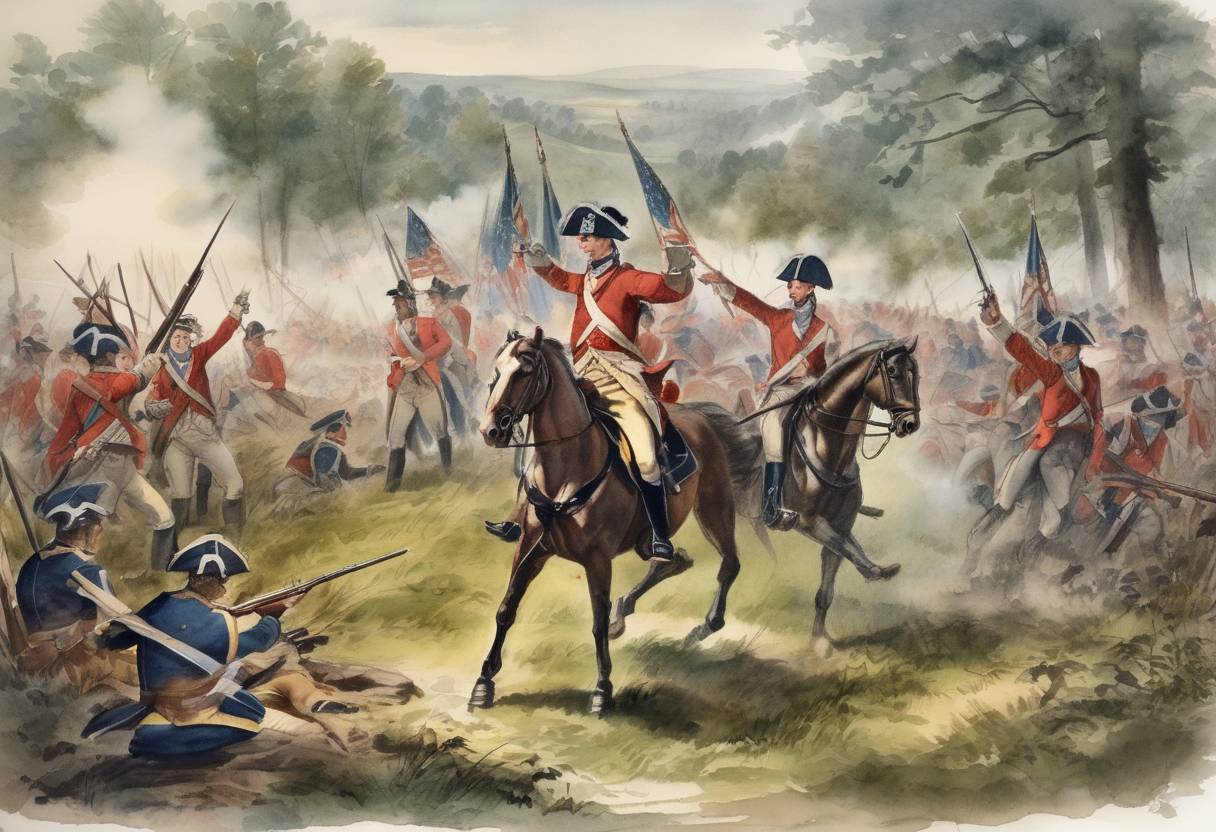
The Battle of Ridgefield was a significant engagement during the American Revolutionary War, taking place on April 27, 1777, in Ridgefield, Connecticut. This battle was part of a British campaign to disrupt American supply lines and assert control over the rebellious colonies.
In early 1777, the British aimed to weaken the American war effort by targeting key supply depots. One such target was the town of Danbury, Connecticut, which served as a crucial supply center for the Continental Army. British forces, under the command of Major General William Tryon, launched a raid to destroy these supplies and disrupt American operations.
On April 25, 1777, Tryon’s force of approximately 1,800 troops landed at Compo Beach in Westport, Connecticut. They marched inland to Danbury, where they successfully destroyed large quantities of American supplies, including food, clothing, and ammunition.
As the British troops began their return to their ships, American forces, led by Major General David Wooster, Brigadier General Benedict Arnold, and Brigadier General Gold Selleck Silliman, mobilized to intercept them. The Americans, numbering around 700, engaged the British in a series of skirmishes as they retreated through Ridgefield.
The main confrontation occurred on April 27, when the American forces attempted to block the British retreat. Despite their efforts, the Americans were outnumbered and outgunned. General Wooster was mortally wounded during the fighting, and the British managed to break through the American lines.
The Battle of Ridgefield ended in a tactical victory for the British, as they successfully completed their mission to destroy American supplies and returned to their ships. However, the engagement demonstrated the resilience and determination of the American forces, who managed to inflict significant casualties on the British.
The battle also highlighted the growing effectiveness of American militia forces and their ability to mobilize quickly in response to British movements. Benedict Arnold, who played a key role in the battle, was later promoted for his bravery and leadership.
While the British achieved their immediate objectives, the raid on Danbury and the Battle of Ridgefield galvanized American resistance in the region. It underscored the challenges the British faced in maintaining control over the colonies and the determination of the American forces to defend their territory.
The battle also contributed to the legend of Benedict Arnold, who would later become infamous for his betrayal of the American cause. At Ridgefield, however, he was celebrated as a hero, demonstrating the complex and often contradictory nature of historical figures.
In summary, the Battle of Ridgefield was a tactical British victory with strategic implications that fueled American resolve and highlighted the ongoing struggle for control in the Revolutionary War.
Source: en.wikipedia.org