The Opening of the Woodbridge Cloverleaf
1924 · Woodbridge Township, United States
The Woodbridge Cloverleaf, the first cloverleaf interchange in the United States, opens in Woodbridge Township, New Jersey.
May 23, 2013
The Interstate 5 bridge over the Skagit River in Washington State collapsed after a truck struck a girder, causing a major transportation disruption.
Mount Vernon, United States | Washington State Department of Transportation
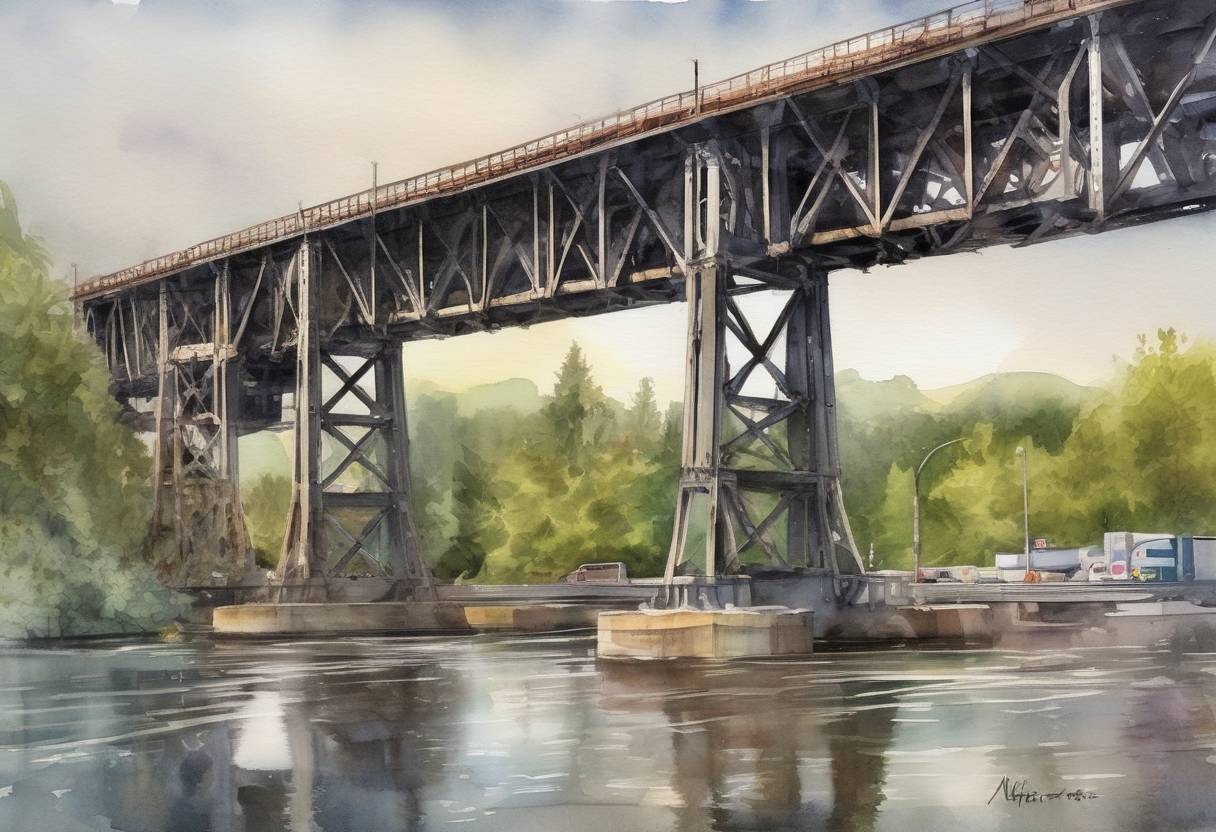
On May 23, 2013, a significant transportation incident occurred in Washington State when a section of the Interstate 5 (I-5) bridge over the Skagit River collapsed. This event caused major disruptions and highlighted vulnerabilities in the infrastructure of the region.
The I-5 bridge, officially known as the Skagit River Bridge, was a critical part of the transportation network in the Pacific Northwest. It connected the cities of Seattle and Vancouver, British Columbia, facilitating the movement of goods and people across the region. The bridge was a steel truss structure, originally built in 1955, and was part of a vital corridor for both local and interstate traffic.
On the evening of May 23, 2013, a semi-truck carrying an oversized load struck one of the bridge’s overhead support girders. The impact caused a 160-foot section of the bridge to collapse into the Skagit River below. Fortunately, there were no fatalities, but three people were injured as two vehicles plunged into the water.
The collapse prompted immediate action from state and federal authorities. Emergency services responded quickly to rescue those who had fallen into the river. The incident underscored the importance of infrastructure maintenance and the need for stringent regulations regarding oversized loads.
The Skagit River Bridge collapse served as a wake-up call regarding the state of infrastructure in the United States. It highlighted the need for regular inspections, maintenance, and upgrades to aging bridges and roads. The incident also led to increased scrutiny of transportation regulations, particularly concerning the movement of oversized loads.
The collapse of the I-5 bridge over the Skagit River was a significant event in Washington State’s history, demonstrating the critical importance of infrastructure integrity and safety. It prompted swift action to restore a key transportation route and sparked discussions on improving infrastructure resilience nationwide.
Source: www.nytimes.com