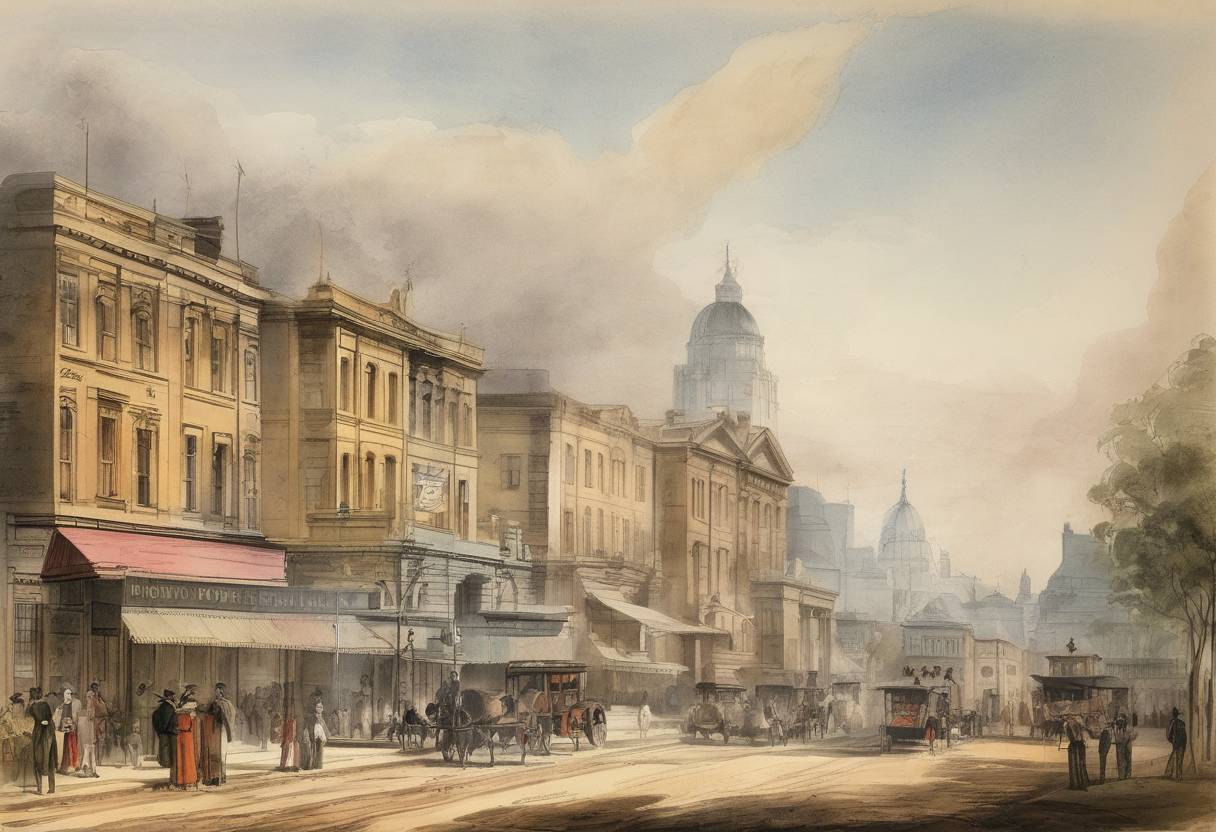
Founding of Melbourne, Australia - August 30, 1835
The founding of Melbourne, Australia, is a significant event in the history of the country, marking the establishment of what would become one of its largest and most vibrant cities. The date often associated with this founding is August 30, 1835, when the first settlers arrived and began to establish a permanent settlement.
John Batman: A prominent grazier and businessman from Tasmania, Batman is often credited with initiating the founding of Melbourne. In May 1835, he led an expedition from Tasmania to the mainland, where he negotiated a treaty with the local Aboriginal people, the Wurundjeri, to acquire land around the Yarra River.
John Pascoe Fawkner: Another key figure in Melbourne’s founding, Fawkner was a businessman and publican who organized a separate expedition to Port Phillip Bay. His party arrived in the area in August 1835, shortly after Batman’s treaty.
Context and Events Leading Up to the Founding
European Exploration: The area around Port Phillip Bay had been explored by Europeans since the early 19th century, with explorers like Matthew Flinders and John Murray mapping the region.
Settlement in Tasmania: Both Batman and Fawkner were originally from Tasmania (then known as Van Diemen’s Land), where they were involved in agriculture and business. The desire for new grazing land and economic opportunities drove them to explore the mainland.
Batman’s Treaty: In what is now a controversial and disputed agreement, Batman claimed to have negotiated a treaty with the Wurundjeri people, offering goods in exchange for large tracts of land. This treaty was later declared invalid by the colonial government.
Establishment of the Settlement
Arrival of Settlers: On August 30, 1835, Fawkner’s party, aboard the schooner Enterprize, arrived at the site where Melbourne would be established. They began to clear land and build structures, laying the groundwork for the new settlement.
Conflict and Cooperation: Initially, there was tension between the Batman and Fawkner parties, as both claimed rights to the land. However, they eventually cooperated to develop the settlement.
Aftermath and Significance
Growth of Melbourne: The settlement quickly grew as more settlers arrived, attracted by the fertile land and economic potential. By 1837, the settlement was officially named Melbourne, after the British Prime Minister, William Lamb, 2nd Viscount Melbourne.
Impact on Indigenous Peoples: The founding of Melbourne had profound and often devastating effects on the local Aboriginal populations, leading to displacement and cultural disruption.
Economic and Cultural Hub: Over time, Melbourne developed into a major economic and cultural center in Australia, known for its diverse population, vibrant arts scene, and significant contributions to the nation’s economy.
The founding of Melbourne is a complex event with lasting implications, reflecting both the opportunities and challenges of colonial expansion in Australia.