Holy Roman Emperor Frederick II Lands at Acre - September 15, 1228
1228 · Acre, Kingdom of Jerusalem
Holy Roman Emperor Frederick II lands at Acre, starting his crusade.
May 24, 1218
The Fifth Crusade leaves Acre for Egypt.
Acre, Kingdom of Jerusalem | Fifth Crusade
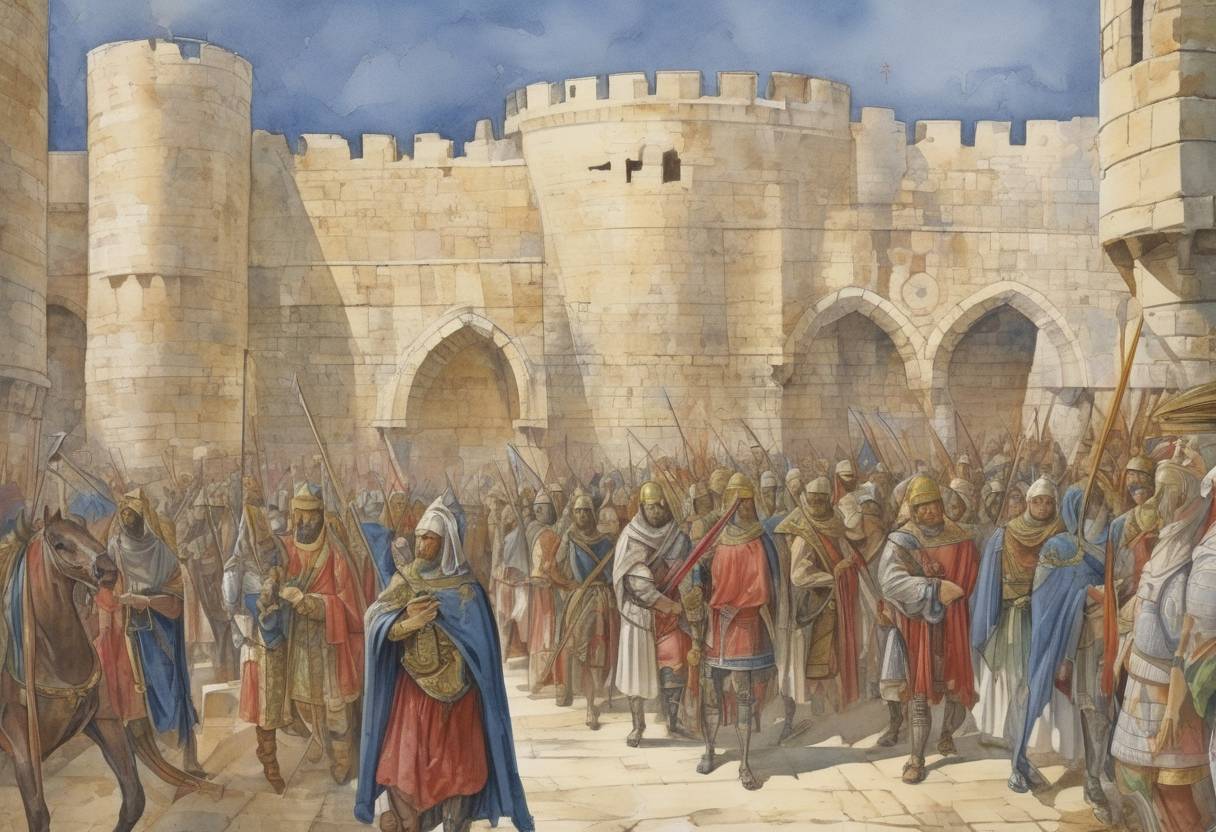
On May 24, 1218, the Fifth Crusade embarked from the city of Acre, located in the Kingdom of Jerusalem, towards Egypt. This marked a significant phase in the series of religious and military campaigns known as the Crusades, which were initiated by European Christians with the primary aim of reclaiming Jerusalem and other holy lands from Muslim control.
The Fifth Crusade (1217–1221) was called by Pope Innocent III and later led by his successor, Pope Honorius III. The Crusade was part of a broader papal strategy to exert Christian influence in the Holy Land and was characterized by its attempt to weaken Muslim power by targeting Egypt, a key Muslim stronghold and the seat of the Ayyubid dynasty.
Acre served as a strategic launching point for Crusader operations due to its location and its status as a major port city in the Crusader states. On May 24, 1218, the Crusader forces set sail from Acre, aiming to capture the Egyptian city of Damietta. The decision to target Egypt was based on the belief that controlling Egypt would undermine Muslim power in the region and facilitate the eventual recapture of Jerusalem.
Upon arrival in Egypt, the Crusaders laid siege to the port city of Damietta, located at the mouth of the Nile River. The siege lasted for nearly two years, from 1218 to 1219, and was marked by intense combat and significant hardships for both the Crusaders and the city’s defenders.
The Fifth Crusade highlighted the complexities and challenges of the Crusader campaigns, including logistical difficulties, leadership disputes, and the formidable resistance posed by Muslim forces. It underscored the shifting strategies of the Crusaders, who sought to weaken Muslim powers indirectly by targeting Egypt rather than directly assaulting Jerusalem.
The events of the Fifth Crusade also set the stage for subsequent Crusades and continued the cycle of conflict in the region, influencing the geopolitical and religious landscape of the medieval Mediterranean world.
Source: en.wikipedia.org