Hernando de Soto Reaches the Mississippi River - May 9, 1540
1540 · Mississippi River, Present-day United States
Hernando de Soto, a Spanish explorer and conquistador, reached the Mississippi River, the first documented European to do so.
May 21, 1542
Spanish explorer Hernando de Soto died on the banks of the Mississippi River. He was the first European documented to have crossed the river.
Mississippi River, United States | Spanish Empire
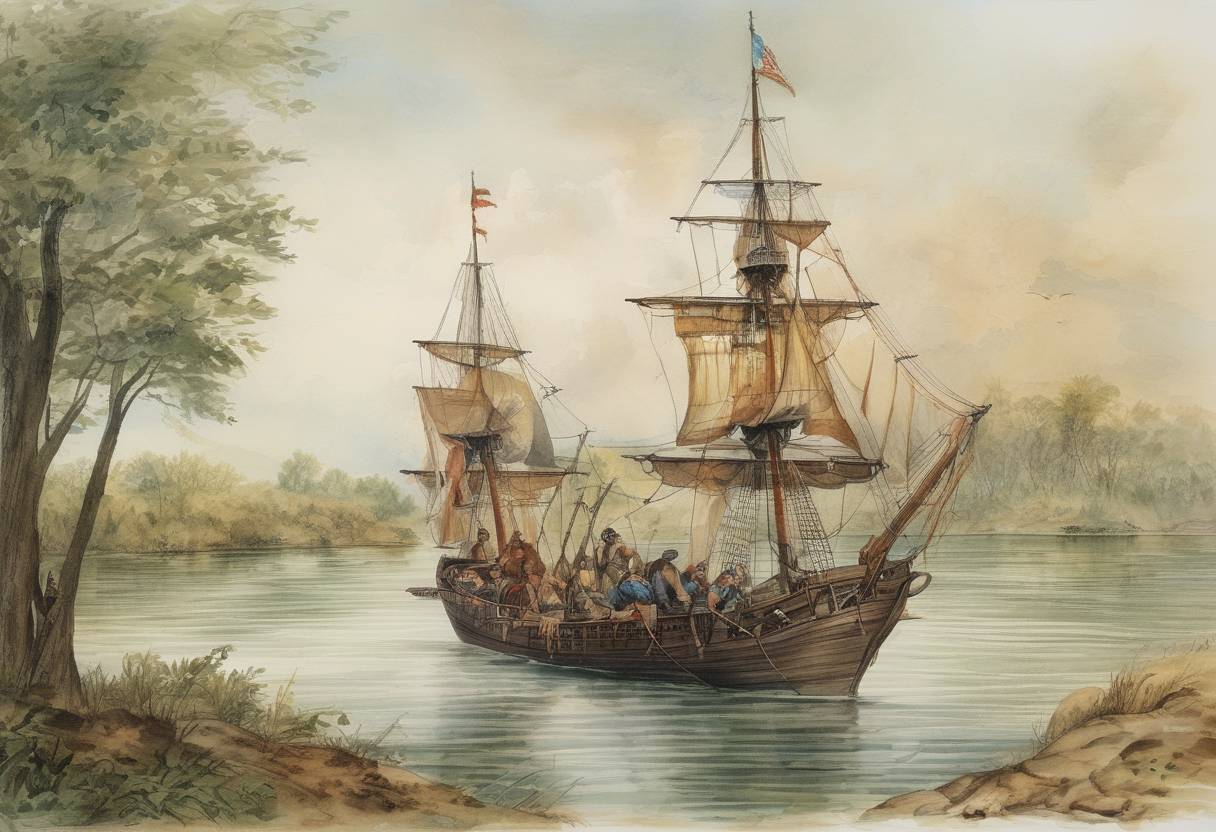
Hernando de Soto, a notable Spanish explorer and conquistador, died on May 21, 1542, on the banks of the Mississippi River. His death marked the end of a significant chapter in the early exploration of the North American continent. De Soto is recognized as the first European documented to have crossed the Mississippi River, a pivotal moment in the history of European exploration in the New World.
Born around 1500 in Jerez de los Caballeros, Spain, Hernando de Soto gained fame and wealth through his involvement in the conquest of Central America and Peru. He was part of Francisco Pizarro’s expedition that led to the fall of the Inca Empire. Following his success in South America, de Soto sought to explore and conquer new territories in North America.
In 1539, de Soto embarked on an ambitious expedition to explore the southeastern United States. He landed in present-day Florida with a large contingent of men, horses, and supplies. Over the next three years, de Soto’s expedition traversed vast regions, including parts of what are now Georgia, the Carolinas, Tennessee, Alabama, Mississippi, and Arkansas.
In May 1541, de Soto and his men became the first Europeans to document crossing the Mississippi River, a major geographical milestone. This crossing occurred near present-day Memphis, Tennessee, and opened the way for further exploration of the interior of North America.
De Soto’s expedition faced numerous challenges, including hostile encounters with Indigenous peoples, disease, and dwindling supplies. On May 21, 1542, Hernando de Soto succumbed to a fever on the banks of the Mississippi River, near present-day Ferriday, Louisiana. His death left the expedition without its leader, and his men, fearing the reaction of the Indigenous peoples, buried him in the river to conceal his death.
Following de Soto’s death, the remnants of his expedition, led by Luis de Moscoso Alvarado, attempted to reach Mexico overland but eventually returned to the Mississippi River. They constructed makeshift boats and sailed down the river to the Gulf of Mexico, finally reaching Spanish settlements in Mexico in 1543.
Hernando de Soto’s expedition was one of the earliest European incursions into the interior of North America. It provided valuable information about the geography and Indigenous cultures of the region, despite its ultimate failure to establish a permanent settlement or find the wealth de Soto had hoped for. His journey across the Mississippi River remains a significant event in the history of European exploration, symbolizing the beginning of European engagement with the vast interior of the continent.
De Soto’s legacy is complex, as his expeditions also brought violence and disease to Indigenous populations, leading to significant disruptions in their societies. His explorations, however, paved the way for future European expeditions and colonization efforts in North America.
Source: en.wikipedia.org