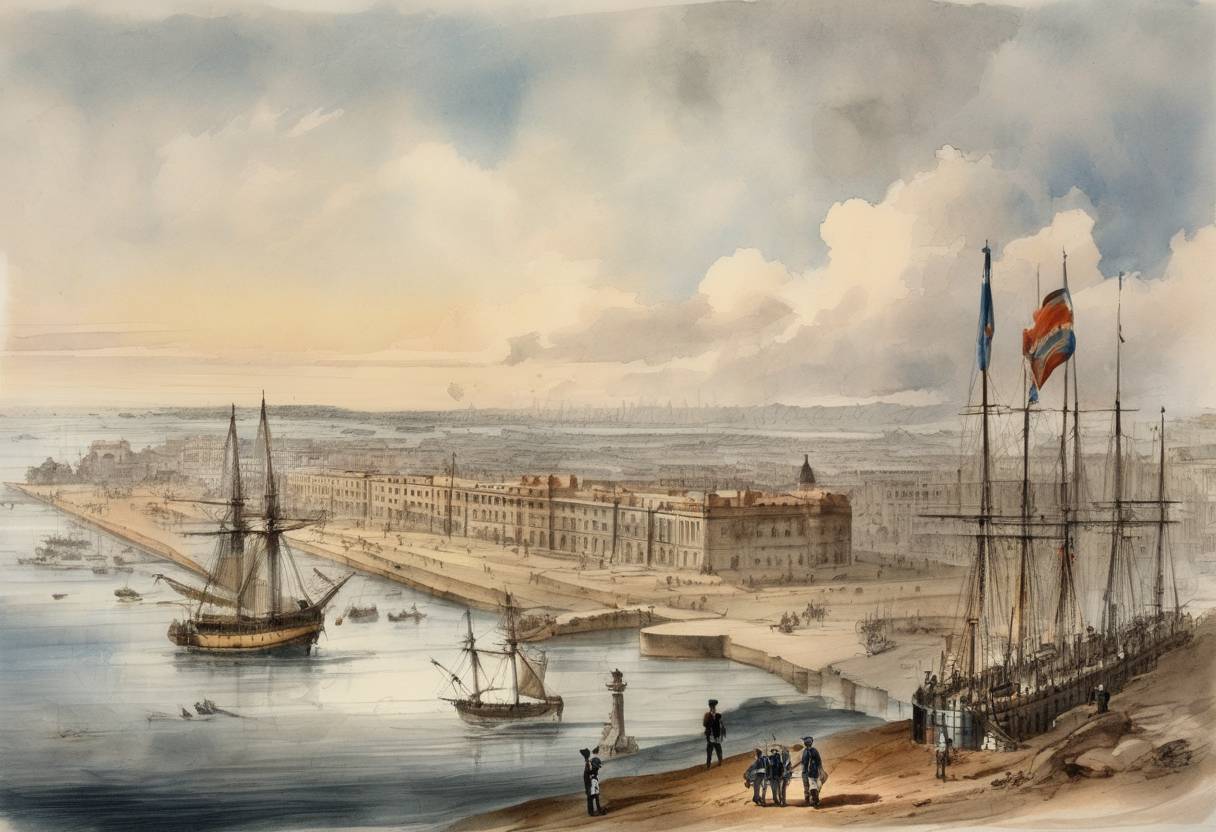
Capture of Montevideo by British Forces on February 3, 1807
On February 3, 1807, a British military force led by Brigadier-General Sir Samuel Auchmuty successfully captured the Spanish-ruled city of Montevideo, which is now the capital of Uruguay. This event was part of the broader British invasions of the Río de la Plata, a series of military campaigns during the Napoleonic Wars aimed at expanding British influence in South America.
Context and Background
- Napoleonic Wars: During the early 19th century, Europe was engulfed in the Napoleonic Wars. Britain, seeking to weaken Spain, a French ally, and expand its own colonial reach, targeted Spanish territories in South America.
- Strategic Importance: The Río de la Plata region, encompassing parts of modern-day Argentina and Uruguay, was strategically significant due to its rich resources and potential as a trade hub.
- Previous Attempts: The British had previously attempted to capture Buenos Aires in 1806 under General William Carr Beresford. Although initially successful, the British were expelled by local forces led by Santiago de Liniers.
The Capture of Montevideo
- British Forces: The expedition to capture Montevideo was commanded by Brigadier-General Sir Samuel Auchmuty. The force comprised approximately 6,000 troops, supported by a naval squadron under Admiral Charles Stirling.
- Siege and Assault: The British laid siege to Montevideo in January 1807. After a series of bombardments and skirmishes, Auchmuty launched a decisive assault on February 3. The British forces breached the city’s defenses and captured Montevideo after intense fighting.
- Spanish Surrender: The Spanish garrison, unable to withstand the British assault, surrendered the city. The capture was a significant victory for the British, providing them with a strategic foothold in the region.
Aftermath and Consequences
- British Occupation: Following the capture, Montevideo remained under British control for several months. The occupation was marked by efforts to establish British trade and influence in the region.
- Second Invasion of Buenos Aires: Encouraged by their success in Montevideo, the British launched a second invasion of Buenos Aires in June 1807. However, this attempt ended in failure, with British forces being decisively defeated and forced to withdraw.
- Return to Spanish Control: In September 1807, as part of a negotiated withdrawal, the British returned Montevideo to Spanish control. The failure of the British invasions ultimately reinforced local resistance and contributed to the rise of independence movements in the region.
Broader Historical Significance
- Impact on Independence Movements: The British invasions highlighted the vulnerabilities of Spanish colonial rule and inspired local populations to pursue independence. The events in the Río de la Plata region were precursors to the broader Latin American wars of independence that would unfold in the following decades.
- British Influence: Although the invasions were unsuccessful in establishing lasting British control, they demonstrated Britain’s interest in South American affairs and set the stage for future economic and diplomatic engagements in the region.
The capture of Montevideo remains a significant episode in the history of British military campaigns and the complex colonial dynamics of early 19th-century South America.