Bahram Chobin Crowned as King Bahram VI of Persia
590 · Ctesiphon, Sasanian Empire
Bahram Chobin is crowned as King Bahram VI of Persia, marking a significant moment in the Sasanian Empire's history.
February 3, 0590
Khosrow II is crowned King of Persia, beginning his reign over the Sasanian Empire.
Ctesiphon, Sasanian Empire | Sasanian Empire
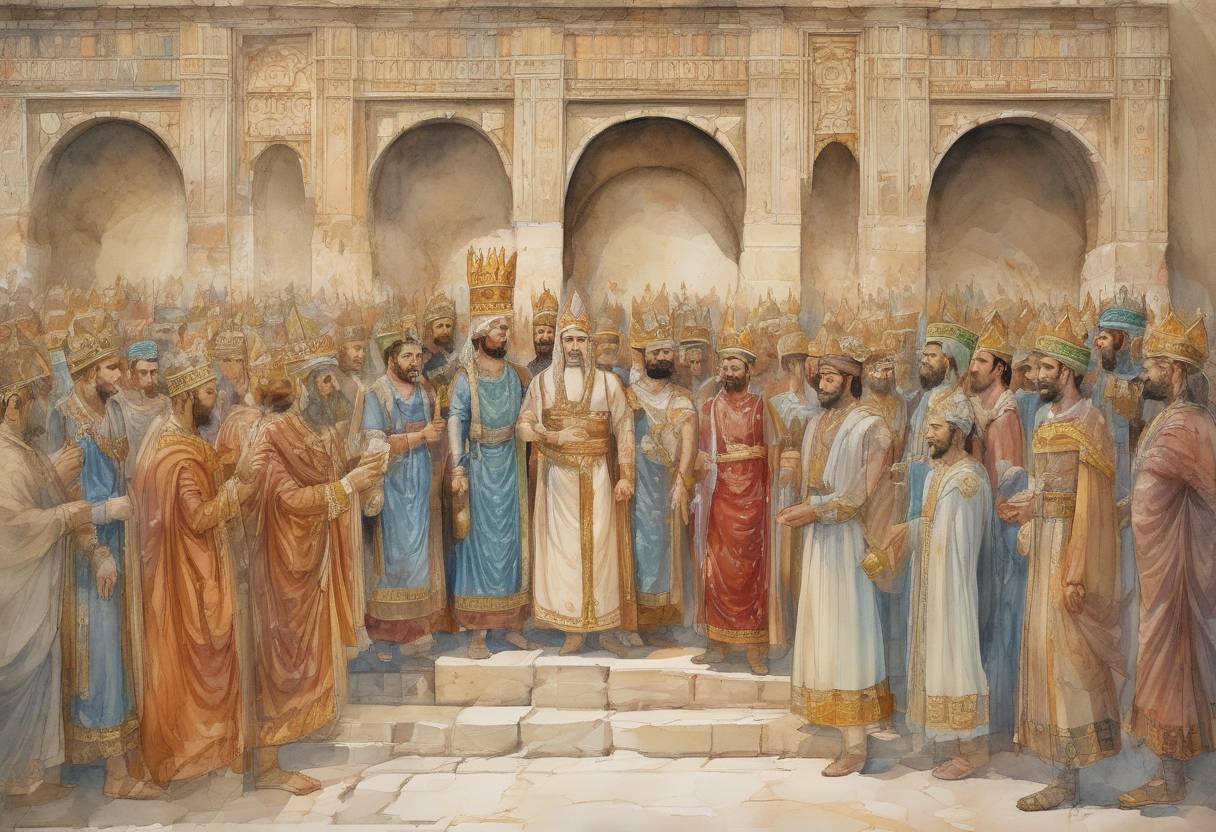
On February 3, 590, Khosrow II, also known as Khosrow Parviz, was crowned King of Persia, marking the beginning of his reign over the Sasanian Empire. His ascension to the throne was a pivotal moment in the history of the Sasanian dynasty, which was one of the most powerful empires of its time, rivaling the Byzantine Empire.
Khosrow II was the grandson of Khosrow I, one of the most celebrated Sasanian rulers, known for his administrative reforms and military campaigns. Khosrow II’s father, Hormizd IV, was the reigning monarch before him. However, Hormizd IV’s rule was marked by internal strife and dissatisfaction among the nobility and military, leading to his eventual overthrow.
Khosrow II’s rise to power was not without challenges. His father, Hormizd IV, was deposed and killed in a coup led by the general Bahram Chobin, who then declared himself king. Khosrow II fled to the Byzantine Empire, seeking support from Emperor Maurice. With Byzantine assistance, Khosrow II was able to reclaim the throne, defeating Bahram Chobin and securing his position as the ruler of the Sasanian Empire.
Khosrow II’s reign is noted for several key developments:
Military Campaigns: Khosrow II engaged in numerous military campaigns, most notably against the Byzantine Empire. His initial successes included the capture of significant territories, such as Jerusalem in 614 and Egypt in 619.
Cultural Flourishing: The Sasanian Empire under Khosrow II experienced a cultural renaissance. The arts, architecture, and literature flourished during his reign, with the construction of grand palaces and the promotion of Persian culture.
Diplomatic Relations: Khosrow II maintained complex diplomatic relations with neighboring states, including alliances and conflicts with the Byzantine Empire, which played a crucial role in the geopolitical dynamics of the region.
Despite his early successes, Khosrow II’s reign ended in turmoil. The prolonged wars with the Byzantine Empire drained the empire’s resources and led to internal dissent. In 628, Khosrow II was overthrown and executed by his own son, Kavadh II, amidst widespread discontent and rebellion.
Khosrow II’s reign is remembered for its initial military and cultural achievements, but also for the eventual decline that set the stage for the Islamic conquests that followed shortly after his death. His rule exemplifies the complexities of leadership during a period marked by both grandeur and instability.
In summary, Khosrow II’s coronation on February 3, 590, was a significant event that shaped the course of the Sasanian Empire, leaving a lasting impact on the history of Persia and the broader region.
Source: en.wikipedia.org