The First Publication of People Magazine: March 4, 1974
1974 · New York City, United States
People magazine was published for the first time.
November 23, 1936
The first issue of Life magazine is published as a photojournalism magazine, becoming one of the most popular and influential publications in the United States.
New York City, United States | Time Inc.
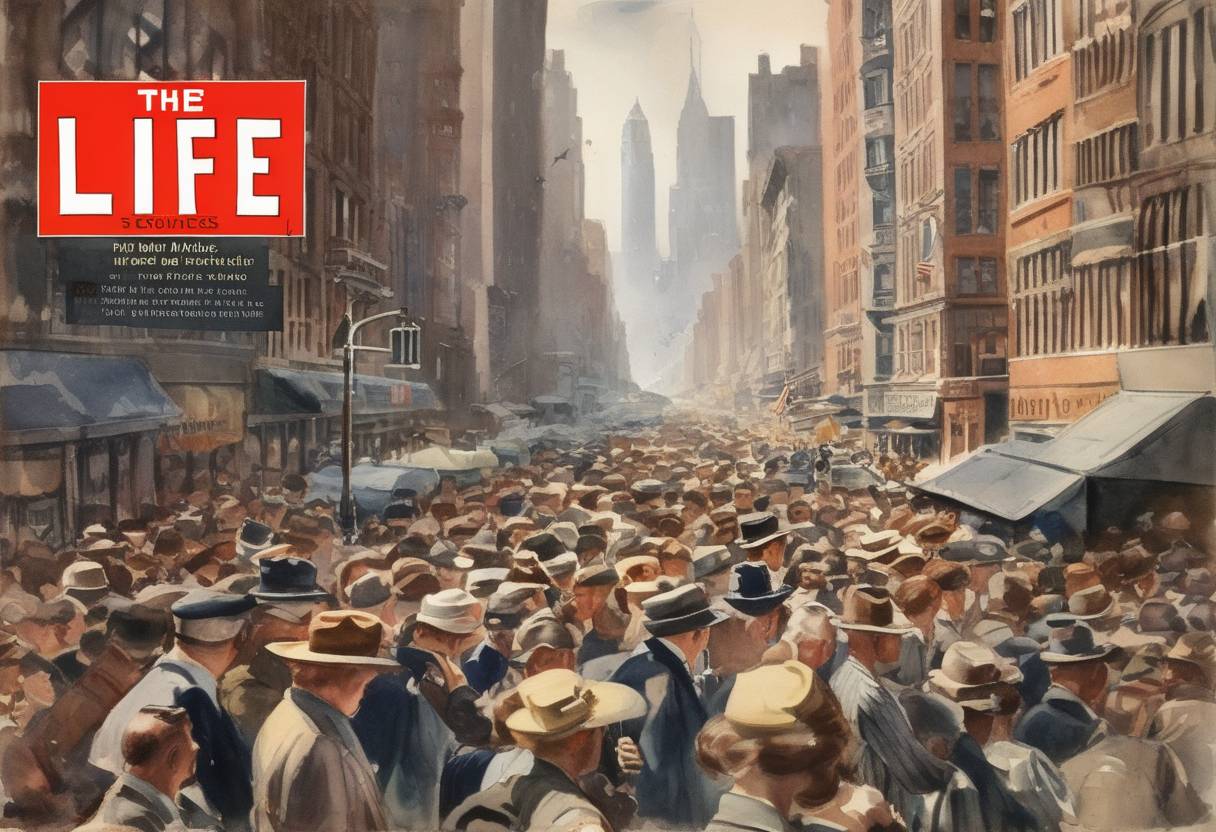
On November 23, 1936, the first issue of Life magazine was published, marking a significant moment in the history of American media. Life magazine, originally founded as a humor and general interest publication in 1883, was reimagined by Henry Luce, the co-founder of Time Inc., as a pioneering photojournalism magazine. This transformation positioned Life as one of the most popular and influential publications in the United States.
Henry Luce’s Vision: Henry Luce envisioned a magazine that would tell stories primarily through photographs, capturing the essence of events, people, and places in a visually compelling manner. This was a novel concept at the time, as most magazines relied heavily on text.
Technological Advances: The 1930s saw significant advancements in photography and printing technology, which made high-quality photo reproduction more feasible. This technological progress was crucial for the success of a photo-centric magazine like Life.
Cover and Content: The inaugural issue featured a striking cover photograph by Margaret Bourke-White, depicting the Fort Peck Dam in Montana. This image symbolized the magazine’s commitment to showcasing powerful and evocative photography.
Editorial Approach: Life’s editorial approach combined in-depth photo essays with concise text, allowing readers to engage with stories visually. The magazine covered a wide range of topics, including politics, culture, science, and human interest stories.
Cultural Significance: Life quickly became a cultural icon, shaping public perception and understanding of major events. Its photojournalism brought distant and complex issues into the homes of everyday Americans, influencing public opinion and discourse.
Influence on Journalism: The success of Life magazine helped establish photojournalism as a respected and vital form of reporting. It inspired other publications to adopt similar approaches, integrating photography more prominently into their storytelling.
Legacy: Life magazine continued to publish weekly until 1972, with intermittent special issues thereafter. Its legacy endures in the field of photojournalism and in the way visual storytelling is valued in media today.
The publication of Life magazine on November 23, 1936, marked a transformative moment in the history of journalism. By prioritizing visual storytelling, Life not only captivated audiences but also set new standards for how stories could be told. Its influence is still felt in contemporary media, where images continue to play a crucial role in shaping narratives and informing the public.
Source: en.wikipedia.org