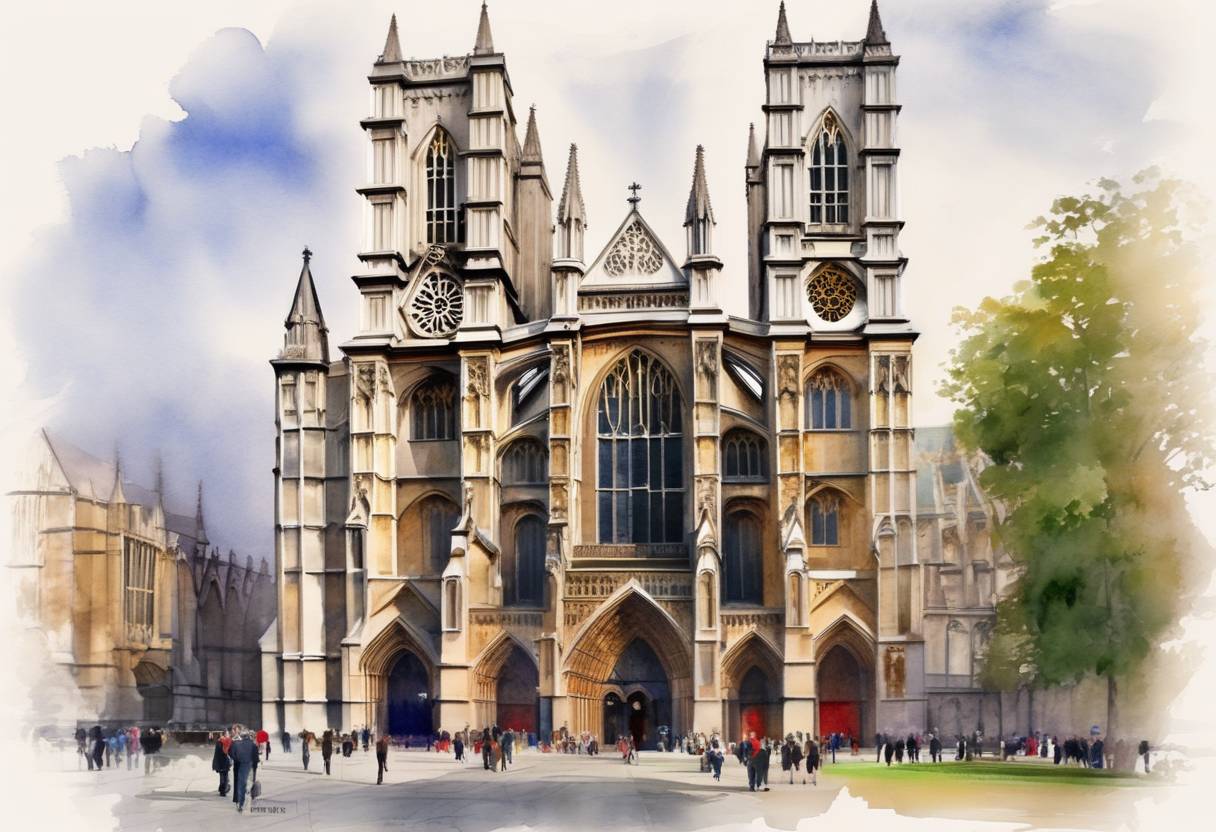
Consecration of Westminster Abbey - December 28, 1065
Westminster Abbey, one of the most iconic religious buildings in the United Kingdom, was consecrated on December 28, 1065. This Gothic monastery church, located in the heart of London, has played a pivotal role in British history as the traditional site for the coronation and burial of English and later British monarchs.
Historical Context
Foundation and Construction: The origins of Westminster Abbey date back to the early 11th century when King Edward the Confessor decided to build a grand church dedicated to St. Peter. The construction began around 1042 and was largely completed by 1065. The Abbey was built in the Romanesque style, which was prevalent at the time, and it was one of the first churches in England to be constructed in this manner.
Edward the Confessor: King Edward the Confessor, who reigned from 1042 to 1066, was a deeply religious monarch. His decision to build the Abbey was partly influenced by a vow he made during his exile in Normandy. The Abbey was intended to serve as a royal burial church and a center for religious life.
Consecration Ceremony
Date and Significance: The consecration of Westminster Abbey took place on December 28, 1065, just a week before Edward the Confessor’s death on January 5, 1066. The ceremony marked the completion of the Abbey and its dedication to St. Peter.
Architectural Features: Although the original structure was Romanesque, the Abbey underwent significant changes over the centuries, evolving into the Gothic masterpiece we recognize today. The Gothic style, characterized by pointed arches, ribbed vaults, and flying buttresses, was introduced in the 13th century under the direction of King Henry III.
Historical Significance
Coronations and Burials: Westminster Abbey has been the site of every English and British coronation since William the Conqueror in 1066. It is also the burial site for numerous monarchs, including Edward the Confessor himself, whose shrine became a place of pilgrimage.
Cultural and National Importance: Beyond its royal associations, the Abbey has hosted many significant national events, including state funerals, royal weddings, and memorial services. It stands as a symbol of continuity and tradition in British history.
Aftermath and Legacy
Architectural Evolution: Over the centuries, Westminster Abbey has been expanded and renovated, reflecting the changing architectural styles and the growing importance of the site. The addition of the iconic Gothic nave and the construction of the Henry VII Chapel are notable developments.
Modern Role: Today, Westminster Abbey remains an active church and a UNESCO World Heritage Site. It continues to attract millions of visitors each year, drawn by its rich history, architectural beauty, and the many notable figures interred within its walls.
In summary, the consecration of Westminster Abbey on December 28, 1065, marked the beginning of its long-standing role as a central institution in British religious and cultural life. Its historical significance and architectural grandeur make it a cherished landmark in the United Kingdom.